Venezuela’s Earthquake Crisis: Manual Search Efforts Outpace Government Response
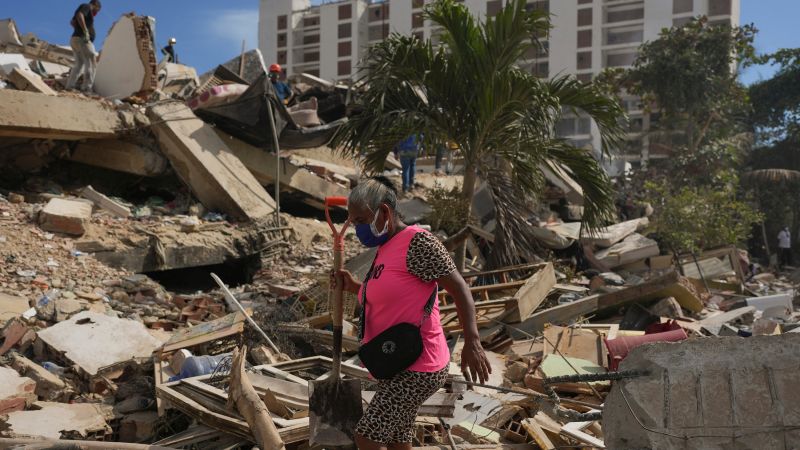
Sandego.net – Almost a week after two catastrophic earthquakes devastated parts of Venezuela, residents of La Guaira continue to sift through the debris of collapsed structures by hand, while government-provided heavy equipment remains dormant. In the coastal city, where the air is thick with the scent of damp concrete and the echoes of crumbling buildings linger, the absence of functional machinery has left families relying on basic tools like shovels and pickaxes to locate loved ones buried beneath rubble. This delay in mobilizing resources has intensified frustration among Venezuelans, who now view the crisis as a stark reminder of systemic failures in governance.
State Machinery Fails in the Wake of Disaster
Despite Venezuela’s status as home to the world’s largest oil reserves, the aftermath of the recent earthquakes has exposed a critical shortage of fuel—specifically, gasoline—that has rendered essential equipment unusable. At a construction site in La Guaira, a government excavator sat unused, its engine silent, as workers manually pried apart the remains of a nine-story apartment complex. “We lost valuable time trying to adapt new tools for tasks like cutting steel,” said Hassel Mendoza, an engineer who traveled from Tampa to search for her mother, sister, brother-in-law, and nephew in the ruins. “Without fuel, even the most basic operations are impossible.”
“People are outraged,” remarked political analyst Carmen Beatriz Fernández of DataStrategia. “This tragedy mirrors the state’s prior neglect of basic needs, where its resources were diverted toward repression and propaganda. The lack of preparedness is evident.”
Meanwhile, the Venezuelan government has attempted to justify its response, emphasizing efforts to coordinate volunteers and prioritize rescue operations. Interior Minister Diosdado Cabello urged citizens to organize themselves within communes, stating, “We need to know who is missing and where they were to conduct precise rescue work.” However, critics argue that these measures have been reactive rather than proactive, with infrastructure and logistics systems overwhelmed by the scale of the disaster.
Opposition Voices Concerns Amidst Chaos
Opposition leader María Corina Machado, who returned from exile in the U.S., echoed the growing discontent. “The crisis has pushed us to come back to Venezuela,” she told Fox News. “Our people need to be together, united in this struggle.” Her comments highlight the political dimension of the disaster, as the government’s delayed response has fueled accusations of mismanagement. National Assembly President Jorge Ramírez, brother of the acting president, reported 1,943 confirmed deaths on Tuesday, a rise of 200 from the previous day. Yet the official count is likely an underestimate, with the US Geological Survey suggesting the toll could reach tens of thousands.
At the makeshift morgue near La Guaira’s port, the sight of stacked caskets underscores the severity of the situation. “We hold onto hope until the very end,” said Mendoza, who has been sleeping on the ground for two nights while searching for her family. “You never know if they’re still alive until you find the bodies.” The emotional toll is compounded by the lack of adequate equipment, as civil defense teams from neighboring Aragua state admitted they were unprepared for the scale of the destruction. “No drills, no sensors,” Mendoza noted, describing the challenges of navigating the rubble without proper tools.
Supply Shortages Hinder Recovery Efforts
Even when resources are available, they often fall short of demand. Government donations of water have provided some relief, but they’ve not been enough to meet the needs of displaced families. The collapse of La Guaira’s buildings has created a labyrinth of debris, forcing rescuers to work in shifting conditions. “The situation is dire,” said CNN reporter Isa Soares, who documented the scenes of manual labor and desperation. “Families are doing everything they can without support from the state.”
The slow pace of recovery has drawn comparisons to Venezuela’s broader crisis, where shortages of food, medicine, and fuel have plagued daily life for years. The earthquakes have exacerbated these issues, revealing how the government’s focus on political control has left it ill-equipped to handle natural disasters. As the smell of decay fills the humid air, hospitals struggle to accommodate the influx of injured, and the wreckage of the city serves as a grim testament to the country’s vulnerabilities.
Hope and Resilience in the Ruins
Yet amid the chaos, there are glimmers of hope. Miraculous rescues, captured on camera, have shown that some families are still alive, clinging to survival in the rubble. These moments of triumph, however, are overshadowed by the uncertainty of the situation. Mendoza’s determination to find her relatives reflects the resilience of Venezuelans, who have become accustomed to navigating crises with limited support. “We’ve been through so much,” she said. “But we keep searching, because we believe there’s still a chance.”
The earthquake’s impact has also highlighted the role of deportations in the crisis. Many Venezuelans who were sent abroad by the government just hours before the disaster struck are now missing, adding to the anguish of those left behind. As the official death toll rises, the United Nations and Venezuelan authorities have begun procuring 10,000 body bags to prepare for the worst. The coordination between government and international agencies remains a key focus, with the hope that such efforts will accelerate the recovery process.
La Guaira, one of the hardest-hit regions, stands as a symbol of the nation’s struggle. Its once-thriving streets now echo with the whispers of loss, as families gather in makeshift camps and wait for news of their loved ones. The events have sparked a renewed call for accountability, with critics arguing that the government’s failure to act swiftly has compounded the tragedy. For now, the search continues—by hand, by heart, and by the unyielding will of those who refuse to give up hope in the face of devastation.