Ukraine Launches Major Drone Attack on Moscow, Killing a Baby
Drone Strikes Target Moscow’s Satellite Hub and Residential Area
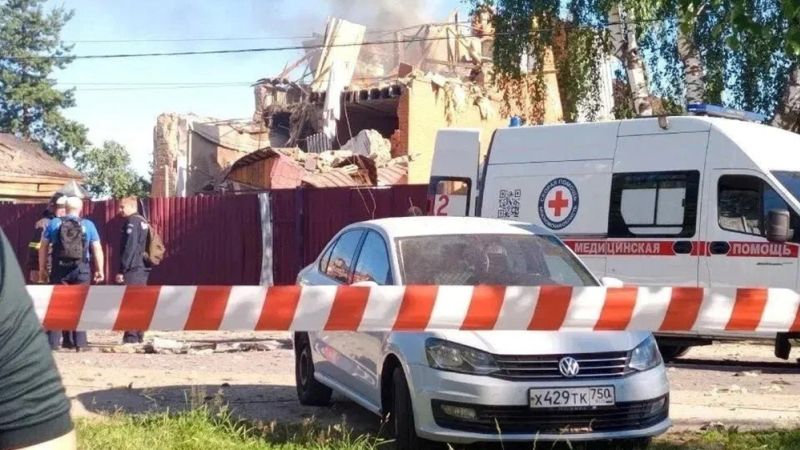
Sandego.net – Ukraine launched a major drone attack on Moscow, striking a key satellite communications center and resulting in a civilian fatality. The assault targeted the Dubna Satellite Communications Centre, approximately 500 kilometers north of the capital, near the Ukrainian border. President Volodymyr Zelensky highlighted the strategic value of the facility, which supports intelligence operations and military coordination. This incident marks a notable shift in Kyiv’s strategy, as drones increasingly play a central role in disrupting Russian defense networks. The Dubna facility was hit again by Ukrainian drones, according to government sources, though Moscow’s response has yet to confirm the extent of the damage. Separately, a drone strike in a residential area killed a six-month-old infant, with debris trapping several people. Rescue efforts saved three individuals, but the baby died before reaching medical care.
Escalating Conflict Beyond Ukraine’s Borders
The attack intensified pressure on Russia as Ukraine expanded its operations into Russian territory. Russian air defenses intercepted over 60 drones Monday night, with the Ministry of Defense reporting the destruction of 419 in total. The sustained drone assaults underscore Ukraine’s determination to undermine the Kremlin’s strategic command. This follows a similar strike on June 22, which targeted the same Dubna hub. While TASS described that attack as “massive,” it noted no significant disruptions to Russia’s communication systems. Despite this, the repeated strikes have been framed as a critical blow to Russia’s ability to manage its military campaigns. The Dubna incident is part of a broader campaign by Ukraine to apply pressure to the Russian military infrastructure.
Human Toll and Political Fallout
“Children are dying because of these strikes,” said Kremlin spokesman Dmitry Peskov, criticizing the attack’s impact on civilians.
The infant’s death has amplified concerns over the humanitarian consequences of the war. Russian officials expressed outrage, emphasizing the toll on families in Moscow. Meanwhile, Ukraine’s military strategy has increasingly focused on strikes within Russia, targeting energy sites, industrial zones, and communication hubs. These actions aim to weaken Moscow’s logistics and disrupt its war effort. The Dubna attack, however, has sparked debate about the balance between military necessity and civilian harm. Some analysts argue that such strikes could galvanize Russian public support, while others see them as a calculated move to force the Kremlin’s hand.
Strategic Implications of the Strike
Experts note that the Dubna Satellite Communications Centre is a vital node for Russia’s defense and intelligence operations. By targeting it, Ukraine has sought to cripple the coordination of troops and supply lines. The facility’s role in the war effort cannot be overstated, as it enables real-time data transmission and command decisions. The attack also signals Ukraine’s growing capability to strike deep into Russian territory, a departure from earlier focus on frontline battles. As the conflict evolves, the use of drones has become a cornerstone of Kyiv’s strategy to destabilize Russia’s military and economic systems. The Dubna strike reinforces this approach, with its dual impact on infrastructure and civilian life.
Regional Reactions and Global Attention
The incident has drawn international scrutiny, with media outlets highlighting the gravity of the strike. The drone attack on Moscow, which killed a baby, has become a symbol of the war’s reach beyond Ukraine’s borders. Russian officials have condemned the attacks, while Ukrainian authorities have framed them as necessary to weaken the enemy’s operational capacity. The broader implications of the strike are still being assessed, but it has undoubtedly heightened the stakes of the conflict. Analysts suggest the Dubna attack could influence public opinion in Russia, potentially increasing support for the war or prompting calls for military reform. The incident also underscores the evolving nature of modern warfare, where drones now play a pivotal role in both strategic and tactical operations.
Future of the Drone Campaign
With the Dubna strike, Ukraine has demonstrated its capacity to conduct high-impact attacks on Russian territory. This follows a series of drone operations aimed at disrupting key infrastructure, including energy facilities and industrial centers. The Kremlin’s response remains uncertain, but the strikes have already altered the dynamics of the conflict. As Ukraine continues its campaign, the focus on Moscow and other Russian cities is expected to intensify. The major drone attack on Moscow has not only damaged critical systems but also intensified the psychological impact on Russian civilians. This dual strategy of physical and symbolic strikes may shape the war’s trajectory, with implications for both sides’ war efforts and global perceptions of the conflict.