Andean Ski Haven Faces Unprecedented Snow Deficit
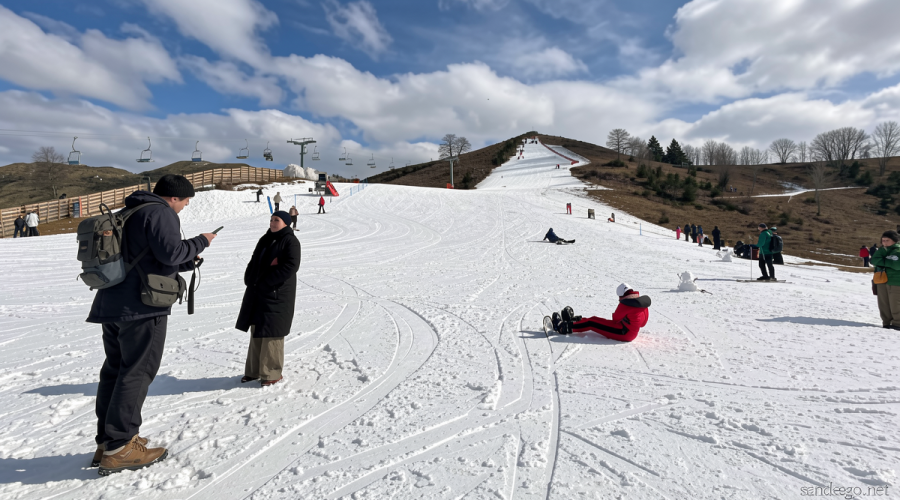
Sandego.net – Visitors to Santiago once expected to witness breathtaking panoramas of snow-capped peaks framing the Chilean capital during winter months. Those quintessential scenes now feel increasingly distant as a prolonged drought grips the nation. The scarcity of precipitation has reached critical levels, forcing major ski facilities in the metropolitan zone to close up to ninety percent of their slopes, according to the Chilean Ski Resorts Association.
Climate change stands as a primary suspect in this environmental shift. Officials caution that the region must eventually develop alternative strategies to attract visitors and sustain tourism revenue. Chile occupies a unique position in the southern hemisphere, where June through August constitute the cold season. This timing has made it an ideal destination for American travelers seeking winter sports during their own summer holidays. The arrangement has generated substantial financial returns for local businesses.
Recent statistics highlight the sector’s importance. During 2025, ski destinations in the area hosted over one million two hundred forty thousand visitors. These guests contributed approximately two hundred eighty-three million dollars to the local economy. Foreign travelers accounted for two hundred twenty-eight million of that total figure, demonstrating the international appeal of Chilean mountains.
Weather Patterns Signal Concerning Trends
Despite the region’s reputation, current conditions tell a different story. Arnaldo Zúñiga, a meteorologist representing Chile’s Meteorological Directorate, expressed his concerns to CNN reporters. He explained that the situation deviates significantly from historical patterns.
“It is not normal. We are very much behind,” Zúñiga stated.
The most recent precipitation event occurred on June twenty-first, depositing merely twenty-four centimeters of snow across the mountains. This measurement represents nearly sixty percent less than what typically accumulates during an average year. Zúñiga emphasized that climate indicators point toward continued reductions in rainfall, which directly correlates with diminished snowfall.
“Unfortunately, the trends that mark climate change indicate that we are indeed headed for a decrease in precipitation. And if it rains less, less snow also falls,” he warned.
Adaptation and Innovation
While natural snow remains scarce, ski operators have implemented creative solutions. Artificial snow production has become increasingly common across the region. Hospitality establishments and dining venues maintain positive outlooks despite challenging circumstances.
Michael Leatherbee, president of ACESKI, highlighted the industry’s preparedness. He noted that substantial investments over the past fifteen years have modernized snowmaking capabilities. Visitors can still enjoy ski instruction, ride panoramic lifts, and dine at mountain restaurants, though operations function at reduced capacity compared to typical seasons.
Government officials are pursuing a broader vision for mountain tourism. María Paz Lagos, Chile’s Undersecretary of Tourism, outlined plans for year-round activities that extend beyond winter sports. Nature excursions, hiking trails, wellness programs, and food festivals represent opportunities that do not depend on snowfall. These initiatives aim to diversify revenue streams and reduce seasonal vulnerability.
“Just the ski season alone generates about 18,000 jobs, and we want that contribution to the development of the regions to continue growing,” Lagos explained.
Looking ahead, meteorologists offer cautious optimism. A weather system approaching from the southern direction promises potential relief for mountain communities. Zúñiga predicted that the front would arrive on Sunday with cooler temperatures. While initial precipitation may fall as rain, higher elevations above two thousand five hundred meters could experience snow accumulation.
The coming days will reveal whether this weather pattern provides meaningful respite or merely temporary relief for Chile’s beloved ski destinations. The long-term challenge remains clear: adapting to a changing climate while preserving the economic vitality of mountain communities that depend on winter tourism for their livelihoods.