Tragic Losses in Colorado’s Wildfire Crisis Highlight Growing Dangers for Wildland Firefighters
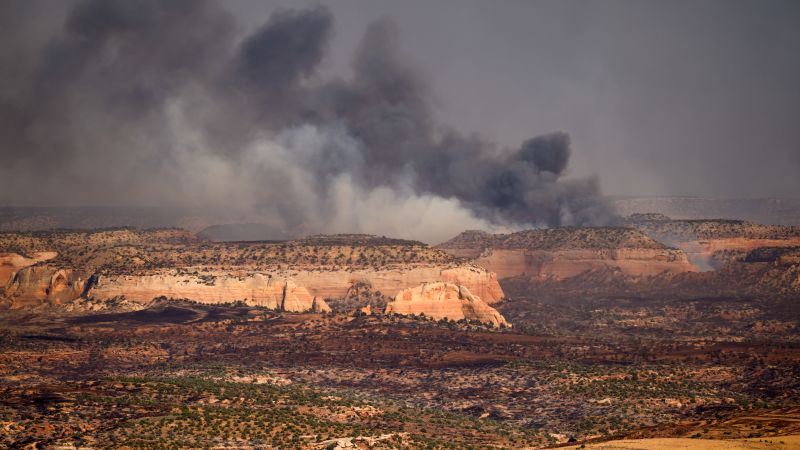
Sandego.net – On Saturday, the skies over Rifle County, Colorado, darkened as the Knowles Fire surged toward the state’s western edge. Among the first responders to the scene were members of the Helitack crew, a specialized team known for their rapid deployment and high-risk operations. Within moments, the situation turned catastrophic when an urgent command was issued over the radio: “Get out of there now.” The order, meant to save lives, came too late for three firefighters—Emily Barker, 38; Nick Hutcherson, 27; and Sydney Watson, 27—who were caught in the path of a rapidly expanding inferno. Their deaths, confirmed by the US Department of Interior, mark a somber milestone for the newly formed Wildland Fire Service, which began operations in January to oversee firefighting efforts on public lands.
A Changing Climate and Unprecedented Fire Behavior
As the flames closed in, the trio had no choice but to retreat to foil-lined shelters, a last-resort measure designed to shield firefighters from extreme heat. Yet, even these precautions couldn’t prevent the tragedy. This incident represents the first fatal casualties recorded by the newly established US Wildland Fire Service, underscoring the agency’s early struggles with the severity of the wildfire season. The Snyder Fire, which emerged from the merger of multiple blazes near the Colorado-Utah border, remains 0% contained, according to the Upper Colorado River Interagency Fire Management unit. Its relentless spread has left communities scrambling to protect homes and infrastructure.
The conditions that fueled the disaster are not new, but their intensity has escalated dramatically. A historic drought, compounded by unusually high temperatures and gusty winds reaching 60 mph over the weekend, transformed the region into a tinderbox. Over 28,000 acres have already been scorched, a figure that highlights the alarming scale of the crisis. Utah Gov. Spencer Cox described the situation as unprecedented, noting that even seasoned firefighters are struggling to predict the fire’s behavior. “We are seeing fire behavior that even our most experienced firefighters say they’ve never witnessed before,” Cox remarked, emphasizing the challenges faced by emergency crews in the region.
While the fire season has always been fraught with danger, the statistics reveal a troubling trend. The American Burn Association study indicates that wildland firefighter deaths have risen from 2% to 10% of all firefighting fatalities over the past decade. Burk Minor, executive director of the Wildland Firefighter Foundation, has observed this shift firsthand during his 30 years of advocacy. “In old-school fire, it just used to be a wildfire deep in the mountains,” Minor said. “Over the years—call it El Niño or global warming—our fuel conditions out there are changing.” He warned that any fire now has the potential to become “catastrophic,” increasing the risks for those on the front lines.
“While the wild animals and everything are running out of the woods (to escape the flames), our wildland guys are running in,” said Minor. “But when you’re battling Mother Nature, you’re up against the elements all the time. … Bad things happen on bad days.”
Wildland firefighters, often overlooked for their critical role, face an ever-growing threat. Their work requires not only physical endurance but also mental resilience, as they live among the flames for weeks at a time. Helitack crews, like the one from Rifle County, parachute into remote areas to coordinate water drops, while others dig fire lines or implement fuel reduction strategies. Despite these efforts, the recent tragedies have brought renewed attention to the dangers they endure. The deaths of Barker, Hutcherson, and Watson are a stark reminder that even in modern firefighting, the risks remain.
On Sunday, the community of Grand Junction, Colorado, gathered to honor the fallen. American flag-draped caskets carrying the three federal firefighters arrived at the city’s airport, where dozens of local firefighters lined the streets in a solemn salute. The procession, which included equipment from multiple fire departments, proceeded to the coroner’s office, symbolizing both the gravity of the loss and the unity of the firefighting community. Meanwhile, the skies above the city remained cloudless, a stark contrast to the chaos unfolding just an hour away. The ongoing inferno continues to challenge emergency crews, with no signs of abating.
A Legacy of Sacrifice and a New Era of Risk
The incident also echoes the 13th anniversary of the Yarnell Hill Fire in Arizona, where 19 Granite Mountain Hotshot crew members perished in a similar burnover. “All anniversaries are hard. It doesn’t matter if there’s a group of 19 or one individual,” Minor reflected, linking the past and present. He emphasized that the evolution of fire behavior is a direct result of climate change, which has altered fuel conditions and made wildfires more unpredictable. “The way we fight fire now is different from what we saw even a decade ago,” he added. “It’s not just about containing a blaze—it’s about surviving it.”
As the Snyder Fire continues to grow, the question of preparedness looms large. While the new Wildland Fire Service aims to streamline coordination and improve response times, the recent losses suggest that the challenges are more complex than anticipated. The agency’s ability to manage such a crisis will depend on its capacity to adapt to the changing landscape of wildfire threats. For now, the focus remains on containing the flames and supporting the families of those who have lost their lives. The emotional toll on the crews is undeniable, with each call to action carrying the weight of potential tragedy.
In a world where wildfires are increasingly frequent and severe, the sacrifices of wildland firefighters have never been more apparent. Their dedication to protecting public lands is both heroic and harrowing, as they navigate unpredictable conditions and face the ever-present danger of being overwhelmed. The deaths of Barker, Hutcherson, and Watson are not just a loss for their families but a sobering reminder of the stakes involved in this line of work. As the summer progresses, the question remains: how many more will be needed to contain the flames, and at what cost?