New York Times Challenges EEOC in Counterclaim Over Alleged Retaliation
A Legal Battle Over Press Freedom and Government Authority
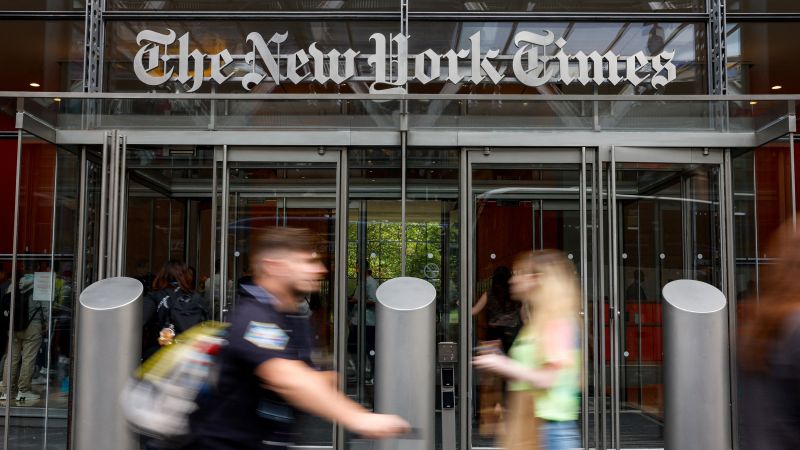
Sandego.net – The New York Times has initiated a counterclaim against the Equal Employment Opportunity Commission, asserting that the federal agency engaged in retaliatory conduct through what it characterizes as a bad faith application of its powers. This legal action comes in response to a discrimination lawsuit the EEOC brought forward on behalf of a former White House staff member, Bryant Rousseau, who alleged that the newspaper denied him advancement to the position of deputy editor because of his race and gender.
The timing of events has become central to the Times’ argument. The agency’s initial complaint was filed in May, merely two days after the publication released an investigation revealing that EEOC personnel indicated they faced pressure to prioritize discrimination cases aligning with President Donald Trump’s policy positions. The president has consistently opposed diversity, equity, and inclusion programs, and the newspaper’s reporting suggested the commission was adjusting its priorities accordingly. Following that coverage, the Times subsequently learned that the EEOC was preparing to pursue legal action against the newspaper—a case later confirmed to involve Rousseau’s grievance.
In its Friday filing, the newspaper’s legal team emphasized that the EEOC’s investigation concluded without finding any proof that race or sex played a role in the employment decision. The countersuit notes that despite conducting an eight-month inquiry into Rousseau’s charge, the commission failed to identify any supporting evidence in its own complaint demonstrating discrimination. Specifically, the attorneys pointed out that the EEOC could not cite any documentation showing Rousseau was treated unfairly when the Times hired a Real Estate Deputy Editor.
“Despite pursuing an eight-month investigation of the Charge … the Commission tellingly does not (and could not) point to any evidence in its Complaint to show that Rousseau was discriminated against on the basis of his race or sex in connection with The Times’s hiring of a Real Estate Deputy Editor,” the Times’ attorneys write in the countersuit.
The newspaper further contends that the EEOC has publicly acknowledged its lack of independence from the White House and has committed itself to advancing the president’s objectives. According to the countersuit, this political alignment transforms the agency’s lawsuit into a targeted effort rather than a genuine enforcement action. The legal filing argues that such retaliatory behavior violates multiple constitutional protections and statutory frameworks.
“The Commission’s retaliatory, bad faith use of its authority to target The Times violates the First and Fifth Amendments and the Administrative Procedure Act (‘APA’) and poses a uniquely insidious threat to a free and independent press, and to our democracy,” attorneys allege elsewhere in the lawsuit.
The EEOC chose not to provide a public statement regarding the counterclaim, referencing its ongoing litigation as the reason for its silence. This legal dispute represents only one chapter in the newspaper’s broader conflicts with the current administration. In September 2025, President Trump initiated a separate defamation action seeking $15 billion in damages, characterizing the Times as a “virtual mouthpiece” for Democratic interests. Although a federal judge dismissed that particular case, he permitted Trump to submit an amended complaint.
Additionally, the Times pursued its own legal action against the Department of Defense in December, challenging restrictions placed on journalists’ access to military facilities. The countersuit frames the EEOC’s lawsuit as part of a pattern in which the president has repeatedly criticized the newspaper for its journalistic practices and reporting methods.
Notably, the EEOC originally filed its complaint without naming Rousseau as the complainant. He subsequently joined the lawsuit in May, when the initial filing requested his promotion to deputy editor. However, a June submission indicates that Rousseau had already departed from the organization by that time.
In a May statement, a Times spokesperson firmly rejected what the publication described as politically driven accusations from the Trump administration’s EEOC. The spokesperson emphasized that the newspaper’s employment decisions are based on merit and focus on identifying and advancing the most qualified professionals globally. The countersuit seeks several remedies, including dismissal of the EEOC’s case with prejudice and reimbursement of reasonable costs and attorney’s fees incurred in defending against what the Times considers an unjustified legal challenge.