North Korean UN Mission Voicemail Appears to Have Been Altered
Sandego.net – A telephone line long used to reach North Korea’s permanent mission to the United Nations appears to have been compromised, leaving callers with a mocking recorded message instead of an official greeting.
The number, listed in the UN member directory for nearly three decades, connects to North Korea’s mission in midtown Manhattan. The office, located on the 13th floor of a skyscraper, is the country’s only diplomatic presence on US soil. In late September, callers reaching the voicemail heard a high-pitched recording using a racist imitation of an East Asian accent and making jokes about hunger in North Korea and leader Kim Jong Un.
The greeting invites callers seeking Kim to leave a message and suggests that perhaps “someone (will) get fed sometime soon.” An automated system then tells callers that the mailbox is full.
Mission staff challenged the number, then used it publicly
North Korea’s mission did not respond to an email asking about the altered recording. When a producer later visited the office and knocked, a male staff member came to the door. He declined to answer questions but listened as the mission’s number was dialed and the complete voicemail message was played.
“This is not our number,” the staffer said.
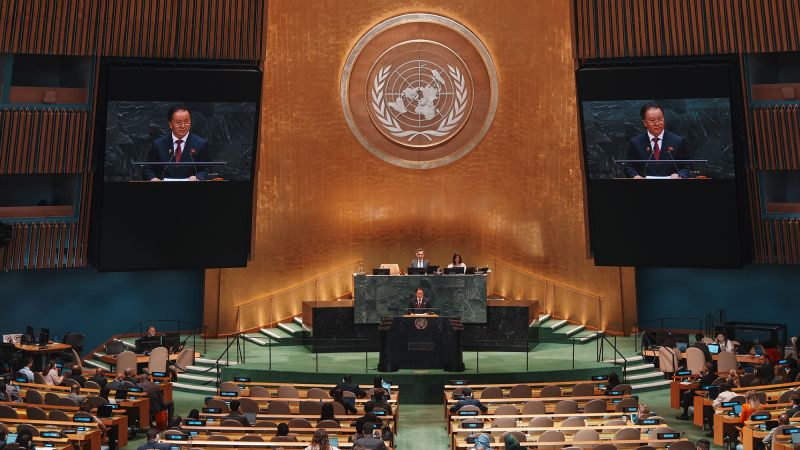
He then shut the door. Yet days later, the mission printed that same telephone number on the first page of a speech delivered to the UN General Assembly by North Korea’s vice foreign minister. The message was still active at the time of publication.
The UN Media and Liaison Unit said the number leading to the voicemail was the only contact number it held for the mission and that it had not been informed of a change to the greeting. The UN Protocol and Liaison Service, which produces the diplomatic directory, referred questions to the media unit.
An apparent prank with unclear origins
No one has publicly identified the person who changed the voicemail or explained precisely how it happened. There are, however, clues about the likely timing. David Maxwell, vice president of the Center for Asia Pacific Strategy, said he called the mission during a protest in November 2023. At that point, he recalled, the greeting simply stated that messages could not be left.
That suggests the recording may have been changed sometime after that call. Determining responsibility would require access to the mission’s private telephone records, which are not publicly available.
Cybersecurity researcher Martin Vigo, who is based in Barcelona, said such an intrusion may not require sophisticated technical skills when voicemail accounts retain simple carrier-issued passwords. In some cases, users never replace a default PIN, which can be based on the final four digits of the telephone number.
Four-digit codes can also be vulnerable to automated calling tools that test large numbers of combinations quickly. Vigo said the process can be inexpensive and rapid when a weak PIN is in use.
“For 40 bucks, I can 100% access your voicemail if you have a four-digit pin,” Vigo said. “It’s very cheap, and very fast.”
The episode illustrates a basic but consequential security problem: a voicemail greeting can be changed independently of a phone number itself. A caller may still reach the correct office line while receiving a message that has been altered by someone with access to the mailbox settings.
A small mission with an outsized diplomatic role
The Manhattan office has historically carried importance far beyond its modest size. The United States and North Korea do not maintain formal diplomatic relations, making the mission a significant channel between Washington and Pyongyang. It became known as the “New York channel,” one of the limited avenues through which officials could communicate.
Joel S. Wit, a former State Department official who has written about US efforts to dismantle North Korea’s nuclear program, said the mission played an important role during negotiations in 1994. Those talks concerned North Korea’s nuclear activities at a time when direct engagement between the two governments was especially limited.
The UN directory lists 23 diplomats and aides as permanent mission personnel. Wit recalled that the office was sparsely furnished and included “the required picture of their leaders” on the wall. Mission staff live nearby because the State Department requires North Korean diplomats to seek approval before traveling farther than 25 miles from New York City.
North Korea’s isolation and its relationship with the United States give even routine contact details unusual significance. A voicemail greeting may appear minor, but the mission’s publicly listed number has served as a practical point of connection for diplomats, journalists, researchers and others seeking to contact the North Korean government.
The altered message also refers to a sensitive subject. North Korea has experienced severe food shortages over many years, shaped by economic mismanagement, restrictions on border commerce and the allocation of scarce resources to military programs. The satirical recording turns that history into a joke, while also leaving callers uncertain whether they have reached an official government contact.
For now, the line remains listed publicly, and the mission has not publicly acknowledged control of the voicemail greeting. The contrast between the staffer’s denial and the later use of the number in an official speech leaves the apparent breach unresolved.
Related Reading
Frequently Asked Questions
What is Someone may have hacked the North?
Someone may have hacked the North is the main topic of this guide. The article explains the context, practical details, and next steps readers should understand.
Why does Someone may have hacked the North matter?
Someone may have hacked the North matters because readers are looking for a useful answer, not just a short summary. Good content should match search intent and help them decide what to do next.