NASA Recruitment: Sick of Earth? Join Moon and Mars Simulation
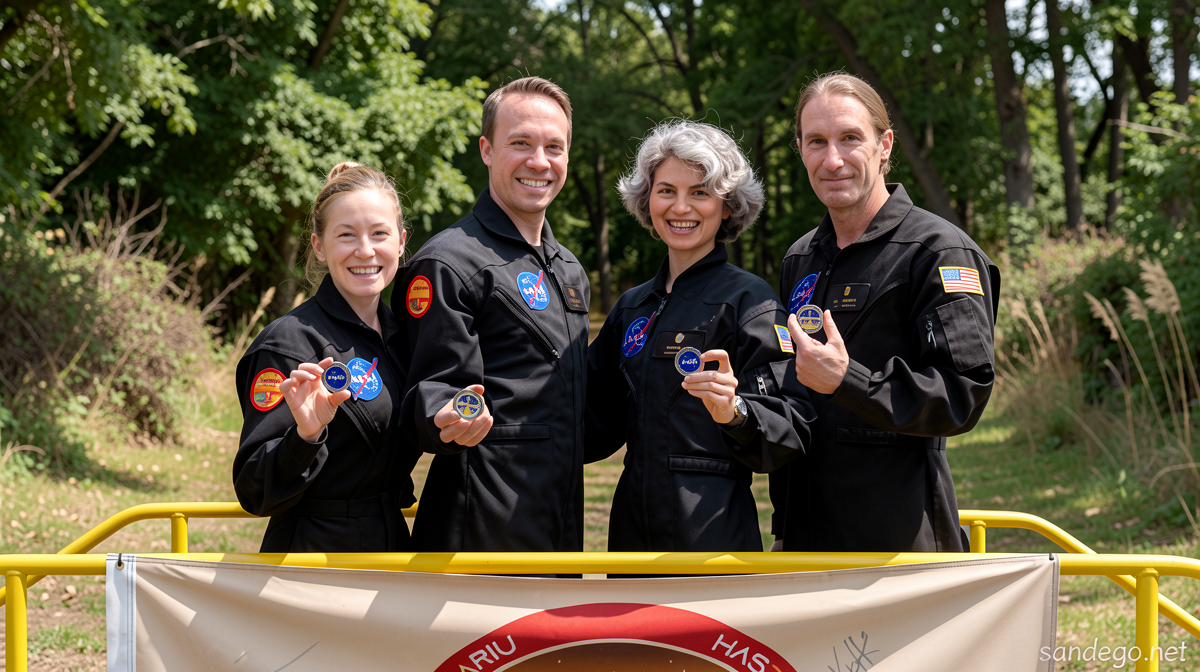
Sandego.net – Sick of Earth NASA is recruiting volunteers for an extraordinary opportunity to experience life beyond our planet. The National Aeronautics and Space Administration has announced a comprehensive yearlong simulation program designed to prepare astronauts for future missions to the Moon and Mars. This groundbreaking initiative seeks four dedicated individuals who will live in isolated habitats while replicating the challenging conditions of interplanetary travel. Participants will spend twelve months in specialized facilities, conducting daily activities that mirror what astronauts would encounter during actual space missions. The program represents a crucial step in understanding how humans can successfully inhabit other celestial bodies for extended periods.
Understanding the Simulation Experience
The Moon and Mars Exploration Analog program offers participants an immersive journey into the future of space exploration. Volunteers will reside in two separate structures that simulate different phases of a mission to the Red Planet. The first phase involves living in a compact 650-square-foot vessel that represents the journey between Earth and Mars. Each crew member receives private quarters equipped for sleeping, working, and maintaining personal hygiene. The second phase takes place in a larger habitat that mimics a permanent lunar or Martian base. Daily routines include agricultural activities, medical monitoring, and simulated extravehicular exercises that astronauts perform during spacewalks. These activities help researchers understand how humans adapt to confined spaces and limited resources.
Program Timeline and Location Details
The twelve-month core phase of the simulation is scheduled to begin no sooner than August 2027 at NASA’s Johnson Space Center in Houston, Texas. This strategic location provides access to state-of-the-art facilities and experienced support staff. The entire commitment spans fourteen months, including two additional months for preparation and recovery training. Officials emphasize that this endeavor serves a critical purpose in mitigating potential hazards associated with interplanetary travel. A representative explained that these volunteers play a vital role in expanding scientific understanding.
“Volunteer research participants contribute greatly to the knowledge base by helping NASA characterize the risks and test countermeasures to enhance human performance during long duration space exploration missions,” the spokesperson said.
Additionally, the study will examine how humans adapt to Martian chronology. Since a Martian sol lasts approximately forty minutes longer than an Earth day, this discrepancy might influence circadian rhythms and overall wellness.
Eligibility Requirements and Application Process
Prospective candidates must hold United States citizenship or possess a permanent resident card to participate in this program. The age bracket spans from thirty to fifty-five years old, though exceptions exist for those outside this range. Height limitations require applicants to stand no taller than six feet two inches, which equates to 1.88 meters. Fluency in the English language is also mandatory for effective communication during the simulation. Beyond basic demographics, participants must undergo rigorous physical and mental evaluations. Individuals with specific food allergies or a history of sleepwalking must refrain from applying. Furthermore, those who regularly consume prescription sleep medications are ineligible. Educational backgrounds should ideally include a bachelor’s degree in fields like engineering, mathematics, biological sciences, or physical sciences. Advanced degrees in STEM disciplines and prior military service are equally valued qualifications.
What Participants Will Experience
Life inside the simulators presents unique challenges that closely resemble actual space missions. Crew members will experience limited communication with the outside world, simulating the delay in signals between Earth and Mars. Daily meals will be prepared using food supplies similar to those used on spacecraft. Participants must maintain strict schedules for exercise, work, and rest to ensure proper health and productivity. The simulation also includes emergency drills and equipment maintenance tasks that astronauts perform during real missions. Kelsey Spivey, a NASA spokesperson, described this initial journey.
“The first will take place inside a mock 650-square-foot habitat that represents the transit phase between Earth and Mars,” she explained.
Volunteers will document their experiences through journals and regular check-ins with mission control. These records help researchers analyze psychological and physiological responses to extended isolation.
Why This Matters for Future Space Exploration
The success of this simulation program directly impacts NASA’s ambitious plans for returning humans to the Moon and eventually sending them to Mars. By studying how volunteers adapt to simulated space conditions, scientists can identify potential problems before they occur during actual missions. The data collected will inform spacecraft design, habitat construction, and crew selection criteria for future expeditions. Sick of Earth NASA is recruiting individuals who want to contribute to humanity’s expansion into the solar system. This opportunity allows ordinary citizens to participate in extraordinary scientific endeavors that could shape the future of space travel. Applications are currently open, and interested candidates should visit NASA’s official website to learn more about the selection process and timeline.