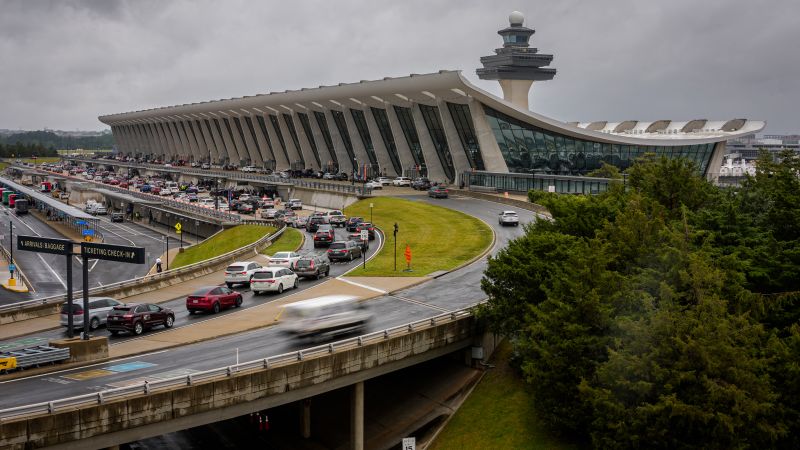
Pregnant Woman and Son to Return to Ghana After Being Held at Dulles Airport
Sandego.net – Washington Dulles International Airport will soon see the departure of Anabella Gyasi and her 4-year-old son, who were detained for over a week under conditions described as “a windowless chamber with only a bed and a toilet,” according to legal documents. A federal judge has ruled that the couple may return to their home country, Ghana, on Friday evening, as reported by the ACLU of Virginia, which represents Gyasi. The decision follows a court hearing where Judge Leonie Brinkema emphasized the importance of releasing the family to ensure their well-being and uphold the principles of justice.
Detention and Legal Battle
Gyasi, a 38-year-old teacher, and her son were detained after arriving in the U.S. on tourist visas. The legal team argued that her prolonged confinement at the airport violated her rights, while the government maintained her visa was invalid because she admitted to seeking asylum. The case has drawn attention to the broader challenges faced by immigrants under the current administration’s strict deportation policies.
Brinkema, a federal judge appointed by President Clinton, directed the government to release Gyasi before the end of the day. “She cannot spend tonight at Dulles,” she stated during a hearing in Alexandria, Virginia. “One way or another, we’re going to get her out.” This directive came after an immigration judge denied Gyasi’s asylum request, leaving her and her son with no legal path to remain in the country. The legal team’s primary concern now is Gyasi’s health, which has deteriorated during her time at the airport.
Gyasi’s son was brought to the U.S. for a medical evaluation at Akron Children’s Hospital. The petition states that he required surgery for severe physical abnormalities in his hands, a condition that had previously prevented treatment due to his age. Their tourist visas, valid until 2028, were meant to allow their temporary stay, but Gyasi and her son were held without access to adequate food or medical care. “She was locked in a holding room and denied proper nourishment,” the petition details, adding that she was even given food to take back with her after officials noted she struggled with the American diet.
Reasons for Seeking Asylum
Gyasi’s asylum claim is rooted in fears of persecution in Ghana. According to a government transcript, she told immigration officers that her mother, a traditional priest, had expressed a desire to kill her son when he was a baby due to his disability. This statement was central to her credible fear interview, which led to a negative asylum determination. Despite this, her legal team argued that the government’s decision to detain her indefinitely was unjust, especially given her pregnancy.
“We were very pleased that the judge recognized one fundamental principle, which is that human beings should not be detained under the conditions our client was being held at Dulles Airport in a windowless room without access to appropriate food or medical care,” said Mary Bauer, executive director of the ACLU of Virginia.
Gyasi’s medical team reported that she experienced two hospitalizations during her detention, initially for lightheadedness and later for vaginal bleeding. Doctors attributed her symptoms to stress and high blood pressure, highlighting the toll of her prolonged confinement. Her attorneys allege that the government failed to provide adequate medical attention, leaving her in a vulnerable state. Gyasi’s son, though not in immediate medical distress, also faced challenges due to the cramped conditions.
Immigration Crackdown Context
This case is part of a growing trend in the U.S. immigration system, where federal courts are overwhelmed by the administration’s efforts to expedite removals and tighten checks on nonimmigrant visas. Gyasi’s detention underscores the tension between the government’s stance on border security and the humanitarian concerns raised by legal advocates. Her situation has become emblematic of the challenges faced by families seeking temporary relief while their asylum cases are reviewed.
The government’s position in the case is clear: Gyasi’s tourist visa was not valid because she admitted to intending to stay in the U.S. rather than return to Ghana. This argument hinges on her sworn statement during a customs interview, where she acknowledged her plan to seek asylum. However, her legal team disputes this, claiming that the government overstepped by using her admission as a justification for detention.
Brinkema’s ruling to allow Gyasi’s return to Ghana marks a significant victory for her legal representatives, who have highlighted the harsh conditions of her detention. The couple’s journey to the U.S. was intended to secure critical medical care for her son, but they were instead held in a confined space, far from family and familiar surroundings. Their plight has sparked discussions about the balance between immigration enforcement and compassion for vulnerable individuals.
As Gyasi prepares to board her flight, the focus remains on her physical and emotional state. Her attorneys stress that the detention not only endangered her health but also placed her son in a stressful environment. “The stress of being held in such conditions for over a week has taken a toll,” the petition states. “It is essential that she is given the opportunity to return to a safe and stable environment.”
Broader Implications
The case has drawn comparisons to similar instances of immigration detention, where families are held for extended periods without clear justification. Gyasi’s situation highlights the complexities of asylum processes and the role of visa conditions in determining an individual’s right to remain. Her story has also become a focal point for advocacy groups, who argue that such cases reveal systemic issues in the U.S. immigration system.
While the government maintains that Gyasi’s visa was not valid, her legal team contends that the conditions of her detention were unnecessarily harsh. “The fact that she was held for over a week without access to adequate food or medical care is a clear violation of her rights,” Bauer explained. This argument aligns with broader critiques of immigration policies that prioritize speed over human dignity.
Gyasi’s case also illustrates the challenges of navigating the U.S. legal system while dealing with medical emergencies. Her son’s condition required urgent attention, yet the family was unable to stay in the country long enough for treatment. This has raised questions about the fairness of expedited removal orders and their impact on families with pressing health needs.
As the couple prepares to leave, their story serves as a reminder of the human cost of immigration enforcement. Gyasi’s attorneys hope that her release will set a precedent for other families detained under similar circumstances. “This case is not just about one woman and her son—it’s about the principles that should guide our immigration policies,” Bauer said. “We must ensure that no one is held indefinitely without justification, especially when their health is at risk.”
The judge’s decision to allow Gyasi’s return to Ghana reflects a growing awareness of the need to balance enforcement with compassion. While the government continues its efforts to remove immigrants, this case highlights the importance of protecting vulnerable individuals, even in the midst of a busy immigration system. Gyasi’s journey from detention to freedom is a testament to the resilience of families seeking better opportunities abroad, even when faced with bureaucratic hurdles and emotional strain.