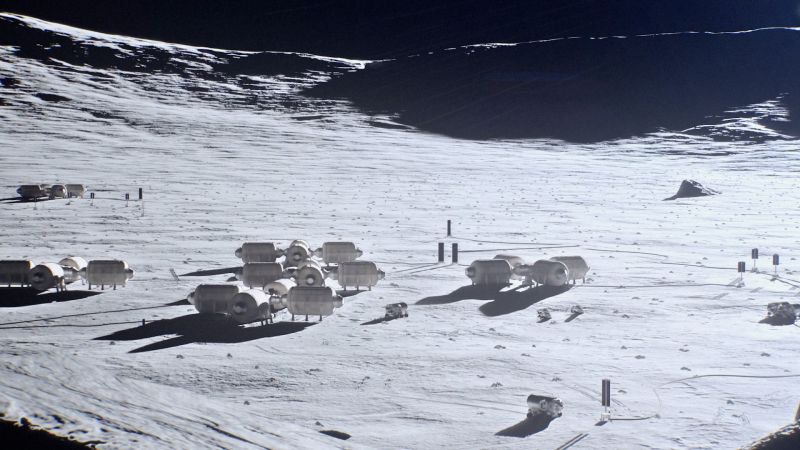
NASA Makes Moves to Dodge Costly Delays on Its Path to Build a $30 Billion Moon Base
Sandego.net – NASA has accelerated its moon base initiatives, which were recently outlined, into active implementation. The space agency is taking steps to ensure that its ambitious plan to establish a permanent lunar settlement remains on track despite recent challenges. Central to this effort is a series of contracts awarded to private companies to deliver critical payloads to the moon. These deals, announced in mid-June, include agreements with three firms—Astrobotic, Firefly Aerospace, and Intuitive Machines—for four missions focused on transporting scientific equipment and supplies to the lunar surface. Astrobotic stands out as the sole recipient of two missions, signaling its role in the program’s early stages.
Phase 1 Initiatives
The contracts announced this week are part of “Phase 1” of NASA’s broader strategy, according to Carlos García-Galán, the agency’s program executive overseeing the moon base project. This initial phase, set to span through 2028, is projected to cost approximately $10 billion. The goal is to lay the groundwork for future human exploration by deploying robotic systems to assemble essential infrastructure. García-Galán emphasized that these missions will serve as a foundation for astronaut habitats and operational systems, ensuring the moon base is functional and sustainable.
Strategic Shift to Robotic Vehicles
While the focus remains on robotic vehicles, NASA has also explored innovative options, such as repurposing a Mars rover for lunar use. The rover, dubbed “Promise,” could play a role in scouting potential sites for the moon base, a task that requires detailed terrain analysis. This approach reflects a growing reliance on automation to reduce costs and mitigate risks associated with human spaceflight. By leveraging existing technologies, the agency aims to streamline its operations and create a more resilient lunar infrastructure.
Setbacks and Adjustments
Despite these forward-looking plans, NASA faces challenges from its private-sector partners. Blue Origin, the aerospace company founded by Jeff Bezos, encountered a significant obstacle when one of its New Glenn rockets exploded on the launchpad in May. The incident damaged vital infrastructure, potentially delaying the launch of its Blue Moon lander, which was scheduled to deliver a prototype to the lunar south pole later this year. The south pole is a prime target due to its potential water ice deposits, a resource that could be converted into fuel or drinking water.
Following the explosion, García-Galán indicated that NASA is considering alternative launch vehicles for the Blue Moon project if necessary. “We are looking at other options,” he stated, highlighting the agency’s flexibility in the face of setbacks. This adaptability is crucial, as the timeline for the moon base’s development is tight. The agency’s administrator, Jared Isaacman, reiterated this stance in a social media post, emphasizing NASA’s commitment to taking an active role with its partners. “We have been saying for months at NASA that we are not going to sit on our hands and wait for the capabilities necessary to achieve the nation’s most pressing objectives,” Isaacman said. “We are going to take an active role alongside our partners, just as we did in the 1960s, to overcome setbacks, remove obstacles, and deliver the intended outcomes.”
Private Sector Contributions
While Blue Origin’s setback has raised concerns, other companies are contributing to the moon base’s progress. Firefly Aerospace, based in Texas, has already demonstrated success with its Blue Ghost vehicle, which landed near the lunar equator last year. Intuitive Machines, also based in Texas, has attempted two landings at the moon’s south pole, though both missions resulted in the landers tipping over. These experiences, while mixed, underscore the iterative nature of space exploration and the importance of multiple players in the field.
Additionally, NASA has allocated over $1 billion in May for developing buggies and drones designed to aid in lunar surface operations. These tools are expected to map potential locations for the moon base and support logistical efforts, with some systems potentially ready by 2028. The inclusion of drones marks a new frontier in robotic exploration, enabling more efficient data collection and terrain assessment. This diverse range of technologies demonstrates NASA’s multifaceted approach to lunar colonization.
Competitive Landscape and Global Ambitions
NASA’s moon base project is not only a domestic endeavor but also a response to global competition. The agency is keenly aware that China’s space program has made rapid advancements, with the nation positioning itself as a leader in lunar exploration. Lawmakers have expressed concerns that China’s efforts could undermine U.S. dominance in space technology. To counter this, NASA is doubling down on its partnerships and technological investments, aiming to maintain its leadership in the sector.
However, the moon base initiative is also about securing a long-term presence on the moon. NASA envisions “semi-permanent” settlements where astronauts can live and work, a concept that requires not only infrastructure but also reliable supply chains and transportation systems. The agency’s strategy involves creating a robust network of robotic vehicles and modular habitats that can be expanded over time, ensuring scalability and sustainability in its lunar operations.
Looking Ahead: Phases 2 and 3
Phases 2 and 3 of the moon base plan, scheduled for the 2030s, outline more ambitious goals. These include constructing the first pressurized habitats on the lunar surface and installing power generators to support long-term missions. The success of Phase 1 will be critical in paving the way for these next steps, which require significant technical and financial resources. NASA is working closely with its partners to ensure these phases are executed seamlessly.
As the moon base project progresses, NASA is also signaling its intent to expand the role of private companies beyond mere contractors. By fostering innovation and investment, the agency aims to create a thriving ecosystem of space enterprises. García-Galán noted that the recent flurry of announcements and presentations is designed to inspire industry leaders to commit to lunar exploration. “If you are in industry and wondering if you need to make that investment to increase your high bay, to increase the number of supply chain vendors that you have — this is the signal to say: W” he said, the quote ending abruptly, perhaps hinting at a larger vision for collaboration and growth.
Conclusion: A Vision for Lunar Settlement
With a clear roadmap and strategic adjustments, NASA is moving toward a future where the moon becomes a hub for scientific research and human habitation. The agency’s investments in robotic systems, partnerships with private firms, and emphasis on infrastructure development are all aimed at creating a sustainable presence on the lunar surface. As the project evolves, the success of these early phases will determine the pace of progress and the long-term viability of the moon base. The stakes are high, but with determination and innovation, NASA aims to lead the way in humanity’s next great leap into space.