Multiple Attackers Kill 12 in Late-Night Mass Shooting in South Africa
Shooting in Johannesburg Sparks Concern Over Rising Crime Rates
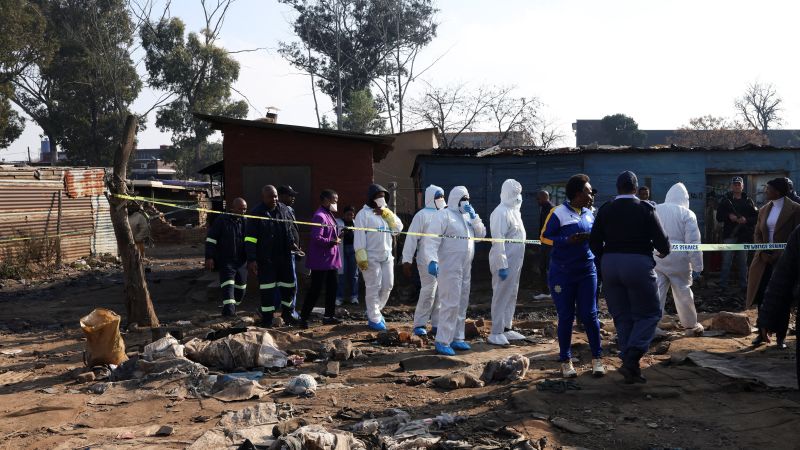
Sandego.net – On Wednesday, June 10, 2026, a mass shooting in Johannesburg claimed the lives of 12 people and injured at least nine, according to police reports. This incident marks the latest in a series of violent attacks that have increasingly gripped the South African city. The assault occurred late on Tuesday night, targeting an informal settlement in the Cleveland suburb, where the perpetrators unleashed a barrage of gunfire before vanishing in the same vehicle they arrived in.
Authorities believe more than 10 suspects were transported in a minibus to the area, which is known for its close ties to illegal mining operations. Once there, the attackers began systematically firing at residents and community members, leaving chaos in their wake. Police spokesperson Athlenda Mathe confirmed the scale of the violence, stating that the assailants “moved through the area, opening fire on residents and community members at multiple locations before fleeing the scene in the same vehicle.”
The victims, as reported by officials, comprised nine men and three women. Eleven of them perished at the scene, while a twelfth succumbed to injuries in a nearby hospital. Despite the severity of the attack, no arrests have been made yet, and police are actively searching for the individuals responsible. The motive for the shooting remains under investigation, with authorities emphasizing that more information is needed to establish a clear link to any specific group or cause.
Context of Previous Attacks and Crime Trends
South Africa has recently witnessed a surge in mass shootings, with several high-profile incidents occurring in the past year. Notably, two such attacks in December 2025 resulted in over 20 fatalities, underscoring the persistent threat of violence in the region. One of those earlier attacks involved multiple shooters, further complicating efforts to identify the perpetrators.
Cleveland, the suburb where the latest shooting took place, is deeply intertwined with illegal mining activity. This connection has fueled speculation that the current attack may be related to the criminal networks operating in the area. However, police commissioner Tommy Mthombeni has yet to confirm this theory, stating that the investigation is ongoing. “We are still investigating, but what we have seen here is a criminal act,” he remarked, adding that crime intelligence officials have been deployed to the site to assist in the inquiry.
The rise in such incidents has prompted a renewed focus on security measures across Johannesburg. CNN’s David McKenzie provided an on-the-ground perspective during a report, accompanying private security teams as they navigated the city’s heightened threat environment. The frequency of hijackings and heists has reached record highs, contributing to a climate of fear and urgency for both residents and law enforcement.
Structure of Informal Settlements and Criminal Networks
Informal settlements in South Africa, often characterized by hastily constructed shacks and limited infrastructure, have become prime locations for such attacks. These areas, which house some of the city’s most vulnerable populations, are frequently targeted due to their density and the presence of illicit activities. Cleveland, in particular, has been a focal point for illegal mining gangs, which extract minerals from abandoned shafts and sell them on the black market.
The police have mobilized provincial and district detectives, alongside crime intelligence and forensic experts, to investigate the incident thoroughly. This multi-agency approach reflects the complexity of the case and the need to trace the suspects’ movements and motives. “Provincial and district detectives, supported by crime intelligence and forensic experts, have been mobilized to investigate the incident and track down the suspects,” said Mathe, highlighting the extensive resources being allocated to the case.
While illegal mining gangs are often implicated in similar attacks, Mthombeni cautioned against premature conclusions. “We are still investigating, but what we have seen here is a criminal act,” he reiterated, noting that the link to mining operations will only be confirmed once the evidence is fully analyzed. The commissioner also emphasized the role of private security in addressing the city’s growing crime problem, particularly in areas where police presence is stretched thin.
Broader Implications for South African Security
The incident has reignited discussions about the state of security in Johannesburg and the broader challenges facing South African law enforcement. With crime rates climbing, the city’s police force has faced mounting pressure to respond effectively to such threats. The recent wave of mass shootings has not only shocked the community but also raised questions about the effectiveness of current strategies to combat organized criminal activity.
Cleveland, located in the heart of Johannesburg, has long been a hotspot for illegal mining and associated violence. The area’s proximity to mineral-rich regions has made it a target for gangs seeking to exploit the region’s resources. This connection has led to increased tensions between local residents and the criminal elements operating in the area, often resulting in retaliatory attacks and a cycle of violence.
As the investigation unfolds, authorities are urging the public to remain vigilant. “The motive for the shooting remained unclear, they said,” Mathe noted, underscoring the need for further analysis. The police have also launched a public awareness campaign to encourage residents to report suspicious activities and cooperate with investigators. This effort is part of a larger strategy to tackle the root causes of such attacks, including poverty, unemployment, and the proliferation of firearms in the community.
Community Impact and Calls for Action
The attack has left the Cleveland community reeling, with residents expressing fear and frustration over the rising number of violent incidents. “It’s like the city is under siege,” said one local resident, who requested anonymity. “We don’t know when the next shooting will happen.” This sentiment echoes across Johannesburg, where the police are working tirelessly to restore a sense of safety.
Analysts suggest that the combination of economic hardship and the accessibility of weapons has created an environment conducive to mass shootings. The use of minivans to transport attackers is a tactical choice that reflects the adaptability of criminal groups in South Africa. These vehicles offer mobility and anonymity, making it easier for perpetrators to evade detection.
As the investigation continues, the police are focusing on both the immediate response and long-term prevention. “We have deployed all required units,” Mthombeni stated, highlighting the coordination between different branches of law enforcement. The outcome of this case could provide critical insights into the methods and motivations of the perpetrators, potentially shaping future policies on crime prevention in the region.
In the wake of the shooting, there is a growing demand for stricter regulations on firearms and enhanced security measures in informal settlements. While the link to illegal mining remains unproven, the incident has sparked a broader conversation about the intersection of economic factors and violence in South African society. For now, the focus remains on identifying the suspects and bringing them to justice, as the city grapples with the aftermath of yet another deadly attack.