Space Rock with Alien Amino Acids Lands in New Jersey Home
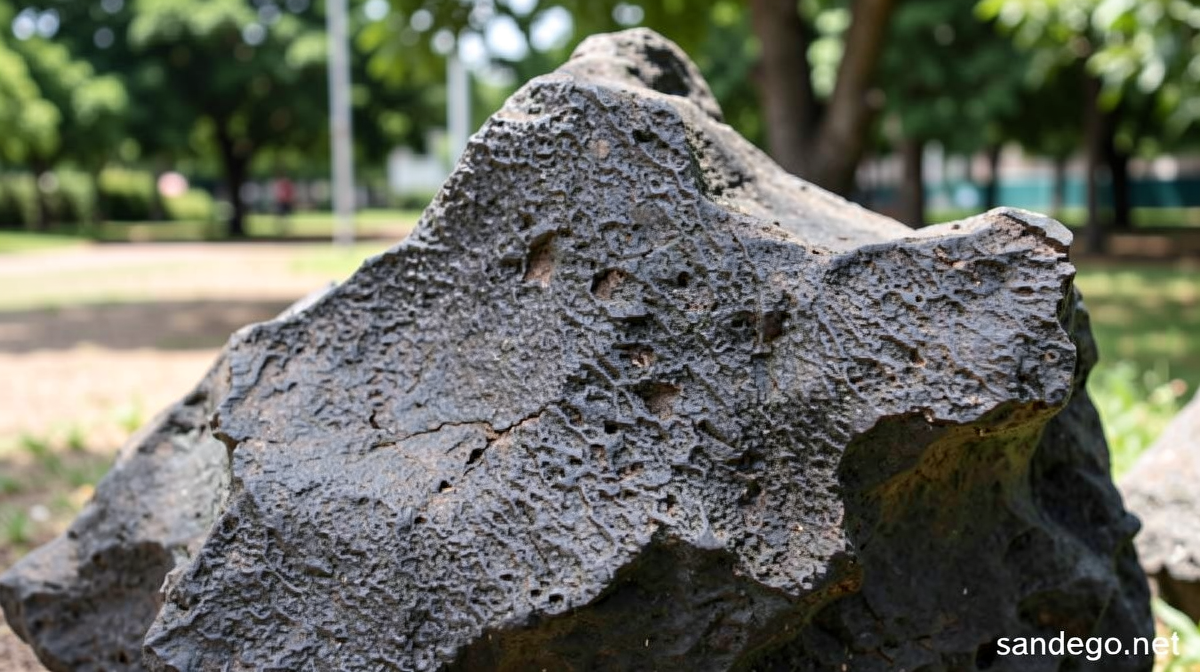
Sandego.net – Residents of a Hillsborough, New Jersey, neighborhood experienced an extraordinary event when a celestial visitor pierced through their ceiling and landed in a master bedroom. The fragment, weighing over a kilogram, has since provided scientists with valuable insights into the composition of our solar system’s earliest days. According to researchers, this rare meteorite contains amino acids that are genuinely extraterrestrial in origin, offering a unique window into ancient space chemistry.
A Daytime Fireball Captivates the Northeast
On July 16, 2024, observers spanning multiple states witnessed a spectacular celestial display. People across New York, New Jersey, Connecticut, Rhode Island, and Pennsylvania reported seeing a brilliant fireball cutting through the daytime sky. As the object traveled just south of the Statue of Liberty, it generated a sonic boom that resonated throughout New York City and New Jersey communities. The phenomenon originated from a space rock approximately the size of a heavy airline bag, which hurtled through Earth’s atmosphere at an astonishing velocity of 32,000 miles per hour, equivalent to 14.4 kilometers per second.
Unlike many meteorites that survive atmospheric entry intact, this particular space rock proved remarkably fragile. It disintegrated at an altitude of roughly 22 miles, or 35.4 kilometers, above the ground. Doppler weather radar at Newark Liberty International Airport captured the moment as a cloud of fragments descended from Staten Island toward New Jersey. Remarkably, only one piece made it to the surface, and it did so by punching directly through a bedroom ceiling.
Quick Thinking Preserves Scientific Value
The homeowners responded swiftly to the unexpected intrusion. With no injuries reported, they donned disposable gloves and carefully gathered black fragments and dust from both the bed and carpet using aluminum foil and glass containers. Peter Jenniskens, a senior research scientist affiliated with both the SETI Institute and NASA’s Ames Research Center in California’s Silicon Valley, noted that this prompt action was crucial. The homeowners also repaired their roof before evening rain arrived, which proved essential because the meteorite is porous and readily absorbs moisture from the atmosphere. This careful handling prevented excessive contamination of the precious sample.
“We detected a complex suite of amino acids, the fundamental building blocks of proteins, in water extracts of the Hillsborough meteorite,” explained Dr. Danny Glavin, senior scientist for the Sample Return in the Solar System Exploration Division at NASA’s Goddard Space Flight Center in Greenbelt, Maryland.
“Most of the amino acids detected in Hillsborough are rare or nonexistent in life on Earth, so they are truly extraterrestrial in origin.”
Scientific Classification and Origins
Jenniskens serves as the lead author of a comprehensive study published Wednesday in the journal Science Advances, which presents detailed analysis of the Hillsborough meteorite. The research revealed that the specimen represents a rare, primitive category of meteorite that illuminates conditions present during the solar system’s formative period. Scientists classified it as a CM½ type carbonaceous chondrite, positioning it as an intermediate between the two main categories of primitive CM meteorites—CM1 and CM2.
The designation “C” indicates carbonaceous composition, while “M” references the Mighei meteorite, a carbonaceous chondrite that descended upon Ukraine in 1889. These space rocks originate from rocky bodies that circulated throughout the early solar system and contain both hydrated minerals and organic compounds. The primary distinction between CM1 and CM2 varieties lies in the degree of water alteration that modified their composition while still connected to a larger parent asteroid.
“It is the first CM type meteorite that contained bits of rock that preserved the subsurface of the original asteroid,” Jenniskens stated via email. “We really have a unique window here on the physical properties of the parent asteroid.”
This sample represents only the second instance of a CM½ meteorite being observed falling to Earth, yet it stands as the first such specimen researchers could examine in pristine condition. Jenniskens pointed out that similar meteorites that landed in Indonesia during 2020 ended up submerged in mud, potentially compromising their scientific value.
Tracing the Meteorite’s Journey Through Time
The Hillsborough meteorite likely originated from a larger space rock orbiting within the inner asteroid belt, situated between the orbital paths of Mars and Jupiter. Jenniskens outlined the object’s remarkable timeline in his research. A substantial asteroid family formed following a major collision sometime in the past, and approximately 6 million years ago, a smaller impact destroyed one of these asteroids. A fragment from that collision eventually entered near-Earth orbit.
This piece endured countless heat and cold cycles as it spun in sunlight, eventually fragmenting roughly 200,000 years ago. It then required that same duration to reach Earth’s relatively small target. Researchers identified high concentrations of sodium within the meteorite, likely originating from icy brines that once existed within the original asteroid. As water evaporated from the space rock over millions of years, it left behind concentrated salt deposits that scientists can now analyze to understand the asteroid’s internal composition and history.
The discovery of tryptophan, often described as the “sleepy” amino acid associated with sleep regulation, adds another layer of scientific interest to this celestial visitor. The presence of such compounds in extraterrestrial material suggests that the building blocks necessary for life may have been present in our solar system long before Earth formed. This meteorite continues to provide researchers with unprecedented opportunities to study the chemical processes that shaped our cosmic neighborhood during its earliest epochs.