Kim Yo Jong Says She’s Unaware of Trump-Kim Contact
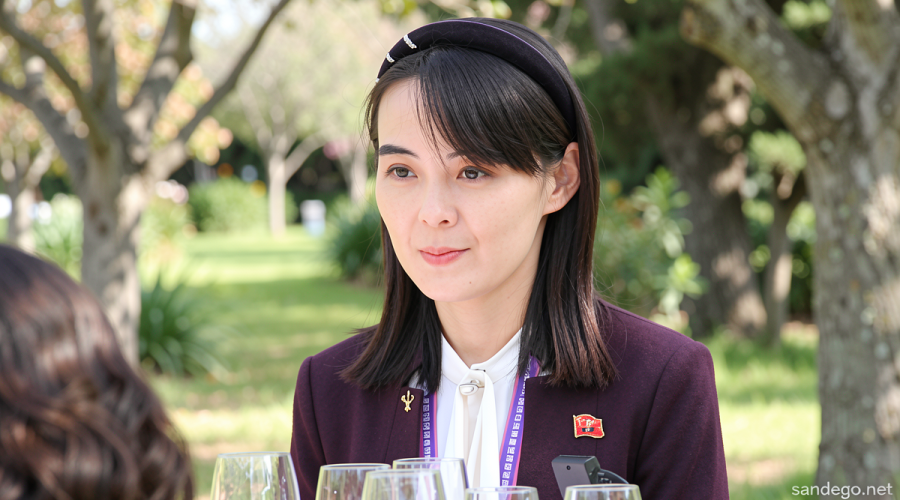
Sandego.net – Washington and Pyongyang found themselves locked in an unusual public standoff this week after Kim Jong Un’s powerful sister, Kim Yo Jong, told state media she had no knowledge of any recent communication between her brother and President Donald Trump. The remark, broadcast on Wednesday, collided head-on with claims Trump made just two days earlier, injecting a layer of official ambiguity into a bilateral relationship that has oscillated between sharp confrontation and tentative overture for decades.
What Trump Claimed and What Kim Yo Jong Denied
On Monday, the president told reporters that Kim Jong Un had responded to his request for a conversation. He offered no detail on the timing, format, or substance of the alleged exchange, leaving analysts to fill in the blanks. Days later, Kim Yo Jong — who occupies one of the most senior posts in North Korea’s political hierarchy and routinely channels the regime’s foreign-policy messaging — stopped well short of confirming the president’s account. She acknowledged that Kim Jong Un holds favorable personal sentiments toward Trump and that the two men share what she called a “great relationship,” yet her language about the reported contact itself was pointedly evasive.
“I am not aware of it at all, and perhaps it may be the only thing I do not know as regards the foreign policy of our supreme leadership.”
In Pyongyang’s political culture, that phrasing carries considerable weight. Kim Yo Jong’s public admission of ignorance about a supposed presidential-level exchange is extraordinary: it neither flatly denies nor confirms that any communication took place, leaving the episode suspended in official uncertainty.
Trump’s Parallel Messaging and the Drills Dispute
By Wednesday, the president had gone further, telling reporters he intends to meet Kim Jong Un later this year while declining to name a date, venue, or operational detail. Asked whether letters had been exchanged, he did not answer directly. His tone stayed upbeat.
“I get along with him. And you know what? The fact that I get along with him — that’s a good thing.”
That personal framing has been a recurring feature of Trump’s approach to Pyongyang. During his first term he met Kim three times in high-profile summits aimed at denuclearizing the peninsula; those talks ultimately collapsed without a final agreement, and North Korea’s nuclear arsenal has continued to grow in the intervening years. Still, Trump has consistently invoked the personal rapport as a diplomatic asset, distinguishing his style from predecessors who leaned more heavily on institutional channels.
The immediate trigger for this week’s exchange was Trump’s call to scale back the annual joint military exercises conducted alongside South Korea. Those drills, typically scheduled for ten days, will run for only five this year at Washington’s request. Their stated purpose is to adapt to North Korea’s evolving capabilities — training scenarios now include countering drone incursions, GPS jamming, and cyberattacks. Seoul and Washington have long stressed the exercises’ defensive character, but Pyongyang has consistently branded them provocative and offensive.
Kim Yo Jong addressed that point squarely. She argued that trimming the duration of the drills does not alter their fundamental nature in North Korea’s eyes, insisting that the “provocative and offensive nature” of the exercises remains unchanged and that scaling them back should not be read as a “measure of goodwill.” For the regime, the symbolic weight of large-scale allied military activity on its doorstep outweighs any reduction in days or scope.
The episode also raises pointed questions for South Korea. Trump has signaled that he wants Seoul to assume greater responsibility for its own defense, and his overtures toward Pyongyang could complicate that calculus. If Washington is simultaneously courting Pyongyang while asking its ally to shoulder more of the deterrence burden, the strategic message becomes difficult to parse. Seoul’s position is further complicated by what Trump cited as the country’s limited assistance in connection with the war in Iran — a factor he wove into his justification for recalibrating the alliance’s division of labor.
Frequently Asked Questions
Who is Kim Yo Jong and what role does she play? Kim Yo Jong is the sister of North Korean leader Kim Jong Un and one of the most senior figures in the country’s political hierarchy. She routinely serves as a conduit for Pyongyang’s foreign-policy messaging and has been visible in diplomatic exchanges with South Korea, Japan, and the United States.
Did Kim Yo Jong deny that any contact occurred? No. She stopped short of a flat denial, saying she was “not aware of it at all” and framing her ignorance as an exception to her usual knowledge of the regime’s foreign policy. The statement leaves the question officially unresolved.
What happened to the joint military exercises? At Washington’s request, this year’s drills were cut from the usual ten-day schedule to five days. The stated rationale is adapting to North Korea’s evolving military capabilities, including drone, GPS-jamming, and cyber threats. Pyongyang rejected the reduction as insufficient to change what it views as the exercises’ inherently provocative character.
Has Trump met Kim Jong Un before? Yes. During his first term, Trump met Kim three times in summits aimed at denuclearizing the Korean Peninsula. Those talks ended without a final agreement, and North Korea’s nuclear program has continued to expand since.