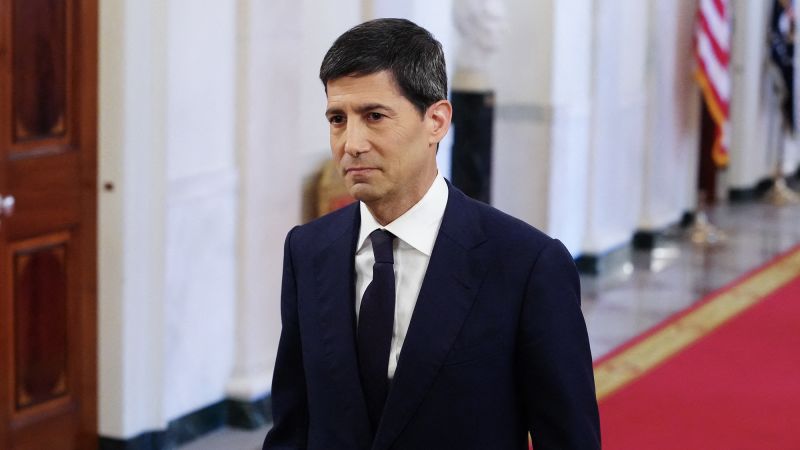
Fed’s Rate Decision and Kevin Warsh’s Leadership Shift
Sandego.net – This week, the Federal Reserve is anticipated to maintain its current interest rate policy, keeping borrowing costs unchanged. While the immediate outcome may seem routine, the focus has shifted to the new chairman, Kevin Warsh, and how his leadership might reshape the central bank’s approach to monetary management. Investors, economists, and market participants are keenly watching for signals about future rate adjustments, particularly as the Fed navigates a post-conflict economic landscape shaped by recent geopolitical developments.
A New Era of Communication at the Fed
Kevin Warsh’s first public address as Federal Reserve chairman will take place during a post-meeting news conference at 2:30 p.m. ET. This event marks a pivotal moment, offering a glimpse into his strategy for steering the economy. Unlike his predecessor, Jerome Powell, who was known for frequent press briefings and direct engagement with reporters, Warsh has signaled a preference for a more streamlined communication style. His vision for the Fed could involve fewer high-profile appearances and a reevaluation of traditional practices, such as the quarterly publication of officials’ inflation forecasts.
“Warsh has made it pretty clear he wants to change a lot of what is going on in terms of the system and the structure at the Fed,” noted Jose Rasco, chief investment officer for the Americas at HSBC Global Private Banking and Wealth. “The biggest shift would be with the projections because the market has gotten so used to them.”
Global Tensions and Inflation Outlook
The Fed’s deliberations are influenced by broader global dynamics, including the resolution of the US-Iran conflict. A recent agreement between the two nations has eased concerns about potential oil price spikes, which could have triggered inflationary pressures. This development has created a more stable environment for economic planning, but it also raises questions about the future trajectory of interest rates. Wall Street analysts are particularly interested in how Warsh will balance the need for rate adjustments against the current risk profile.
Reassessing the Role of Projections
For years, the Federal Reserve’s economic projections have served as a critical tool for guiding market expectations. However, Warsh has indicated that this practice may be reconsidered, signaling a potential departure from the status quo. The current meeting will feature the release of these forecasts, which are expected to highlight a more measured outlook. Analysts suggest this shift could reduce the frequency of updates or alter their presentation, allowing for greater flexibility in policy communication.
Key Considerations for the Fed’s Policy Path
Inflation remains a central concern for the Fed, but the decision to raise rates hinges on whether price pressures are temporary or entrenched. Central bankers are analyzing the underlying drivers of inflation, with particular attention to supply chain disruptions and energy costs. Powell’s approach, which emphasized “looking through” short-term shocks, has guided the Fed’s stance, but Warsh’s team may introduce a more nuanced framework.
Monetary policy operates with a delay, so the Federal Reserve must be confident that persistent inflation will continue into the next year before implementing rate hikes. This confidence is being tested by recent data, which suggests that while inflation is rising, its drivers may not be sufficient to justify sustained increases in interest rates. For instance, wage growth has remained subdued, according to the Bureau of Labor Statistics, indicating that households are not demanding significant raises to offset higher living expenses.
Supply Shocks and Market Sensitivity
Supply shocks, such as those caused by the Middle East conflict, are typically seen as isolated events. However, the Fed is scrutinizing whether these shocks could lead to a self-sustaining inflation cycle. The concept of “second-round effects” refers to scenarios where rising prices lead to higher wages, which in turn fuel further inflation. Current indicators suggest that such a cycle has not yet materialized, with companies opting to absorb elevated energy costs rather than pass them on to consumers.
Consumer behavior is also a key factor. Surveys reveal that households are highly price-sensitive, tempering the demand for inflationary pressures. This trend has been reinforced by the Fed’s reliance on core inflation metrics, which exclude volatile food and energy prices. Recent core inflation readings have shown a slower pace of growth, providing the Fed with room to maintain its current stance for the time being.
Expectations as a Policy Driver
Long-term inflation expectations play a crucial role in shaping the Fed’s decisions. While short-term forecasts have surged due to uncertainty, longer-term projections have advanced more gradually. This divergence reflects a cautious market sentiment, with many analysts believing that sustained inflation requires stronger evidence of persistent price increases. “Expectations determine what will happen to prices,” said Eugenio Alemán, chief economist at Raymond James, underscoring the importance of managing market psychology alongside economic data.
Warsh’s Vision for the Central Bank
Warsh has described his tenure as a “regime change,” emphasizing a structural overhaul of the Fed’s operations. This includes not only shifts in communication but also a reexamination of the central bank’s role in economic governance. His approach prioritizes efficiency and adaptability, aiming to reduce bureaucratic inertia in response to evolving economic conditions. The appointment of two conservative policy veterans as temporary advisers—Paul Winfree and another unnamed figure—has further signaled a move toward a more streamlined decision-making process.
Challenges and Outlook for the Fed’s Strategy
Despite Warsh’s ambitious agenda, the Fed’s leadership will still face challenges. The chairman is only one of 12 members on the Federal Open Market Committee, meaning he cannot unilaterally decide on rate cuts. However, his influence is expected to shape the overall direction of policy. Trump, who has long criticized the Fed for maintaining high rates, has joked about suing Warsh over the central bank’s decisions, highlighting the political dimension of monetary policy.
As the Fed transitions under Warsh’s guidance, the focus will remain on balancing inflation control with economic growth. The upcoming meeting will set the tone for this new chapter, with officials closely monitoring both data and market reactions. Whether Warsh’s approach leads to a more aggressive or measured response will depend on how the economy evolves in the coming months, with the potential for significant shifts in the Fed’s strategy.
Preparing for a Policy Evolution
The central bank’s approach to monetary policy is in flux, with Warsh advocating for a more proactive and data-driven framework. This includes a reevaluation of how inflation projections are used and a reassessment of the Fed’s commitment to transparency. While the immediate rate decision is likely to be neutral, the long-term implications of Warsh’s leadership will be felt across markets and the economy. Investors and analysts are now tasked with interpreting a new set of signals, as the Fed charts its course in a rapidly changing economic landscape.
As the Fed prepares for this new era, the emphasis will be on clarity and consistency. Warsh’s team is expected to refine the central bank’s messaging to align with its evolving priorities. This could involve greater focus on specific metrics or a more centralized decision-making process. The coming weeks will be critical in determining how effectively the Fed can adapt to these challenges while maintaining its credibility as a stabilizing force in the global economy.