Trump’s Comments Put Fresh Focus on Fed Independence
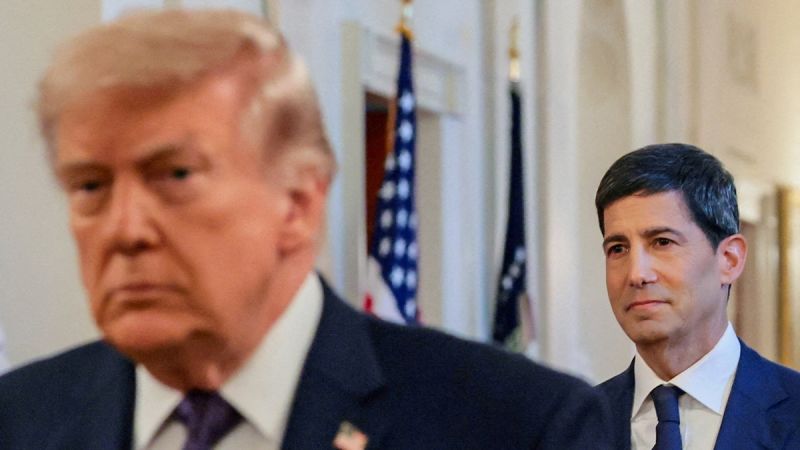
Sandego.net – The Federal Reserve’s first interest-rate increase in three years has created a new point of tension between President Donald Trump and Kevin Warsh, the Fed chair selected by Trump to lead the nation’s central bank.
Trump surprised observers on Wednesday evening by suggesting that he had told Warsh he could support the rate increase, even though the president believed it was the wrong decision. Trump portrayed the move as largely unavoidable because Warsh lacked the votes to block it within the Fed’s rate-setting committee.
“I talked to Kevin and I said you might as well vote with the board because it’s not going to matter…I said, ‘Do what you want because it doesn’t matter’ because he doesn’t have the votes,” Trump told reporters.
The remarks immediately raised questions about the nature of any conversations between the White House and the Fed chair. Those concerns carry unusual weight because the central bank is intended to operate independently from elected officials. Its policymakers set interest rates based on their assessment of inflation, employment and the broader economy, rather than on the political interests of the administration in power.
A rate decision can affect households and businesses far beyond Washington. Higher rates can make mortgages, car loans and business borrowing more expensive, while also serving as a tool to restrain inflation. That is why confidence in the Fed’s independence matters so much: investors and consumers need to believe its decisions are guided by economic conditions, not presidential pressure.
Former Officials Question the Implication
Some former Fed officials and market analysts expressed skepticism about Trump’s depiction of the meeting. Eric Rosengren, the former president of the Federal Reserve Bank of Boston, said the president’s framing was both unusual and troubling.
“It’s an unusual and unfortunate comment to make. Clearly, the Fed chair does not need the president’s permission to raise rates,” Eric Rosengren said. “The implication is that the chair got a hall pass. I have no idea how truthful the comment was.”
Krishna Guha, vice chairman and head of economics and central bank strategy at Evercore ISI, argued that financial markets viewed Warsh as the driving force behind the decision. Guha said the committee appeared firmly aligned behind its chair rather than forcing him into an unwanted position.
“The market believes – and with good grounds – that Kevin Warsh owned this decision and that the committee was strongly united behind him,” Guha said. “There is no evidence here or to the market at large that Warsh was dragged into this by colleagues – or permissioned by the president.”
The Fed did not comment on Trump’s statement. Warsh, meanwhile, offered little detail when asked about his interactions with the president during his Wednesday press conference.
“I’m not a Wall Street newsletter. Part of the independence of the Federal Reserve is we stay in our lane. Independence is a two-way street,” Warsh said. “We’ll let people that do trade policy and fiscal policy stay in their lane, too. That’s how we can stand up here and call them the way we see them.”
When a reporter asked when he had most recently spoken with Trump, Warsh replied:
“I don’t have anything for you on discussions with the president.”
A Delicate Moment for the New Fed Chair
Tim Mahedy, chief executive and chief economist at Access/Macro, described Warsh’s response as unusual. Mahedy, who previously worked at both the International Monetary Fund and the San Francisco Fed, said a clearer denial of pre-meeting contact with the president would have eased concerns.
“The right answer is, ‘I didn’t talk to the president.’ I don’t think the president is talking to Warsh beforehand. That would be shocking,” said Mahedy.
Trump’s comments could also undermine Warsh’s standing inside the institution he leads. By suggesting that Warsh simply accepted the wishes of a hostile committee, the president risked depicting him as unable to build support among colleagues.
“It makes it seem like Warsh has no control over this committee, like he was completely ineffectual in convincing his colleagues,” said Mahedy.
That image differs sharply from the impression Warsh gave after the rate decision. He oversaw an increase opposed by the White House, explained the reasoning publicly and received unanimous backing from fellow policymakers, including former Fed Chair Jerome Powell.
“It felt like the day the Fed became Warsh’s Fed,” Guha said. “He was a lot more assured, coherent and credible yesterday. What he’s saying basically adds up.”
Why the Stakes Extend Beyond One Rate Decision
The immediate challenge is not merely whether the latest increase was justified. The larger issue is whether future Fed decisions will be seen as independent. If Warsh and a majority of the committee later decide against raising rates, critics may ask whether the president influenced the outcome.
For decades, presidents have generally sought to avoid even the appearance of directing the Fed’s monetary policy. The restraint reflects a practical concern: once markets suspect the central bank is serving political goals, longer-term borrowing costs can rise even if the Fed is trying to keep them under control.
Such a loss of confidence could ripple through the economy. Market-set rates help determine the cost of home loans, auto financing and corporate debt. Doubts about central-bank independence can also unsettle expectations for inflation, making the Fed’s job more difficult.
Warsh’s rate decision initially appeared to demonstrate that he could act separately from the White House. Trump’s account of their exchange has complicated that message. The next decisions by the Fed will now be judged not only for their economic consequences, but also for what they reveal about the distance between the nation’s most powerful elected office and its most powerful central bank.
Related Reading
Frequently Asked Questions
What is Kevin Warsh just defied Donald Trump?
Kevin Warsh just defied Donald Trump is the main topic of this guide. The article explains the context, practical details, and next steps readers should understand.
Why does Kevin Warsh just defied Donald Trump matter?
Kevin Warsh just defied Donald Trump matters because readers are looking for a useful answer, not just a short summary. Good content should match search intent and help them decide what to do next.