Framework Agreement Between Israel and Lebanon Marks Shift Toward Ceasefire
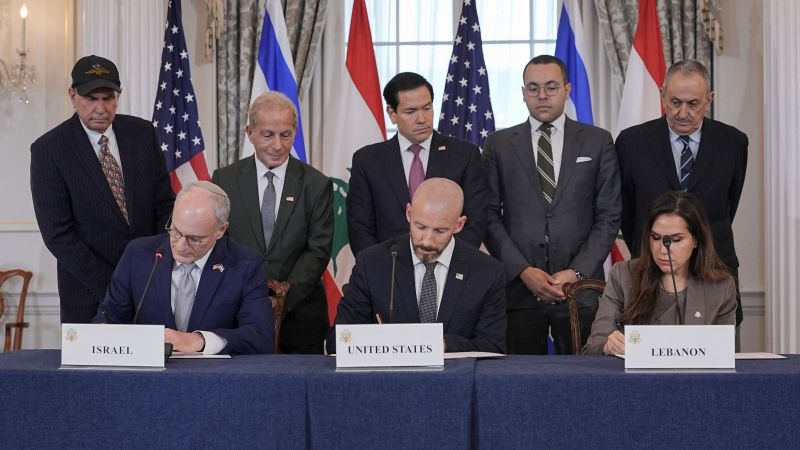
Sandego.net – Following four days of intensive discussions in Washington, Israel and Lebanon have reached a landmark framework agreement that outlines the country’s planned withdrawal from two strategic regions in southern Lebanon. Prime Minister Benjamin Netanyahu confirmed the terms, stating that the Israel Defense Forces (IDF) will relocate from these areas, effectively transferring control to the Lebanese military. The agreement is the result of a trilateral negotiation involving Israel, Lebanon, and the United States, which aims to lay the groundwork for a broader peace accord between the two nations.
Key Details of the Agreement
Under the terms of the deal, the IDF will withdraw from zones north and south of the Litani River, a significant boundary in the region. These areas, currently under Israeli occupation, will be handed over to Lebanese forces as part of a pilot initiative tied to the most recent ceasefire agreement. Netanyahu emphasized that the withdrawal is not a complete retreat, as Israel intends to maintain its presence in much of the territory as long as Hezbollah remains armed and active. “This is a major win for Israel,” he stated, highlighting the strategic balance the agreement seeks to achieve.
“This is also a major blow to Iran,” Netanyahu added. “Iran is trying to force us into a withdrawal from southern Lebanon by force. In effect, Israel, Lebanon, and the United States are telling them: this is none of your business.”
Lebanon’s Ambassador to the US, Nada Hamadeh Moawad, hailed the agreement as the “first step on the road to restoring Lebanese sovereignty and territorial integrity.” Her remarks underscored the country’s desire to reclaim full control over its borders, a long-standing goal amid ongoing regional tensions. The deal, however, is not without its challenges, as Hezbollah, a key force in Lebanon, has expressed opposition to the terms.
Earlier in the week, the Israeli military announced a temporary reduction in its forces in Lebanon. While this move was seen as a positive sign, it did not explicitly mention the withdrawal from occupied territory. A day prior, the Israeli defense minister had reiterated that the military would not withdraw from Lebanon even if the US pushed for it. This stance reflects the broader Israeli strategy of maintaining leverage while engaging in diplomatic talks.
The US State Department played a central role in facilitating the fifth round of negotiations between Israel and Lebanon, part of the Trump administration’s effort to broker a lasting agreement. US Secretary of State Marco Rubio described the signing as “the beginning of the beginning,” acknowledging the complexities ahead. “There’s a lot of work to be done,” he noted, “but we understand the importance of this step and are honored to be part of it.”
Rubio’s comments emphasized the US’s commitment to stabilizing the region, particularly in light of Iran’s influence through Hezbollah. The framework agreement is seen as a critical component in countering Iran’s geopolitical ambitions, which have long fueled the conflict. Lebanese President Joseph Aoun, in a statement after the signing, thanked the Trump administration for hosting the talks and praised the agreement’s potential to restore Lebanon’s sovereignty. “This allows the people of Lebanon to return to their fully liberated land,” he said, “under the sovereignty of a state that has no partner in its control over its people.”
Hezbollah’s Opposition and Political Implications
Despite the agreement’s progress, Hezbollah has rejected the terms, calling the negotiations a betrayal of Lebanon’s interests. Hassan Fadallah, a member of Lebanon’s parliament and a Hezbollah representative, denounced the deal as a “criminal act” against the country. Speaking to the pro-Hezbollah Al-Mayadeen news channel, he accused Israel of collaborating with its enemies, stating, “Whoever shakes hands with the enemy is a criminal like them.”
Hezbollah’s opposition highlights the deep divisions within Lebanon’s political landscape. The group, which has been a key player in the region’s conflicts, views the agreement as a concession to Israeli pressures and a threat to its influence. Fadallah urged the Lebanese government to “retract these negotiations and all the decisions they have made against their people,” signaling the group’s readiness to challenge the deal politically.
The agreement also marks a shift in the Israeli military’s approach to the conflict. Netanyahu’s decision to withdraw from specific areas, while retaining others, reflects a nuanced strategy of reducing immediate tensions without compromising long-term security interests. The withdrawal is framed as a symbolic gesture, with the IDF focusing on leaving behind “sites it does not need” in Lebanon. This move is expected to ease some of the pressure on the Lebanese government, allowing it to consolidate control over its territory.
Historically, the Israeli-occupied areas in southern Lebanon have been a flashpoint for conflict, with Hezbollah frequently clashing with IDF forces. The new framework agreement seeks to address these tensions by establishing a clear timeline for withdrawal and outlining the conditions under which Israel will maintain its presence. This pilot program is intended to test the feasibility of a more permanent peace agreement, with the US acting as a mediator and guarantor.
While the agreement is a significant step forward, it remains a framework rather than a final treaty. This means that further negotiations will be necessary to resolve remaining disputes. The Trump administration’s involvement has been pivotal, with its focus on building trust between the two nations and reducing the impact of external actors like Iran. The success of this agreement will depend on how well the parties can work together to address the broader issues of regional security and diplomatic relations.
As the agreement takes effect, its impact on the people of both Israel and Lebanon will be closely monitored. Netanyahu described the deal as a victory for Israeli security, while Aoun saw it as a step toward national liberation. However, the road to a comprehensive peace remains long, with Hezbollah’s resistance and the complexities of the conflict posing ongoing challenges. This is a developing story, and updates will be provided as the situation unfolds.