Rural North Dakota Hospital Turns to Immigrant Professionals to Fill Essential Jobs
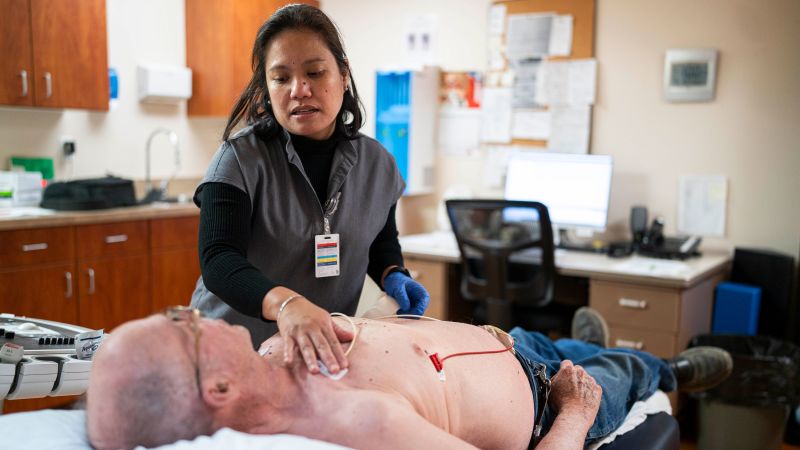
Sandego.net – In Hettinger, a prairie community of roughly 1,100 residents, the local hospital’s ability to serve patients increasingly depends on workers who have traveled thousands of miles to get there. West River Hospital employs 19 foreign-born professionals, including nurses, laboratory staff and an ultrasound technician from the Philippines.
The facility serves a broad rural area that reaches beyond southwest North Dakota into parts of Montana and South Dakota. For a small hospital located about two and a half hours from Bismarck, recruiting qualified medical personnel has become a persistent challenge as younger residents leave rural communities and health care vacancies remain difficult to fill.
A long journey to Hettinger
For Marichu Castillo Villamiel, the first question during her interview for an ultrasound technician position was unexpectedly simple: whether she liked McDonald’s. The question was meant to gauge whether she could adapt to a town with one grocery store, limited amenities and little established immigrant community.
“Yes, I’m willing,”
Villamiel recalled saying when asked about relocating to Hettinger. She also made clear that fast food was not a major attraction.
“I don’t like McDonald’s much because I can make my own burger.”
She accepted the position and later welcomed her partner, Eric, and her three daughters to their new home. Her children arrived from the Philippines six months earlier, after Villamiel waited for the harsh winter weather to pass. Bringing them after the snow had melted was intended to make the transition somewhat easier.
For Villamiel, the move reflects a longtime ambition to work in the United States while contributing to a community that needs her skills.
“Because this is my dream,”
she said of her decision to pursue work in the country.
“Yes, Hettinger is a home. If I got a chance to live in the United States, a good opportunity, why not?”
“I can help people here, yes, I can stay.”
Staffing shortages shape rural health care
Villamiel entered the country through the H-1B program, which allows employers to hire skilled foreign workers for an initial three-year period that can generally be extended for another three years. West River Health Services has used the program to recruit professionals from the Philippines for nursing, laboratory and other roles.
Some openings have proved especially hard to fill. One position at the organization had remained vacant for more than a decade, illustrating the long-term pressure facing rural medical providers. Health care facilities in isolated places often must compete with larger cities for the same limited pool of trained workers, while also asking recruits to accept longer travel distances and fewer nearby services.
Dr. Cathy Houle, a family physician at West River Health Services, said the problem is tied to wider demographic shifts affecting rural communities.
“All rural areas are experiencing population loss,”
“We’re seeing, increasingly, it’s difficult to recruit and retain people to work in the medical field.”
For patients, the staffing question has immediate consequences. A hospital can only maintain local access to diagnostic testing, nursing care and physician services when it has enough trained people on site. In communities separated from larger cities by hours of highway travel, local medical capacity can be particularly important.
Immigration uncertainty for hospital employers
West River’s recruitment efforts now face uncertainty from changes and proposals affecting legal immigration. A proposed $103,000 fee for H-1B visas could alter the economics of hiring international talent, although many hospitals may qualify for an exemption.
Alyson Kornele, chief executive of West River Health Services, said the changing policy environment makes future planning difficult.
“It is something we expect to potentially affect us in the future as it continually changes,”
“We never know what’s going to happen.”
The uncertainty extends beyond one employer. Rural hospitals that rely on international recruitment must consider visa rules alongside the usual challenges of attracting staff, arranging travel and helping new employees settle into a smaller community. At West River, staff members arriving from the Philippines fly into Bismarck and are met by hospital employees for the drive south to Hettinger.
New teachers join the community
The need for immigrant workers in Hettinger is not limited to the hospital. As Villamiel prepared her daughters for school, three Filipino teachers had arrived in town only a week earlier to begin work in public education.
The teachers described the emotional weight of leaving relatives behind. After classes ended, they called family members in the Philippines from the school cafeteria. On one call, chickens could be heard in the background as morning began on the other side of the world.
Zaira Chinte, a second-grade teacher, said a student’s response to her arrival made the sacrifice feel recognized.
“One of my students (told) me, thank you for coming here, you left your daughter in the Philippines just for us,”
“I’m so touched with that because they see our effort as a teacher coming here.”
A community gathering introduced the new teachers to local families. Villamiel and other Filipino residents prepared homemade food, while parents and students met the educators who would soon become part of everyday life in Hettinger.
Welcome in a changing small town
Hettinger is largely White and native-born, and it sits in a region that mostly supported President Donald Trump. Yet the foreign workers interviewed there said they had felt welcomed. Their experience included friendly interactions around town and visits to local gathering places such as Pastime, a steakhouse and bar operated by the same Hettinger family for more than four generations.
The town’s experience shows how immigration debates can intersect with practical local needs. For West River Hospital, international professionals are not an abstract policy question; they are colleagues filling vital shifts and helping sustain care for residents across a wide rural region. For the newcomers, the opportunity comes with separation from family, unfamiliar weather and the challenge of building a home far from the Philippines.
In Hettinger, those two realities meet in classrooms, hospital corridors, shared meals and ordinary conversations. The community’s future health care and public services may depend in part on whether it can continue to welcome and retain the people willing to make that journey.
Related Reading
Frequently Asked Questions
What is Inside a tiny prairie town relying?
Inside a tiny prairie town relying is the main topic of this guide. The article explains the context, practical details, and next steps readers should understand.
Why does Inside a tiny prairie town relying matter?
Inside a tiny prairie town relying matters because readers are looking for a useful answer, not just a short summary. Good content should match search intent and help them decide what to do next.