
Unexpected Roman Villa Unearthed by Illegal Dig Near Rome
Sandego.net – On the periphery of Rome, a significant archaeological find has emerged from an unauthorized excavation on government property. The site, now part of the village of Castel di Guido, lies approximately 12 miles from the capital. This discovery, sparked by a tip from local residents, has exposed a grand villa dating back to the Imperial era, from 27 BC to the fifth century AD. The villa, previously hidden beneath layers of earth, was identified as part of a hamlet called Lorium, which thrived as a hub of aristocratic residences during ancient times.
The Hidden Villa and Its Intricate Artistry
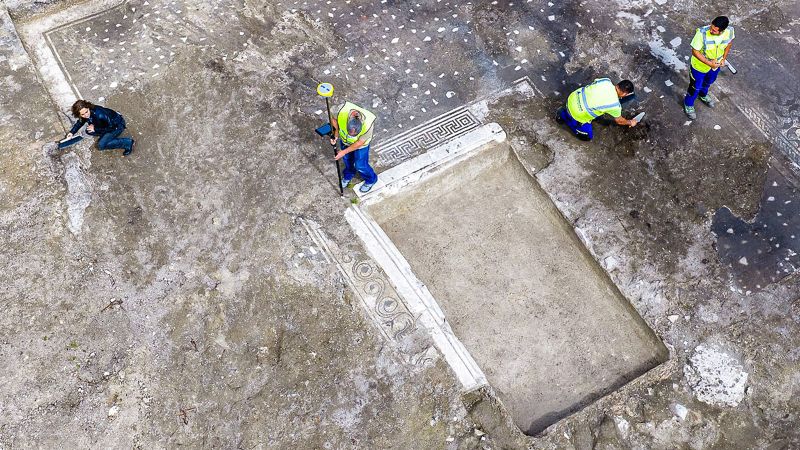
The excavation, which began in February when authorities were notified of suspicious activity, revealed a stunning entrance hall featuring an atrium and a sunken basin known as an impluvium. Surrounding these spaces is a meticulously preserved mosaic floor adorned with botanical and geometric motifs. Forensic archaeologists noted the extraordinary craftsmanship of the designs, which suggest a high level of sophistication and wealth. The site’s significance was underscored by the presence of a statue believed to depict Silvanus, the Roman deity associated with rural life, holding a small animal in one hand and a basket decorated with birds in the other.
Authorities Respond to the Illicit Dig
When the Carabinieri military police arrived at the scene, they quickly recognized the telltale signs of tomb raiders. These signs included small dirt mounds, tools like backhoes and drills, and the absence of official excavation permits. The Carabinieri Art Police, a specialized unit focused on protecting Italy’s historical treasures, confirmed that the perpetrators had bypassed protective fences to access a concealed cavern beneath the property. Despite the disturbance, the operation yielded remarkable results, uncovering artifacts that remain in pristine condition.
“Within days, officials from the Ministry of Culture and the Carabinieri successfully halted the clandestine excavation,” stated Italian Minister of Culture Alessandro Giuli in a recent statement. “The site, once known as Lorium, was a key location for the Antonine dynasty’s imperial residences, and its recovery has shed new light on the grandeur of Roman life.” The villa’s remnants, though partially damaged by the illegal dig, still offer a glimpse into the opulence of the era. The ministry noted that the exact extent of the stolen items is yet to be determined, but the findings are considered invaluable.
The Legacy of Illicit Excavation
Illegal excavation has long been a challenge for Italy’s cultural heritage. Over the years, tomb raiders have plundered countless sites across the country, selling artifacts on the black market. Many of these looted items have found their way into global museums, often with forged provenance documents or through smuggling networks. However, recent efforts have led to the recovery of hundreds of such artifacts, including some that were previously displayed in American institutions.
Alessia Contino, an archaeologist with the Special Superintendency of Rome, highlighted the importance of the discovery. “The exceptional quality of the decorations confirms that the villa was owned by members of the Roman aristocracy with close ties to the imperial court,” she explained during the unveiling of the site. Contino’s team is still analyzing the findings, which include not only the mosaics but also intricate marble work and other artifacts that may provide further insight into daily life and social hierarchy during the Imperial period.
A New Chapter for Roman Archaeology
The villa’s unearthing marks a pivotal moment in the study of Roman architecture and art. The structure, located in a secluded part of the property, was protected by fences that were cut down to facilitate the illicit dig. While the unauthorized activity caused some damage, the preservation of key elements like the mosaic floor and the Silvanus statue has allowed archaeologists to piece together a detailed picture of the site’s original layout and purpose.
“This discovery is a testament to the resilience of Rome’s cultural legacy,” Giuli added. “It reminds us that even in modern times, ancient treasures can still be uncovered through unexpected means.” The villa’s location near Rome’s outskirts suggests it may have been a retreat for elite families or a secondary residence for imperial officials. Its proximity to the imperial residences of the Antonine dynasty further supports its historical importance.
Preserving the Past for the Public
Although the excavation was stopped swiftly, the villa remains under study. The Ministry of Culture has announced plans to allow the public to view the site, starting with a limited preview on Saturday by appointment. Additional dates will be released in the coming months, ensuring broader access to this remarkable find. The process will involve careful documentation to preserve the site’s integrity and share its story with a wider audience.
“This villa’s mosaics and decorative elements offer a unique window into the Roman world,” Contino emphasized. “They reflect the artistic achievements and social status of its inhabitants, which aligns with the known history of Lorium as a place of imperial influence.” The ongoing research aims to uncover more about the villa’s function, its connection to the Antonine emperors, and the daily lives of those who lived there. As archaeologists continue their work, the site is expected to become a focal point for understanding Roman architecture and the cultural practices of the time.
Implications for Cultural Heritage Protection
The case of the Castel di Guido villa underscores the need for stricter enforcement of archaeological regulations. The Carabinieri Art Police’s role in identifying and halting the illegal activity highlights the collaboration between law enforcement and cultural institutions. This incident also serves as a reminder of the potential for accidental preservation in illicit digs, where tools like backhoes might uncover treasures before they are fully looted.
“The quick action of the authorities prevented the loss of irreplaceable artifacts,” said a spokesperson for the Carabinieri. “This villa is a prime example of how unauthorized excavations can still yield extraordinary results if caught in time.” The ministry’s statement reiterated the importance of community vigilance, as neighbors played a critical role in exposing the operation. Moving forward, the team will focus on restoring damaged sections and preparing the site for public display, ensuring that its historical value is accessible to all.
The villa’s discovery also adds to the growing body of evidence about the architectural and artistic achievements of the Roman Empire. Its mosaics, which combine naturalistic botanical designs with geometric precision, are rare examples of the era’s craftsmanship. The presence of Silvanus, a god symbolizing the countryside, hints at the villa’s possible role in religious or ceremonial activities. These elements collectively paint a vivid picture of a society that valued both aesthetics and symbolism in its structures.
As the excavation progresses, more details about the villa’s history and its connection to the imperial court are anticipated. The site’s proximity to Rome suggests it may have been part of a larger network of residences and estates, supporting the movement of goods, people, and ideas across the empire. The findings from Castel di Guido are expected to contribute significantly to our understanding of Roman urban planning, social stratification, and the cultural significance of mosaics in elite homes.
A Call to Action for Preservation
The incident has reignited discussions about the role of local communities in protecting archaeological sites. Residents who reported the activity have become key allies in the effort to combat illegal excavation. The ministry is also exploring ways to enhance public awareness and engagement with historical preservation, emphasizing the value of these sites beyond their aesthetic appeal.
“This villa is not just a collection of tiles and statues—it is a living history that connects us to the past,” Contino said. “By protecting such sites, we ensure that future generations can learn from them.” The success of this operation, despite its initial illicit nature, demonstrates the importance of timely intervention. As more artifacts are studied and the villa’s full extent is revealed, it is hoped that this discovery will inspire greater efforts to safeguard Rome’s ancient heritage from both accidental and intentional loss.