Sandego.net – “`html
European Heatwave Sparks Multiple Wildfires and Health Crises
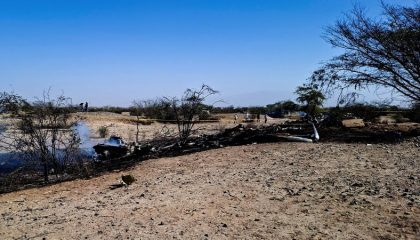
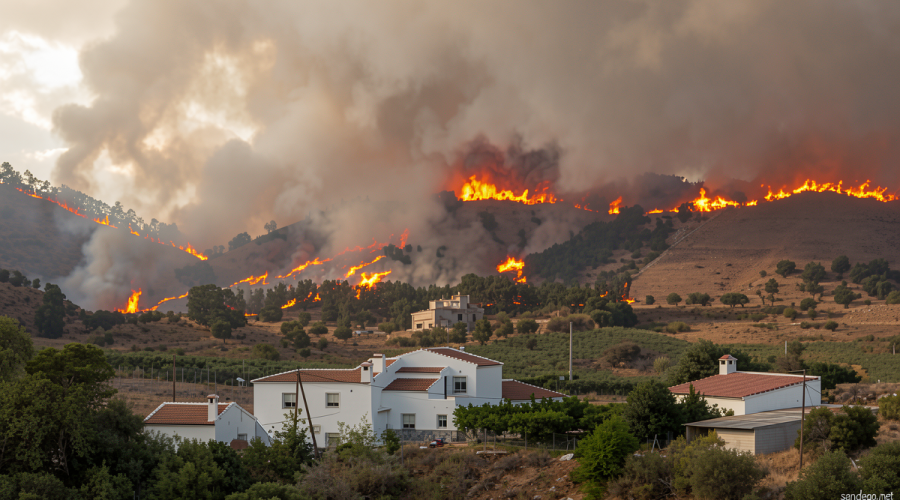
Regional authorities report that approximately twenty individuals remain missing following a devastating wildfire that swept through arid terrain adjacent to Spain’s Mediterranean shoreline on Thursday. The rapidly advancing flames claimed the lives of at least twelve people while inflicting serious burns on four additional victims. Located near Almeria along the Mediterranean, this blaze represents the inaugural European wildfire of the year to result in multiple fatalities, though it joins numerous others that have already scorched thousands of hectares across southern Europe during an unprecedented heat period.
Widespread Blazes Across the Continent
This week has witnessed two significant fire events throughout France, including one in the Pyrenees mountain range that compelled the evacuation of twelve thousand residents. Simultaneously, a substantial fire erupted in central Portugal, with satellite observations revealing smoke columns extending far into the Atlantic Ocean. While summer wildfires in southern Europe are not unprecedented, scientists note they are occurring earlier in the calendar year and demonstrating increasing severity.
Many regions of France and Spain experienced an unusually wet winter season, which produced abundant vegetation that rapidly transformed into highly flammable material. Three consecutive heatwaves subsequently drove temperatures into the high-thirties Celsius range, creating ideal conditions for combustion. According to the European Forest Fire Information System (EFFIS), this combination has triggered a notable surge in larger-scale fires.
Record-Breaking Fire Statistics
So far this year, European Union member states have recorded 314 fires exceeding thirty hectares in size, representing nearly twice the 158 incidents documented at the same point last year. This marks the second-highest total since 2016. By July 8, these fires had consumed 160,000 hectares, substantially surpassing the historical average of just under 100,000 hectares since 2006.
“Very extreme conditions dominate a large area of western and central Europe, with the heaviest concentration across France, Spain and northern Portugal, the Alpine arc extending into northern Italy, the south of the UK and southeast Ireland,” according to EFFIS in a bulletin this week.
Health and Environmental Consequences
Beyond immediate casualties, wildfires contribute significantly to atmospheric carbon dioxide and toxic smoke levels, which carry their own mortality risks. Research conducted by Spanish and American scientists reveals that fires in August of last year across Spain and Portugal resulted in over 2,000 premature deaths from smoke exposure, alongside unprecedented nighttime fire spread. The researchers determined that the total energy generated by those fires resembled the annual output of a 1,000 MW nuclear reactor.
The observed pattern of “big fires getting bigger” signals rising fire intensity, with rural depopulation serving as another contributing element as more land remains untended. This dynamic may have influenced the Almeria incident, where certain victims attempted to flee by vehicle along a dirt track only to become trapped by surrounding flames, according to Spanish authorities.
Heat Domes Create Cascading Effects
Beyond fire hazards, the heat domes trapping elevated temperatures across Europe are generating numerous secondary impacts. In France, more than two thousand deaths during the final week of June were linked to excessive heat. The nation recorded its hottest day ever on June 24, with mortality climbing 29% compared to the preceding week, as noted by French health minister Stéphanie Rist, who highlighted a “clear increase” in fatalities among individuals over forty-five.
Consequently, an increasing number of French households are installing air conditioning systems. France’s energy transition agency reports that only 24% of households currently possess air conditioning, an improvement from 18% merely two years prior, yet still considerably lower than the approximately 50% observed in neighboring Italy. However, air conditioning units release heat into surrounding environments, intensifying the urban heat island effect, particularly during nighttime hours.
Elevated river temperatures are simultaneously impacting France’s nuclear facilities, which depend on water for cooling purposes. French utility EDF announced that generation at the Nogent nuclear plant on the River Seine would decrease starting Tuesday, marking the second reduction this summer. Additionally, another reactor situated on the Garonne river in southwestern France halted production when water temperatures reached 28 degrees Celsius (82 degrees Fahrenheit).
Agricultural and Health Impacts
Europe’s current heatwaves have also precipitated sharply diminished crop projections, particularly for corn (maize). The grain trade association Coceral has lowered its forecast for EU and UK corn output to 52.7 million tons, a decline from 57.2 million tons reported last month. The French corn harvest, projected at under 10 million tons, is anticipated to represent the lowest production in twenty years. Coceral has similarly reduced estimates for barley and wheat output across Europe.
Furthermore, increasingly tropical conditions in southern Europe are contributing to a rise in vector-borne diseases carried by insects and other organisms.
“`