Former Head of Iowa’s Largest School District Sentenced to Two Years for Falsely Claiming US Citizenship
Sandego.net – Des Moines, Iowa — Following a federal court ruling on Friday, Ian Roberts, the former superintendent of the state’s largest school district, received a two-year prison sentence for falsely asserting his U.S. citizenship and illegally possessing firearms. The sentencing comes after Roberts was arrested in September 2025 during a targeted operation by U.S. Immigration and Customs Enforcement (ICE), which intensified under President Donald Trump’s immigration policies. His legal team anticipates that once his sentence is completed, Roberts will be deported to Guyana, his home country in South America, to face the consequences of his actions.
Roberts admitted guilt in January 2026 for the charges, which include misleading authorities about his immigration status and holding firearms without proper authorization. Prosecutors argued that he had been unauthorized to work in the U.S. for most of his two-decade career in urban education and used a forged Social Security card during his hiring as head of Des Moines Public Schools, which educates approximately 30,000 students. The court’s decision reflects the severity of his alleged deception, particularly given his role in a position of significant public trust.
Arrest and Community Reaction
The September 2025 arrest sent shockwaves through the Des Moines community, which was already grappling with the broader implications of Trump’s deportation campaign. At the time, officials were actively pursuing individuals without valid legal status, and Roberts’ case became a focal point of public concern. His sentencing was the culmination of a legal process that highlighted both his professional achievements and the ethical failures that led to his downfall. A final removal order was issued in 2024, paving the way for his deportation after serving the prison term.
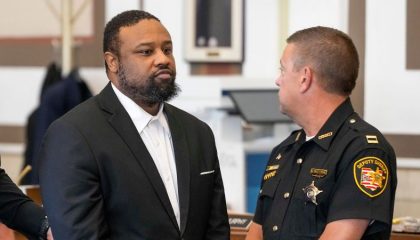
During the hearing, Roberts appeared in court with his wrists and feet restrained, having spent months in custody. He addressed Judge Rebecca Goodgame Ebinger for nearly half an hour, pleading for mercy and acknowledging the personal and professional damage caused by his actions. “I regret what I’ve done every single day,” Roberts said, as he recounted receiving a heartfelt letter from a second-grade student in Des Moines, which underscored the emotional toll of his decision.
Prosecution’s Argument and Judicial Rationale
Prosecutors emphasized that Roberts’ crimes were not isolated incidents but part of a pattern of dishonesty. They highlighted how he misrepresented his legal status for years, ultimately leading to the discovery of his counterfeit Social Security card during his hiring. The court’s decision to sentence him to two years was influenced by the perception that his actions undermined public trust and demonstrated a deliberate misuse of his position. Judge Ebinger stated that Roberts’ fraud was “not an isolated ethical lapse,” pointing to the long-term consequences of his deception.
Roberts’ defense team had advocated for probation, hoping to allow him to prepare for deportation while continuing his work in education. However, prosecutors argued that his likely return to Guyana should not reduce the severity of his punishment. They pushed for a three-year sentence, aligning with the sentencing guidelines. The judge ultimately agreed that the two-year term was justified, given the seriousness of the charges and the repeated nature of Roberts’ misrepresentations.
Professional Legacy and Conflict of Interest
Roberts’ career in education was marked by significant contributions, yet his legal troubles began to unravel his professional reputation. Des Moines Public Schools, which had previously been unaware of the full extent of his immigration status, revised its conflict-of-interest policy last month following an internal audit. The review confirmed that Roberts had awarded district contracts to Nicole Price, an education consultant with whom he had collaborated for years, raising questions about his commitment to transparency.
The district’s decision to update its policy came after the AP first reported the connection between Roberts and Price’s firm in the weeks following his arrest. His legal team described this as a key factor in his sentencing, noting that the conflict-of-interest allegations added to the scrutiny of his actions. “In the background of his career for the next 24 years, this denial of his adjustment of status haunted Dr. Roberts like a ghost,” his attorneys wrote in a filing, explaining how his initial mistake sealed his fate despite subsequent efforts to correct it.
Arrest Details and Evidence
Roberts was detained in a school-issued vehicle during an ICE operation on September 26, 2025. According to authorities, he fled the scene with assistance from state troopers, prompting the search that uncovered a loaded handgun wrapped in a towel beneath the seat and $3,000 in cash. Additional weapons were found at his residence during a later investigation, further supporting the claim that he had been in possession of firearms illegally. The presence of these items during his arrest underscored the risk he posed to public safety.
His attorneys argued that the denial of his application for lawful permanent residency was a direct result of his failure to disclose the 2025 arrest. They noted that the charges were initially dismissed, leading Roberts to believe that his immigration status was secure. “This initial mistake by Dr. Roberts sealed his fate,” the defense stated, as the legal battle over his citizenship and firearm possession continued to shape the case.
Public and Personal Impact
Roberts’ sentencing has sparked discussions about the intersection of immigration enforcement and public service. His appearance in court, with his family and colleagues present, highlighted the personal stakes involved. Many in the community expressed mixed feelings, recognizing his dedication to students while also criticizing his decision to withhold the truth about his status. The case serves as a reminder of the challenges faced by individuals navigating both professional and legal obligations during a time of heightened immigration scrutiny.
As Roberts prepares for his sentence, the focus remains on the consequences of his actions. The two-year term marks the end of his time in the U.S. and the beginning of a new chapter in his life, with deportation to Guyana as the likely outcome. His story has become emblematic of the broader tensions between education and immigration enforcement, illustrating how personal choices can impact public trust and professional standing. The case also underscores the importance of transparency, especially in positions that require a high level of integrity and accountability.
Roberts’ journey from a respected educational leader to a convicted individual reflects the complexities of his situation. While his career was defined by achievements, the legal battles that followed reveal the vulnerabilities of those who may have overlooked their immigration obligations. The sentencing not only addresses his immediate actions but also symbolizes the broader societal impact of such decisions, particularly in a time when immigration enforcement was a central policy focus.