
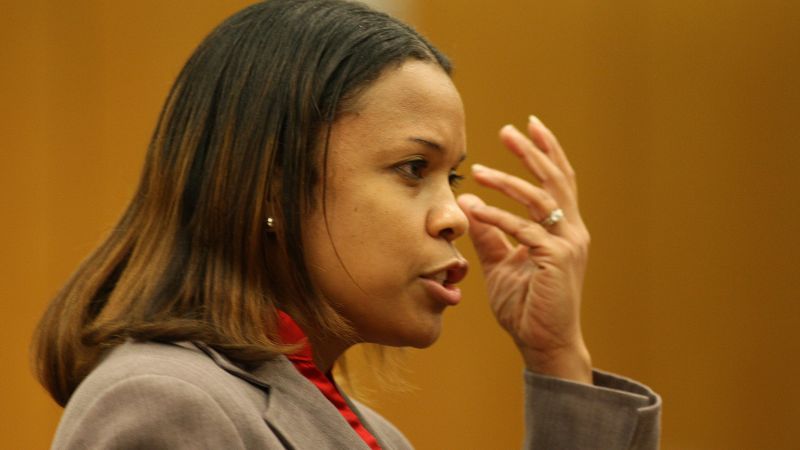
Federal Judge Eleanor Ross Issues Apology After Disciplinary Action for Inappropriate Conduct
Sandego.net – In a recent development, US District Judge Eleanor Ross, who faced disciplinary measures following an investigation into her conduct, has written a heartfelt letter to a former law clerk expressing remorse for her “harmful, offensive, and unprofessional behavior.” The letter, obtained by The Associated Press, reveals that Ross admitted to having sex in her chambers with a high-ranking police officer and then misleading investigators. The incident, which unfolded in the Northern District of Georgia, has sparked broader discussions about judicial conduct and accountability.
Investigation Unearths Controversial Behavior
The inquiry, launched last year by Chief Judge William Pryor of the 11th Judicial Circuit, uncovered allegations that Ross engaged in sexual activity with a police officer in her office during working hours. The judge was also reported to have attended a partisan event and initially denied the accusations when confronted. Security footage and office logs reviewed by a special committee confirmed the presence of the officer in her chambers around lunchtime, with multiple clerks recalling sightings of the individual. Three of these clerks claimed they overheard what could have been sexual activity, adding weight to the claims.
“You deserved better than to have your experience marred by my own offensive conflict,” Ross wrote in the letter, emphasizing her regret for the situation. She described her actions as “patently wrong” and acknowledged that there was “no excuse” for her behavior.
Ross’s behavior was not limited to her interactions with the officer. The investigation also highlighted her alleged lack of supervision over law clerks and instances where she reportedly yelled and cursed at staff. These actions, combined with her sexual conduct, painted a picture of a judge who struggled to maintain the decorum expected of her position.
From Nomination to Disciplinary Measures
Ross was nominated to the federal bench by former President Barack Obama in 2014, a move that underscored her reputation as a competent jurist. However, her tenure has now become a subject of scrutiny. The investigation led to a “private reprimand,” which did not publicly name her, but she agreed to additional measures, including refraining from seeking the chief judge role and writing apology letters to six former law clerks.
During the initial phase of the inquiry, Pryor requested Ross’s response to the allegations, which she promptly denied. In a follow-up communication, she suggested the law clerk might have fabricated details as retaliation for being assigned to work in her office. This claim, however, was later contradicted by the committee’s findings, which revealed a pattern of behavior rather than isolated incidents.
Apology Letters and Acknowledgment of Fault
Ross’s apology letter to the former law clerk not only addressed her sexual conduct but also admitted to earlier shortcomings. She noted that a previous letter she had sent was “entirely deficient” because it failed to fully take responsibility for her actions. “I have no excuse and immensely regret my behavior,” she wrote, expressing a commitment to making amends.
The judge also acknowledged her extramarital affair with the officer, though she maintained that her treatment of staff was not abusive. The special committee, which reviewed evidence and testimonies, concluded that while Ross admitted to the relationship, she denied allegations of mistreatment. This distinction has become a focal point in the ongoing debate about her conduct.
One of the most notable instances cited in the report involved Ross’s behavior during a social event. The committee noted that she attended a “mixer” for former employees of a district attorney’s office, where she used to work. Ross claimed the event was held in a separate room from a victory party for her friend, a district attorney, but the timing of the affair and the proximity to the party have raised questions.
Implications for Judicial Integrity
The controversy has reignited conversations about the expectations placed on federal judges. While they are appointed for life and can only be removed through congressional impeachment, the disciplinary action against Ross represents a significant step in addressing misconduct internally. Two Georgia congressmen have since filed separate impeachment resolutions, putting her in the spotlight for potential removal from the bench.
The House Judiciary Committee will now determine whether to proceed with formal impeachment proceedings. Pryor’s appointed committee detailed the findings in a report attached to the disciplinary order, which included evidence from security footage and eyewitness accounts. The report also described the “eggshell culture” within the judge’s office, where clerks felt the need to carefully navigate her demeanor and expectations.
Ross’s admission of the affair marks a turning point in her case. She wrote in the letter, “Though I can never fully undo the harm that I have caused you, I hope that my acknowledgment of these failures is a small first step.” The judge has pledged to take further action to prevent recurrence, though the extent of her commitment remains under scrutiny.
Broader Impact and Public Perception
As the investigation unfolds, the incident has prompted reflections on the balance between personal conduct and professional responsibilities. Federal judges, despite their authority, are expected to uphold standards of decorum, especially in public spaces like courthouses. The fact that Ross’s actions were witnessed by staff and interns has added to the perception of her behavior as “offensive,” particularly given the context of her role as a legal authority.
The report from the committee also highlighted Ross’s oversight in supervising clerks, with some alleging that she rarely provided substantive edits to the civil orders they drafted. This has led to questions about her leadership and the impact of her behavior on the efficiency of her court. While the committee found no evidence of abusive behavior, the combination of her sexual conduct and alleged lack of supervision has been seen as a breach of judicial ethics.
Ross’s case is not unique in the annals of judicial misconduct, but it has taken on added significance due to the high-profile nature of the allegations. The process of impeachment, which requires a majority vote in the House and two-thirds in the Senate, could result in her removal from the bench. However, the resolution of the case will depend on the House Judiciary Committee’s decision to initiate formal proceedings.
As the situation develops, Ross’s apology serves as both a reflection of her personal accountability and a symbol of the broader challenges facing judicial integrity. Whether this marks the beginning of a new chapter in her career or the end of her tenure on the bench will be decided by the political process, but her actions have already left an indelible mark on public perception. The episode underscores the importance of transparency and the potential consequences of misconduct in a system where trust is paramount.