Europe’s Next-Gen Fighter Jet is Dead. What Does That Mean for the Continent’s Security Ambitions?
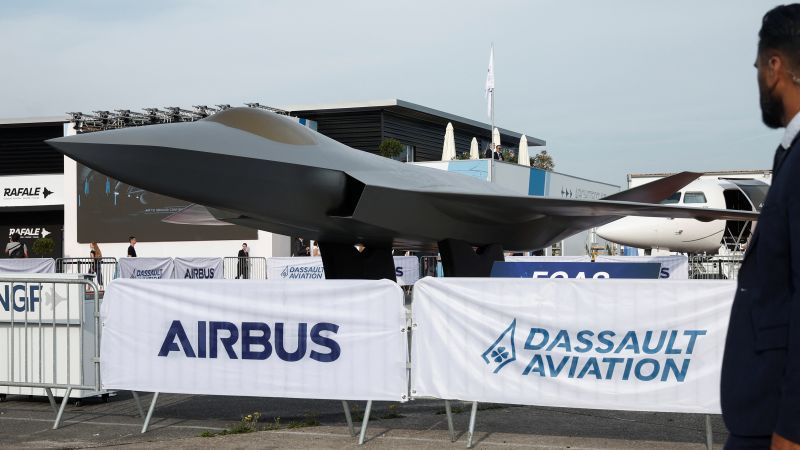
Sandego.net – This week marked the official termination of plans for a European fighter jet designed to outperform the US F-35, a development that has left analysts and policymakers grappling with the implications for the continent’s defense strategy. The collapse of the Future Combat Air System (FCAS) initiative, long hailed as a symbol of Franco-German military collaboration, was anticipated by many in the industry. At its core, the failure stemmed from deep-seated industrial disagreements between France and Germany, two nations with divergent visions for the aircraft’s design. While the FCAS aimed to create a cutting-edge, multinational platform for next-generation military technology, the inability to reconcile differing priorities has rendered the fighter jet component unviable.
The Collapse of a Shared Vision
The FCAS project was initially framed as a bold endeavor to secure Europe’s strategic autonomy in aerospace development. France and Germany, the two driving forces behind the initiative, envisioned a highly advanced aircraft that would combine French innovation with German engineering. However, the dream of a unified design quickly unraveled. French officials, through Dassault Aviation, pushed for a jet capable of sophisticated combat roles, while Germany, represented by Airbus, favored a more conventional approach. This divergence in requirements, coupled with a lack of consensus on technical specifications, proved insurmountable.
The financial commitment to the project was colossal—100 billion euros—yet it seemed to lack a clear path to success from the outset. Experts noted that the project’s political aspirations overshadowed its technical feasibility. “The first lesson is that the Germans and the French didn’t want the same aircraft,” said retired French General Michel Yakovleff, former deputy commander of NATO forces in Europe. His statement encapsulated the fundamental flaw in the FCAS: the insistence on a single, joint design despite the two nations’ contrasting needs.
“The French Air Force is very good at making pretty generic requirements and letting Dassault sort out the technological compromises,” said Yakovleff, contrasting France’s approach with Germany’s more rigid demands. This mismatch, he argued, created a logistical and technical dead end, even as the broader FCAS framework aimed to integrate advanced systems like a “combat cloud” for real-time data sharing and drone wingmen to accompany manned jets.
European Aerospace Giants at Odds
The partnership between Dassault Aviation and Airbus, which was intended to symbolize unity between France and Germany, has now become a casualty of the project’s demise. Dassault, known for its Mirage and Rafale fighters, has historically prioritized agility and multi-role capabilities, while Airbus focused on cost efficiency and scalable production. These differences, though rooted in their respective national strategies, became a critical hurdle in the development of a unified aircraft.
France’s leadership, including President Emmanuel Macron, has faced criticism for not fully aligning with Germany’s technical preferences. A statement from the French presidency noted that Berlin “felt it was not possible to put any further pressure” on the firms involved, despite Macron’s personal commitment to the FCAS. Meanwhile, German officials have attempted to frame the situation as a necessary step toward exploring alternative solutions. “We look ahead to what the countries could still achieve with the rest of the FCAS project,” said Chancellor Friedrich Merz at the Berlin Air Show, highlighting the potential survival of the program’s non-aviation components.
“It is the problem of state leadership,” said Emil Archambault, a fellow at the German Council on Foreign Relations. He pointed to the lack of a clear, unified directive from both nations as a key factor in the project’s failure. “Berlin and Paris failed to define clearly what the requirements were and how they wanted it to proceed,” he explained, underscoring the administrative and strategic challenges that plagued the initiative.
A Legacy of Collaboration and Conflict
The FCAS project was, in part, a continuation of a broader trend in European defense cooperation. Since World War II, Germany has relied on multinational efforts to develop its military aircraft, such as the Tornado bomber in the 1970s and the Eurofighter jet in the 1990s. These collaborations allowed the country to leverage expertise from other nations while avoiding the financial and technical risks of independent development. France, by contrast, has long maintained a tradition of self-reliance in aerospace, dating back to the early days of aerial combat.
However, the FCAS was meant to transcend these historical patterns by creating a platform for seamless integration of next-generation technologies. The combat cloud, a digital network for real-time battlefield coordination, and the drone wingmen, unmanned aircraft designed to support manned fighters, were seen as the project’s most innovative aspects. While these elements may still be realized through separate initiatives, the loss of the fighter jet component has raised concerns about the future of European military innovation.
Analysts have pointed to the broader implications of the FCAS collapse, particularly in light of the weakening transatlantic partnership under US President Donald Trump. With the US withdrawing from certain commitments and shifting focus to its own defense priorities, Europe has been forced to reconsider its reliance on American technology. The failure of FCAS highlights the challenges of coordinating large-scale, complex projects across different national interests and industrial ecosystems.
“The loss of the joint aircraft isn’t a serious setback for European capabilities,” said Per Erik Solli, a senior defense analyst at the Norwegian Institute of International Affairs. He argued that the FCAS’s remaining components—particularly the combat cloud and drone wingmen—could still provide significant value. “If these parts survive, the project may yet deliver meaningful results, even without the fighter jet,” Solli added.
The breakdown of FCAS serves as a cautionary tale for future European defense initiatives. It underscores the importance of aligning national ambitions with technical realities. While France may continue to develop its own advanced jets, Germany is likely to pursue alternative partnerships or domestic solutions to fill the gap. The collapse of the FCAS, though a setback, also offers an opportunity for both nations to refine their approaches to military innovation.
Historically, European projects like the Tornado and Eurofighter have demonstrated the potential of collaboration. Yet, the FCAS’s failure suggests that unity is not always achievable, even in politically aligned nations. The challenge lies in balancing technical aspirations with administrative and industrial compatibility. As Europe reevaluates its security strategy, the question remains: can the continent forge a new path toward integrated defense capabilities without the burden of a single, joint project?
For now, the FCAS’s demise highlights the complexities of European unity in the face of competing interests. While the dream of a unified next-gen fighter jet may be buried, the seeds of its potential legacy—through the combat cloud and drone technology—remain intact. The future of European defense may yet be shaped by these elements, even as the continent grapples with the realities of a fractured collaboration.