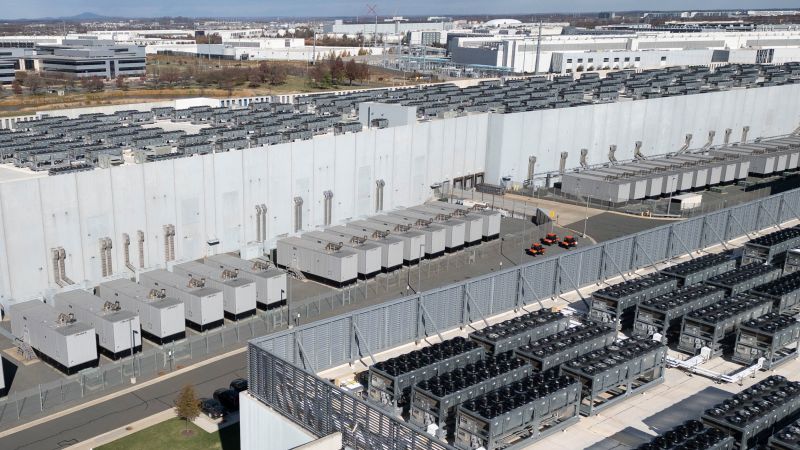
Energy Department Orders Data Centers to Shift to Backup Generators During Heatwave to Support Residential Cooling
Sandego.net – As a severe heatwave blankets the East Coast, Energy Secretary Chris Wright has issued directives to data centers in the mid-Atlantic region, urging them to utilize their backup power sources instead of drawing from the public electricity grid. This move aims to ensure sufficient power remains for residential air conditioning amid soaring demand. The directive, which was announced this week, highlights the growing pressure on the nation’s energy infrastructure during extreme weather events.
By 10 a.m. on Thursday, the heat index exceeded 100 degrees in every major metropolitan area stretching from Washington, D.C., to New York City. With temperatures rising, the demand for air conditioning has surged, placing significant strain on the electrical grid. This surge has forced officials to take emergency measures to prevent widespread blackouts, particularly in areas where energy supply is already stretched thin.
Wright emphasized that maintaining affordable, reliable, and secure power within the PJM service territory is essential, as stated in a press release. “This is a critical priority during extreme weather conditions,” he added. The directive targets data centers and other major electricity consumers within the PJM service area, which oversees the nation’s largest electrical grid. The PJM region spans 13 states, including Virginia, where the world’s most concentrated data center infrastructure is located.
Over the past couple of years, the energy consumption of these facilities has contributed to notable price increases in specific mid-Atlantic states. The spike in demand has been exacerbated by the heatwave, which has driven up both residential and commercial electricity usage. In contrast, states such as Texas and California, which host a substantial number of data centers, have more robust battery storage systems to manage energy during peak demand periods.
However, New York City, which was not included in the PJM regional grid, experienced power outages on Thursday. As of late Thursday afternoon, over 15,000 Con Edison customers in the New York City metro area and surrounding regions were without electricity, as highlighted on the utility’s outage map. The city’s mayor, Zohran Mamdani, addressed the issue on X, encouraging residents to adjust their thermostats to 78 degrees and disconnect non-essential appliances to alleviate grid pressure.
“Maintaining affordable, reliable, and secure power within the PJM service territory is non-negotiable,” Wright said in a statement. “The Trump administration is using every available tool to ensure Americans in the Mid-Atlantic have continued access to affordable, reliable, and secure energy to power and cool their homes.”
The Energy Department reported that over 35 gigawatts of unused backup generation capacity exists across the country, though it did not specify the amount available within the Mid-Atlantic region. While this capacity can help during emergencies, the decision to prioritize backup generators for data centers has raised concerns about localized environmental impacts. Many of these generators run on gas or diesel, which are less efficient than utility-scale power plants and contribute to increased emissions.
Experts warn that the shift to backup generators during the heatwave may result in heightened pollution levels and air quality challenges near the centers. This is particularly concerning as the mid-Atlantic region grapples with rising temperatures and increased energy consumption. The trade-off between grid stability and environmental impact remains a key debate among policymakers and energy analysts.
Historically, data centers have played a vital role in modern infrastructure, supporting everything from internet services to cloud computing. Their energy needs, however, have grown exponentially, creating a challenge for grid operators. During periods of extreme heat, the demand for electricity peaks, and data centers often consume a significant share of the available power. This has prompted the Energy Department to take proactive steps to balance the needs of residential users and industrial operations.
Regional differences in energy infrastructure also play a role in how the crisis is managed. While the PJM region faces unique challenges due to its reliance on coal and natural gas for power, states like Texas and California have invested heavily in renewable energy and battery storage. This allows them to better handle spikes in demand without sacrificing grid reliability. In the Mid-Atlantic, the lack of large-scale battery storage has made the situation more precarious, forcing reliance on alternative power sources.
As the heatwave continues, the impact on energy markets and public health is becoming increasingly evident. Residential cooling has become a lifeline for many, especially in areas where temperatures are expected to remain above 100 degrees for several days. The Energy Department’s directive underscores the need for a coordinated response to ensure that critical services, such as air conditioning, remain accessible during these extreme conditions.
Meanwhile, data centers are adapting to the situation by relying on their backup generators. While this strategy alleviates immediate pressure on the grid, it also highlights the broader implications of energy consumption in the digital age. The use of backup power may be necessary for short-term relief, but long-term solutions will require a reevaluation of how energy is distributed and utilized across the region.
The situation has sparked discussions about the role of data centers in the energy landscape. As their operations continue to expand, the need for sustainable energy solutions becomes more urgent. Policymakers are now exploring ways to integrate renewable energy sources and improve grid resilience, ensuring that both residential and industrial needs are met without compromising environmental goals.
For now, the focus remains on stabilizing the grid and preventing further outages. The Energy Department’s actions during the heatwave serve as a reminder of the delicate balance between technological advancement and energy sustainability. As the nation prepares for more frequent and intense weather events, the lessons learned from this crisis may shape future energy policies and infrastructure investments.