China’s Strategic Gains in the Iran-US Conflict
Sandego.net – As the US and Israel launched airstrikes against Iran in late February, China found itself at a pivotal crossroads. The attack raised concerns about the stability of Iran’s government, echoing the political upheaval seen in Venezuela just weeks prior. However, nearly four months later, the narrative has shifted dramatically. A tentative truce between the United States and Iran, achieved through months of behind-the-scenes diplomacy, has preserved the Iranian regime while exposing the limits of American military dominance. For China, this outcome has served as a validation of its foreign policy priorities and a testament to its growing influence on the global stage.
The Diplomatic Pivot: A Tale of Neutrality and Influence
China’s approach during the crisis was marked by calculated diplomacy. While condemning the US and Israeli strikes, the nation maintained its economic ties with Iran, continuing to import oil despite American sanctions. This balance allowed Beijing to project itself as a mediator rather than a frontline actor, reinforcing its image as a stabilizing force in volatile regions. At the same time, China’s leadership invited a series of foreign dignitaries to its capital, including President Donald Trump, Iranian Foreign Minister Abbas Araghchi, and Pakistani officials, who played a central role in brokering the conflict. These high-profile visits underscored Beijing’s strategic positioning as a key player in international affairs.
Despite its support for Iran, China’s role in the peace process has been subtle. When asked about its involvement in the recent agreement, Foreign Ministry spokesperson Lin Jian emphasized Beijing’s “tireless” efforts but avoided confirming specific contributions. However, the nation’s commitment to diplomacy is evident in its recent initiatives, such as President Xi Jinping’s four-point peace proposal, which called for de-escalation, dialogue, and the restoration of regional stability. The proposal, unveiled in April, positioned China as a proactive force in resolving tensions, even as it maintained its economic relationship with Tehran.
Trump’s Praise and the Cost of Neutrality
China’s neutrality during the conflict earned it recognition from unexpected quarters. At a G7 press conference in France, President Trump singled out China for its balanced stance, thanking the nation for its support. “I want to thank China, President Xi … he stayed neutral, totally neutral, and I appreciate it,” Trump remarked, highlighting how Beijing’s refusal to leverage its naval capabilities against US sanctions on Iranian ports contrasted with the actions of other global powers. This praise reflected a broader acknowledgment of China’s diplomatic finesse, which allowed it to navigate the crisis without alienating either side.
“President Xi helped me. He tried to help, and I think he probably helped get it solved.”
Trump’s comments were not the only endorsement of China’s role. The nation’s Foreign Ministry, in a statement following the agreement’s announcement, reiterated its readiness to “play an active role in restoring peace and tranquility” to the Middle East. This alignment with Trump’s narrative suggested a mutual benefit: China gained geopolitical leverage, while the US found a willing partner in easing tensions. Yet, the broader implications of the deal extend beyond bilateral relations, signaling a shift in the balance of global power.
Economic Resilience Amid Global Turmoil
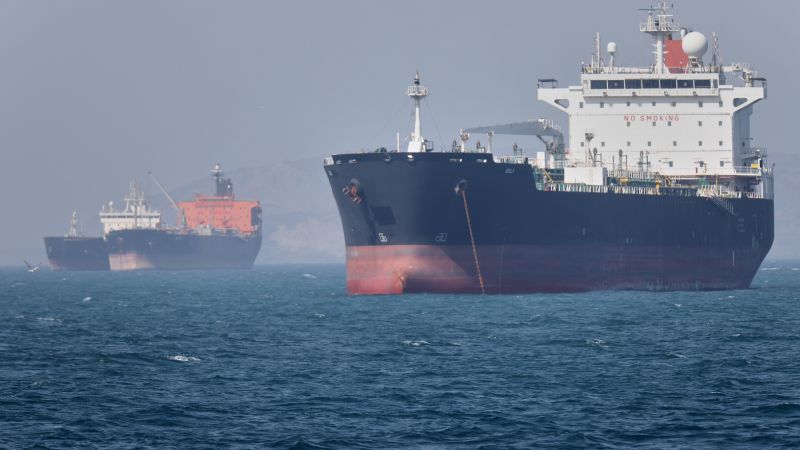
China’s ability to weather the economic fallout of the conflict has further bolstered its standing. The war disrupted energy markets, triggering a historic energy crisis that strained economies worldwide. However, Beijing’s substantial strategic oil reserves and rapid adoption of green technology and electric vehicles provided a buffer against the worst effects. While neighboring countries grappled with supply shortages and inflation, China’s energy infrastructure remained robust, allowing it to maintain economic stability and even grow in the face of global instability.
Beijing’s economic resilience has been a cornerstone of its global diplomacy. By continuing to purchase Iranian oil, the nation not only secured affordable energy supplies but also demonstrated its capacity to operate independently of Western sanctions. This dual strategy—economic cooperation and diplomatic flexibility—has positioned China as a reliable partner for nations seeking to avoid the consequences of US-led conflicts. As a result, its reputation as a responsible global actor has gained traction, even amid the chaos of the Middle East.
The Suez Analogy: A Bellwether for US Global Influence
The interim agreement has sparked discussions about the United States’ place in the world order. Some analysts have drawn parallels to the 1956 Suez Crisis, a pivotal moment in British history when the empire’s grip on the region weakened, signaling its decline as a global superpower. In a recent opinion piece in *Global Times*, Sun Degang, director of Fudan University’s Center for Middle Eastern Studies, posed a provocative question: “Is the scene that cast a shadow over the British Empire during the Suez crisis now being replayed for the United States in the Strait of Hormuz?”
“Since the end of the Cold War, the United States has become the world’s ‘sole superpower,’” Sun wrote. “This time, however, US military power did not prove as overwhelmingly powerful as Washington had imagined.”
Sun’s argument reflects a broader critique of American hegemony. The conflict’s resolution, achieved with minimal US military intervention, has underscored the nation’s reliance on alliances and the challenges of maintaining global dominance. For China, this outcome reinforces its vision of a multipolar world, where economic strength and diplomatic acumen outweigh military might. As the US and Iran move toward finalizing the agreement, the question remains: what has the United States gained from a war that has drained resources and tested its international credibility?
China’s Quiet Triumph: A Shift in Geopolitical Dynamics
The deal’s success has been attributed in part to China’s behind-the-scenes diplomacy. While the formal memorandum of understanding was signed on Wednesday, the path to this agreement likely involved informal channels and strategic persuasion. This approach highlights China’s ability to shape outcomes without overt confrontation, a hallmark of its foreign policy philosophy. By maintaining open lines of communication with all parties, Beijing has positioned itself as a broker of peace rather than a challenger to US interests.
Observers note that China’s influence has grown not through confrontation, but through patience and pragmatism. The nation’s emphasis on long-term stability over short-term victories has resonated with countries weary of US-led interventions. Meanwhile, the Iranian regime’s survival has provided China with a tangible ally in the region, aligning with its broader goal of countering Western dominance. As the conflict enters a new phase, the stage is set for China to solidify its role as a global power broker, while the United States reassesses its geopolitical strategy.
With the interim agreement in place, the focus now turns to the next steps in negotiations. The 60-day window to finalize terms offers a critical opportunity for both sides to address deeper issues, such as Iran’s nuclear program and sanctions relief. For China, this phase represents a chance to expand its influence further, leveraging its economic clout and diplomatic credibility. The nation’s ability to remain neutral in the conflict has not only preserved its relationships but also elevated its status as a key player in shaping the future of Middle Eastern politics.
As the world watches the evolving dynamics of the US-Iran deal, China’s strategic gains are becoming increasingly clear. From economic stability to geopolitical positioning, the nation has emerged as a quiet but powerful force in the conflict. Its success in balancing criticism and support for Iran, while reinforcing its own interests, demonstrates a foreign policy that prioritizes long-term gains over immediate confrontation. In doing so, China has not only secured its place in the global order but also challenged the notion of US supremacy, offering an alternative vision of international leadership.