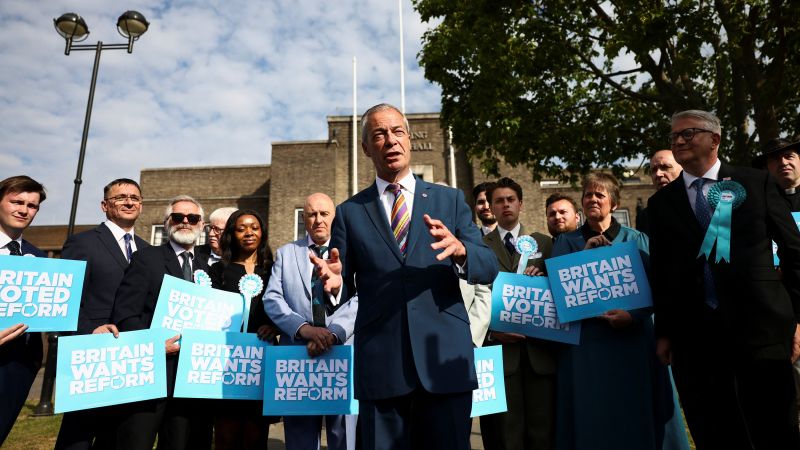
Brexit Architect Farage Faces Growing Scrutiny Over Financial Allegations
Sandego.net – Political figures often face scrutiny, but Nigel Farage has long been perceived as impervious to scandal, much like his US counterpart, Donald Trump. His blunt, assertive communication style has historically shielded him from criticism, even as he rose to prominence as a leading voice of Britain’s far-right movement, a key figure in the Brexit campaign, and a vocal opponent of immigration. However, recent weeks have seen a shift in his fortunes as questions about his financial dealings begin to erode his once-unshakable reputation.
The Rise and Challenges of Reform UK
Reform UK, Farage’s political party, has dominated national opinion polls, suggesting it holds significant sway over British politics despite its small number of members in Parliament—only eight out of 650 lawmakers. This influence was bolstered by its strong showing in May’s local elections, which, while not altering the national government’s composition, offered a glimpse into public sentiment. Yet, translating these electoral gains into broader parliamentary representation has proven difficult. The party has recently suffered setbacks, losing two by-elections to the Green Party and Labour, respectively. These losses have raised concerns about its ability to maintain momentum, especially as a new political force, the Restore Britain party, gains traction on the right flank.
Farage’s personal brand remains central to Reform UK’s success, making his financial controversies particularly impactful. The recent allegations against him have intensified scrutiny, with his income from non-parliamentary sources becoming a focal point. According to public records, Farage has declared over £2 million in additional earnings since entering Parliament in 2024—a sum exceeding 20 times his basic salary. This figure places him second only to former Prime Minister Rishi Sunak in terms of non-parliamentary income within the current government. Such revelations have prompted questions about transparency and potential conflicts of interest.
Funding Scandals and Legal Implications
The latest wave of scrutiny began with a report by *The Sunday Times* on Sunday, which alleged that Farage violated parliamentary rules by failing to disclose payments from George Cottrell, a crypto-financier and gambler. Cottrell, who was indicted in 2016 for conspiracy to commit money laundering, wire fraud, blackmail, and extortion, and served eight months in prison, is said to have provided gifts and financial support to Farage. The report claims these payments included funding for staff to enhance Farage’s social media presence and cover his security expenses. This accusation comes three months after *The Guardian* revealed Farage received a £5 million gift from Christopher Harborne, a crypto-billionaire, just before announcing his candidacy in the 2024 general election.
Farage’s allies have defended the situation, arguing that the gifts fall under “personal” expenses, which typically include gifts from family members. Robert Jenrick, Reform UK’s Treasury spokesman, told the BBC that no rules were broken, emphasizing that the payments were not related to parliamentary work. He stated that Cottrell’s contributions to Farage’s London townhouse and staff expenses predated his election as an MP, making them eligible for the personal category. A spokesman for Farage echoed this defense to CNN, calling the allegations “baseless and contrived.”
The Weight of Public Perception
Despite these efforts, the controversy has taken a toll on Farage’s public image. Unlike past scandals, such as accusations of racism from his school days, which failed to gain lasting traction, these financial allegations have sparked widespread debate. Viral interviews of Farage attempting to downplay the issue have highlighted his frustration, with him insisting that “no one cares” about the payments. This lack of apologetic tone has fueled public skepticism, particularly as the party’s performance in recent elections has faltered.
The parliamentary standards watchdog, which is investigating Farage, has yet to release its findings. However, the implications of a ruling against him could be severe. A suspension of more than 10 days might trigger a by-election, forcing Reform UK to defend its seat in a critical moment. For a party that has relied heavily on Farage’s leadership, such a development could undermine its electoral prospects. Yet, even as the allegations grow, the party’s poll numbers remain strong, suggesting public support for Farage’s policies has not yet wavered.
Context and Political Climate
Farage’s financial dealings have occurred against a backdrop of political uncertainty in the UK. While his party’s local election successes hinted at a growing base of support, the inability to secure more parliamentary seats has left Reform UK in a precarious position. The emergence of the Restore Britain party, led by former Reform MP Rupert Lowe, further complicates the landscape, offering a potential challenge to Farage’s dominance on the right. This internal competition could分流 the party’s energy, especially if voters perceive Reform UK as less coherent than its rivals.
At the same time, the financial allegations have raised broader questions about the transparency of political funding in the UK. MPs are allowed to hold second jobs, but the rules require them to disclose payments that could influence their decisions. Farage’s situation has become a case study in how personal finances can intertwine with political power. His £2 million in additional income has drawn comparisons to other high-profile figures, but it also underscores the unique dynamics of his role as both a party leader and a public figure.
Legacy and Future Prospects
Farage has weathered previous controversies, including accusations of xenophobia and policy inconsistencies. However, the current financial allegations feel different, with their timing coinciding with his peak political influence. The watchdog’s investigation adds an official layer to the scrutiny, potentially setting a precedent for how other MPs are held accountable. If the findings confirm his violations, it could mark a turning point in his career, forcing him to confront the consequences of his actions.
For now, Reform UK remains in the lead in national polls, but the financial saga could disrupt that trend. The party’s ability to navigate this crisis will depend on its messaging and Farage’s continued support. As the investigation unfolds, the public will be watching closely to see whether the allegations will tarnish his reputation or simply add to the narrative of a leader who thrives in the spotlight. The outcome may determine not only Farage’s fate but also the future of Reform UK in the evolving political arena.
Ultimately, the scrutiny reflects a growing appetite for accountability in British politics. While Farage has built a career on defying conventions, his financial dealings now serve as a test of his ability to maintain that image. Whether the allegations will solidify his position or unravel it remains to be seen, but the process has already reshaped the conversation around his leadership and the party’s integrity.