A Car Salesman’s Quiet Path to the Belgian Royal Family
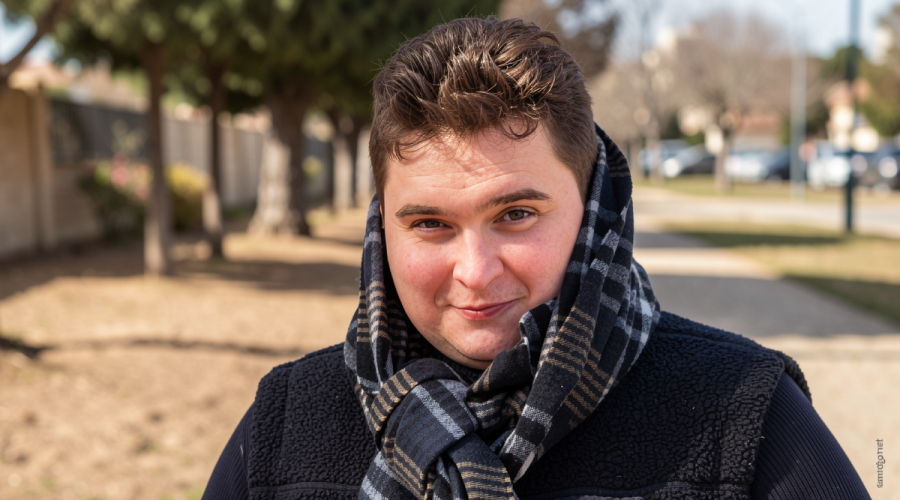
Sandego.net – In a small-town Belgian town hall, roughly six months ago, a 26-year-old man walked through a door and emerged with a title most people spend lifetimes dreaming about. Clément Vandenkerckhove, who sells cars for a living, was formally acknowledged as the son of Prince Laurent — the younger brother of King Philippe and a figure who has long occupied a semi-public role in Belgium’s royal household. The ceremony was deliberately understated, but its consequences are anything but minor: Vandenkerckhove now carries the rank of prince and holds a legal claim to his father’s private fortune.
The revelation, which surfaced publicly this week, caps a story that has unfolded in stages over more than a decade. Vandenkerckhove’s mother, a Belgian singer known professionally as Wendy Van Wanten but born Iris Vandenkerckhove, kept the identity of her son’s father a closely guarded secret until her child reached his sixteenth birthday. That disclosure, made a decade ago, set in motion a chain of events that ultimately led to a hospital visit, a genetic confirmation, and a civil-registry filing that placed the young man squarely within the lineage of the House of Saxe-Coburg.
From a Paris Fashion Show to a Royal Paternity
The origins of the relationship stretch back to the 1990s, when the singer and the prince crossed paths at a fashion event in Paris. Their romance was brief and, by all accounts, ended without producing any formal acknowledgment of offspring. Speculation has circulated for years that Laurent’s own father — the former king, now 92 — may have viewed the liaison with disapproval, though no official statement has ever confirmed or denied that suspicion. The couple never married, and the singer raised their child alone under her own family name.
Vandenkerckhove was born in August 2000. For sixteen years, he grew up knowing nothing about his paternal lineage. The turning point came when his mother finally told him the truth. Four years after that conversation, he reached out to Prince Laurent to relay what he had learned. Laurent agreed to a DNA test, and the two men went to a hospital together for the procedure.
“We went to the hospital together and I remember him saying, ‘I’ll go first so you’re feeling at ease,'” Vandenkerckhove recalled in a documentary broadcast on Belgian television network VTM last September.
Once the genetic results confirmed paternity, the young man described what followed as a period of “open and honest conversations” with his newly identified father. The relationship, however, remained private until the civil-registry paperwork was completed and the town hall ceremony took place.
What the Title Actually Grants — and What It Does Not
The legal recognition carries real financial weight. By registering his paternity with Belgium’s civil registry, Prince Laurent has given Vandenkerckhove equal inheritance rights to his private estate alongside three other children: Princess Louise, 20; Prince Nicolas, 20; and Prince Aymeric, 19. Those three are the offspring of Laurent’s marriage to Princess Claire in 2003, making Vandenkerckhove their half-sibling.
What the title does not confer, however, is a place in the line of succession. Vandenkerckhove has no claim to the Belgian throne, receives no royal allowance, and is under no obligation to perform official state duties. His status is that of a private heir within the Saxe-Coburg family, not a constitutional actor. In practical terms, his daily life — including his career in automotive sales — is unlikely to change overnight.
The Question of a Name
Belgian royal custom allows recognized children to adopt the family surname Saxe-Coburg. Vandenkerckhove has signaled that he may decline that option, preferring to keep the name his mother gave him. Speaking to the Flemish daily Het Nieuwsblad, he offered a clear explanation of his reasoning.
“I am proud of the name Vandenkerckhove,” he said. “If I were to sacrifice that family name, it would be a betrayal of everything my mother has done for me.”
The decision underscores a tension that runs through many late-recognized royal children: the pull between institutional identity and personal loyalty to the parent who raised them. Choosing to retain his mother’s surname is, in effect, a public declaration that his primary allegiance remains with the woman who raised him alone.
A Pattern in the Belgian Monarchy
The Vandenkerckhove case is not an isolated episode. Belgium’s royal family has a documented history of children born outside formal marriages eventually seeking — and sometimes winning — legal recognition. The most prominent example is Delphine Boël, now 58, who waged a years-long paternity suit against Laurent’s father, the former king. In 2020, after a protracted legal battle, he acknowledged that he had fathered her during an extramarital affair. Boël was granted the title of princess and now goes by Delphine de Saxe-Coburg.
That precedent set the stage, in a sense, for the current episode. Once the former king accepted a daughter into the family’s legal framework, the question of how other unacknowledged children might be handled became less abstract. Prince Laurent’s decision to register Vandenkerckhove’s paternity follows the same logic: a genetic fact, once established, can be formalized through civil procedure, and the state’s registry does not distinguish between children born within marriage and those born outside it.
For the Belgian public, the story carries a quiet irony. A man who spent his twenties selling cars in a provincial town now shares a surname’s shadow with one of Europe’s oldest dynasties. Yet by his own account, the most important name in his life remains the one his mother chose — the one that marks him not as a prince, but as her son.
Related Reading
Frequently Asked Questions
What is Belgian car salesman becomes prince after?
Belgian car salesman becomes prince after is the main topic of this guide. The article explains the context, practical details, and next steps readers should understand.
Why does Belgian car salesman becomes prince after matter?
Belgian car salesman becomes prince after matters because readers are looking for a useful answer, not just a short summary. Good content should match search intent and help them decide what to do next.