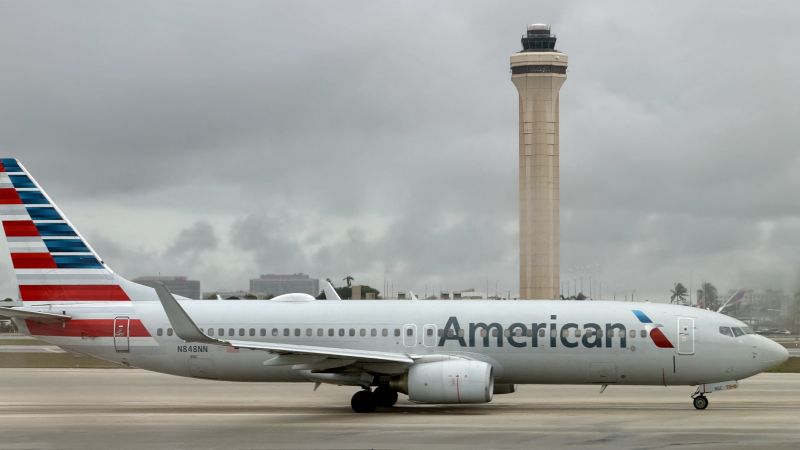
American Airlines Flight Aborts Takeoff in Miami Due to Runway Conflict
Sandego.net – American Airlines flight aborts takeoff in Miami — a pivotal moment occurred on Saturday evening when Flight 308, bound for Bermuda, had to cancel its departure from Miami International Airport. The incident unfolded as a business jet entered the active runway, prompting the crew to halt the takeoff process immediately. According to the airline, the event was a result of a communication breakdown, with the second aircraft’s unannounced movement creating a safety risk. The incident highlights the challenges of managing high-traffic runways and the importance of clear coordination between air traffic control and operators.
Communication Breakdown During the Runway Conflict
During the near-miss, NetJets Flight EJA434 crossed the runway without prior notification, leading to confusion between the pilot and air traffic control. Audio recordings from ATC.com reveal the exchange: “You just crossed an active runway,” the controller said, to which the pilot replied, “You just told me to cross the runway, sir.” This dialogue underscores the potential for miscommunication in high-pressure situations. The controller later clarified that they had instructed Amerijet 461, indicating a momentary lapse in clarity. While the exact cause of the business jet’s movement remains under investigation, the incident has raised concerns about procedural adherence and real-time monitoring.
Aviation safety experts point to the importance of precise communication during critical phases of flight. Runway incursions, where aircraft enter the path of another without clearance, are a recurring issue in air travel. The Miami event, though minor, serves as a reminder of the need for heightened awareness. NetJets, which operates the business jet, stated that the aircraft was under a third-party maintenance vendor’s control at the time. This detail adds complexity to the oversight responsibilities of such vendors, as their actions directly impact runway safety during takeoff and landing sequences.
Recent Safety Incidents and FAA Response
As the Fourth of July holiday approaches, this incident joins a string of aviation close calls that have drawn attention to safety protocols. Earlier that week, a United Airlines passenger jet narrowly avoided a drone collision while landing in New Jersey, further emphasizing the growing need for vigilance. The FAA, which oversees air traffic management in the U.S., has been contacted by CNN to comment on the Miami event and its implications for runway safety. Officials are likely to examine whether standard procedures were followed or if adjustments are necessary to prevent similar incidents.
American Airlines’ response to the event showcased their commitment to safety. A spokesperson noted that the crew acted swiftly and professionally, ensuring passenger safety during the unexpected halt. “The airline is reviewing the incident to determine if any procedural errors occurred,” the statement added. Flight 308 eventually departed after the runway was cleared, with no injuries reported. The incident has prompted renewed discussions about how third-party vendors and air traffic control can better synchronize operations, especially during peak travel periods.
Runway safety is a blend of technology and human oversight. Automated systems assist in monitoring runway usage, but human judgment remains critical during emergencies. The Miami event, while brief, illustrates how a single misstep can disrupt an entire flight schedule. Air traffic controllers and pilots must remain vigilant, particularly in environments where multiple aircraft are operating simultaneously. As investigations continue, the focus will likely shift toward improving communication and implementing additional safeguards to prevent such conflicts in the future.
“This incident highlights the delicate balance between operational efficiency and safety,” said a FAA analyst. “We are reviewing all available data to ensure protocols are up to standard.”