Video Footage Transforms Narrative in Venezuelan Man’s Federal Case
From Terrorist Allegations to Downgraded Charges
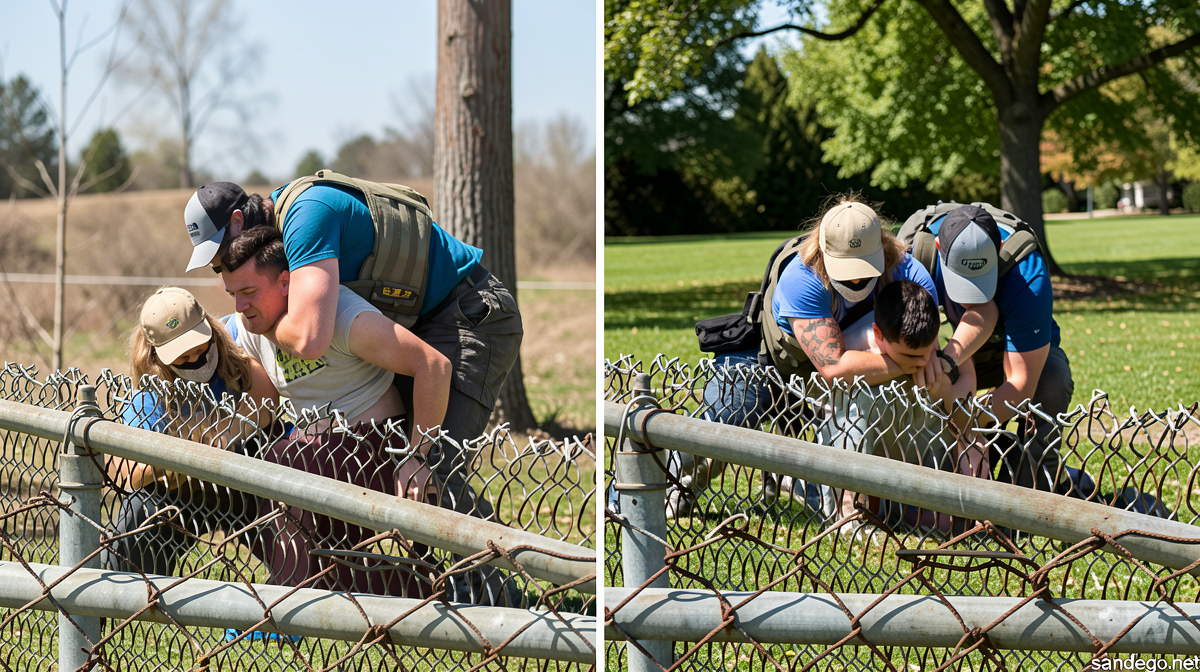
Sandego.net – When Gabriel Hurtado-Cariaco found himself in federal custody in Nebraska during the summer of 2025, government officials quickly assigned him dramatic labels. The Venezuelan delivery driver was characterized as “a criminal illegal alien,” “a known Tren de Aragua terrorist,” and someone who had allegedly slammed a federal agent’s head into pavement while choking her. However, this official version of events began to crumble when ordinary citizens captured cellphone footage that told a different story entirely.
These bystander recordings contradicted the initial portrayal of Hurtado-Cariaco as a dangerous immigrant and the responding officers as innocent victims. The visual evidence suggested a more nuanced encounter than what had been presented to the public and the courts.
Official Statements and Escalating Accusations
Then-Deputy Attorney General Todd Blanche issued a statement in June 2025 describing Hurtado-Cariaco as “a vicious Tren de Aragua gang member.” Blanche emphasized the government’s commitment to addressing threats from organized criminal groups: “Violent attacks from terrorists against those who serve our communities will be met with swift and decisive justice.”
At that time, Attorney General Pamela Bondi also weighed in on the situation, announcing that Hurtado-Cariaco faced an attempted murder charge. These high-profile statements helped cement the narrative that the government would later need to revise.
The Role of Video Evidence in Immigration Enforcement
For Hurtado-Cariaco’s legal team, this case represents a recurring theme in immigration enforcement. Federal Public Defender Richard McWilliams observed that video documentation frequently undermines official government accounts. “It certainly seems like a pattern to me,” McWilliams explained to CNN, pointing to multiple recent arrests where DHS narratives conflicted with available evidence. “If no one had recorded it, we’d be going to trial,” he added, highlighting how crucial such recordings prove to be when official stories remain flexible.
Hurtado-Cariaco, who entered the United States through parole as an asylum seeker in 2024 after leaving the Venezuelan military, faced serious accusations according to court records. The original complaint, submitted on the day of his apprehension, claimed he forcibly resisted arrest. Just one day later, an amended complaint from a Homeland Security Investigations special agent described the encounter differently, stating the defendant “violently threw himself” against the officer and caused her head to “smack harshly against the ground.” The agent further alleged that Hurtado-Cariaco placed the officer in a “chokehold” and continued the restraint “rather than simply flee the scene.”
Charges Evolve as Evidence Emerges
Unlike many cases that proceed to trial, Hurtado-Cariaco accepted a plea bargain and submitted himself to the court’s discretion during sentencing. Court documents and his attorney confirmed that he possessed no prior criminal history before entering his guilty plea.
The critical turning point came through cellphone videos that HSI agents viewed through social media platforms in mid-July 2025, several weeks following the arrest. Amy Donato, spokesperson for the Nebraska US Attorney’s Office, informed CNN that federal prosecutors did not possess these recordings when initial charges were filed. A federal agent subsequently obtained the footage after the indictment and delivered it to prosecutors. “Once we reviewed the videos … the charges were appropriately downgraded to assault,” Donato stated.
Four months after the videos surfaced, in November, federal prosecutors substituted the attempted murder count with what McWilliams described as an “equally fantastic” accusation of providing material support to a terrorist organization. Hurtado-Cariaco has consistently denied any connection to Tren de Aragua, which the United States officially designated as a foreign terrorist organization in February 2025. This terrorism-related charge carries a potential maximum sentence of twenty years in prison.
Sentencing and Uncertain Future
On July 2, following his guilty plea to a felony charge of forcibly resisting arrest while causing bodily injury to a federal officer, Hurtado-Cariaco received a sentence of fourteen months in prison. The presiding judge recommended that he receive credit for time already served.
Despite the sentencing, questions remain about his ultimate fate. McWilliams noted in a pre-sentencing court filing that “No one knows what will happen to Gabriel next.” His client currently faces an immigration detainer requesting that the Bureau of Prisons transfer him directly into Immigration and Customs Enforcement custody.
McWilliams reflected on how quickly Hurtado-Cariaco was branded with serious accusations. “Before he could even appear before a judge, he was called … a ‘criminal illegal alien,’ a member of a prison gang, a terrorist, and violent killer,” the attorney wrote. “That message – pushed by the most powerful government on earth – traveled halfway around the world,” even reaching Hurtado-Cariaco’s mother in Venezuela. On the day of his arrest, Hurtado-Cariaco was driving to register his vehicle, according to his attorney’s account of the circumstances.