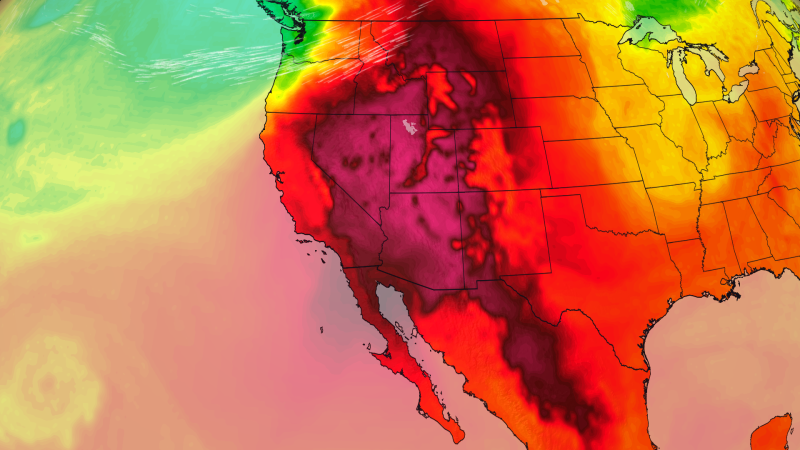
Record-Challenging Heat Dome Bakes Western U.S. This Weekend
Extreme Temperatures Set to Sweep Across Multiple States
Sandego.net – A record challenging heat dome is moving into position over the western United States, poised to deliver the season’s most intense heat so far. From California’s Pacific coastline to the Canadian border, tens of millions of people will face sweltering conditions as dozens of high temperature records are expected across at least twelve western states. Approximately forty million residents currently have heat alerts active as this atmospheric phenomenon takes hold.
Temperatures are forecast to climb ten to nearly twenty degrees above seasonal averages—exceeding even peak summer expectations—stretching from Southern California through the northern Rockies and Great Plains. This extreme heat pattern will last from Friday through Tuesday, creating prolonged discomfort for millions. Death Valley, California, stands to experience the most severe conditions, with forecasts calling for a staggering 126 degrees Fahrenheit, potentially marking the highest temperature of this particular heat wave.
Climate Science Points to Human Influence
This event represents the latest in a series of unprecedented heat waves impacting both the United States and Europe simultaneously during the current summer season. Scientific research consistently demonstrates that human-driven climate change increases the probability of such extreme heat events while also intensifying their severity and extending their duration. Additionally, researchers are actively investigating whether particularly robust and slow-moving heat domes are becoming more frequent as global temperatures continue rising.
The atmospheric mechanism behind heat domes functions similarly to a pot lid, effectively trapping and amplifying warm air beneath its structure. This particular heat dome is expected to extend higher into the atmosphere than usual configurations, enabling it to capture even greater volumes of air below, thereby elevating the potential ceiling for extreme surface temperatures.
Risk Levels and Regional Impacts
Over twelve million residents spanning the Southwest, Mountain West, and northern Great Plains face Level 4 of 4 “extreme” heat risk this Saturday and Sunday. An additional twelve million people experience Level 3 of 4 “major” heat risk during the same period. According to the National Weather Service, conditions at these levels pose serious threats to anyone lacking adequate access to cooling facilities and proper hydration.
Local forecasts highlight several cities poised to break records. Billings, Montana, anticipates reaching 106 degrees on Saturday, surpassing its previous August benchmark. This follows closely on the heels of the city recording its all-time high of 111 degrees merely two weeks prior. Salt Lake City may similarly establish an August record with a projected 106 degrees on Saturday, building upon its recent all-time high achievement earlier this month.
Health, Safety, and Environmental Concerns
Across California, where widespread highs will reach 100 to 110 degrees, beachgoers should exercise caution due to Hurricane Genevieve’s offshore presence generating substantial waves and rip currents along the southern coastline. The Los Angeles County Fire Department reported conducting approximately 2,000 ocean rescues during the previous week as millions flocked to regional beaches.
Phoenix, Tucson, and Las Vegas all expect temperatures to climb well beyond 110 degrees. Maricopa County, which encompasses Phoenix, has already documented forty confirmed heat-related fatalities this year according to county records, with summer’s remaining months still ahead. The National Weather Service statistics reveal that heat ranks as the most lethal form of extreme weather in the United States, producing a higher annual average death toll than tornadoes, hurricanes, and lightning combined.
Emergency room admissions for heat-related conditions spike dramatically on days classified as “major” or “extreme” risk. Overnight temperatures across the western region will remain nearly ten degrees above typical levels, providing minimal relief even after sunset. This absence of nighttime cooling proves particularly hazardous, as it restricts the body’s recovery window before daytime heat intensifies once more.
Water Resources and Wildfire Threats Intensify
Beyond immediate human health concerns, this heat wave exacerbates existing wildfire and water management challenges throughout the western United States, with particular severity affecting the already parched Colorado River Basin. Much of the river basin alongside higher elevations in central and Southern California experienced below-average snowfall during the recent winter season, leaving reservoirs at lower-than-usual levels heading into the hottest months.
“The combination of extreme daytime heat and elevated nighttime temperatures creates a dangerous situation where vulnerable populations have little opportunity to recover,” said a National Weather Service meteorologist. “We’re urging residents to check on elderly neighbors and those with pre-existing health conditions.”
Frequently Asked Questions
How long will the record challenging heat dome last?
The heat dome is expected to persist from Friday through Tuesday, with peak conditions occurring on Saturday and Sunday when the majority of residents face extreme or major heat risk levels.
Which areas are most at risk during this heat wave?
Over twelve million people in the Southwest, Mountain West, and northern Great Plains face Level 4 “extreme” heat risk. Cities like Phoenix, Las Vegas, and Salt Lake City are particularly vulnerable with forecasts exceeding 110 degrees.
What safety precautions should I take?
Stay hydrated, avoid outdoor activities during peak afternoon hours, check on elderly neighbors and those with health conditions, and seek air-conditioned spaces if possible. The National Weather Service emphasizes that heat is the most lethal extreme weather event in the U.S.
How does climate change affect heat domes?
Scientific research shows that human-driven climate change increases both the probability and severity of heat dome events while extending their duration. Researchers are also studying whether these slow-moving atmospheric patterns are becoming more frequent as global temperatures rise.
What impact will this have on water resources?
The Colorado River Basin and higher elevations in central and Southern California are already dealing with below-average snowfall from the recent winter. This heat wave will accelerate evaporation rates and increase water demand during an already strained period.