
Why Castro’s indictment could lead to war between the US and Cuba
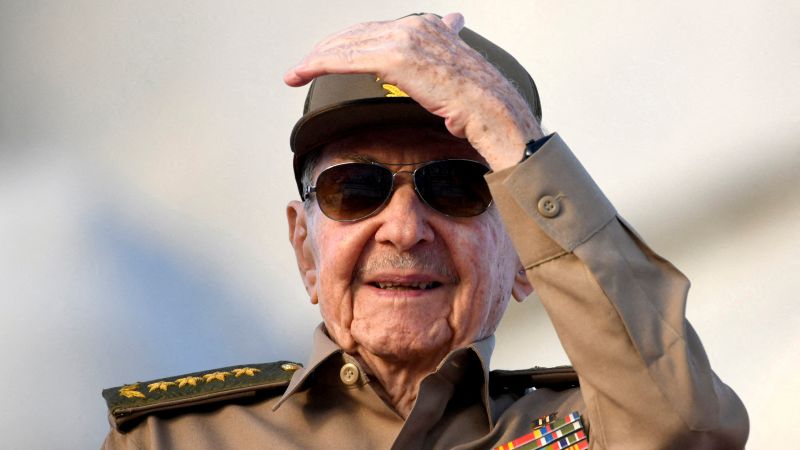
Castro’s Indictment Sparks New Tensions in US-Cuba Relations
Why Castro s indictment could lead – The recent federal indictment of former Cuban leader Raul Castro has ignited fears of renewed hostilities between the United States and Cuba, potentially ending any hope of a diplomatic resolution. Announced in Miami on Wednesday, the charges against Castro for his role in the 1996 shootdown of a civilian aircraft have rekindled fervor among the Cuban exile community, who view the move as a direct challenge to Havana’s leadership. This moment holds particular weight, as it coincides with the annual celebration of Cuban independence from Spain in Miami—a tradition that underscores the community’s deep-seated opposition to the Castro regime.
Historical Context and Exile Sentiment
The 1996 incident, in which Cuban forces shot down two planes operated by the Brothers to the Rescue, remains a defining trauma for many Cuban-Americans. The attack, which killed four Americans, is seen as an unresolved injustice by exiles, who have long demanded accountability. With the indictment of Castro, the community believes they have finally found leverage to push for a confrontation. “This is a milestone,” said one exile leader, emphasizing the symbolic power of targeting the man they consider the face of the revolution.
“Eventually the frustration on both sides could lead to conflict simply because Washington shuts down communication with the Cuban government through this indictment,” said former US diplomat Ricardo Zúñiga.
Zúñiga, a key negotiator during the Obama administration’s efforts to restore ties with Cuba, warned that the move might inadvertently isolate Havana. His remarks highlight a broader concern: that indicting Castro could undermine diplomatic channels, forcing the Cuban government into a defensive stance. While the exile community sees the charges as a necessary step, Cubans on the island remain steadfast in their support for the revolution, viewing Castro as an unshakable figure.
Political Dynamics and the Fate of the Castro Regime
For Cubans living under the current regime, the prospect of Castro’s indictment is met with skepticism. Many argue that his leadership has endured for decades, and the idea of him being removed from power seems distant. “He is the living embodiment of the revolution,” former US diplomat Ricardo Zúñiga told CNN, underscoring the regime’s resilience. However, the indictment has also been interpreted as a signal of impending change, with some believing the Cuban government may be compelled to act preemptively.
The Trump administration’s approach to Cuba has been marked by a blend of pressure and strategic flexibility. While the president has emphasized the need for regime change, he has not entirely dismissed the possibility of a deal. “I can make a deal whether you change the regime or not,” Trump said Tuesday, highlighting his belief that even a struggling government can be persuaded through economic incentives. Yet, this stance contrasts with his actions in Venezuela and Iran, where negotiations often gave way to military strikes.
Economic Strains and Protests
Cuba’s economy, already reeling from years of sanctions, faces mounting pressure. The Trump administration’s oil blockade and restrictions on foreign companies have crippled the island’s ability to import essential goods, leading to widespread shortages and frequent power outages. These conditions have fueled scattered anti-government protests, a development that Cuban officials have traditionally suppressed with force. However, the current unrest signals a growing discontent that could complicate any attempt at a peaceful resolution.
CIA Director John Ratcliffe’s recent visit to Cuba served as a clear warning to Havana. US officials indicated that the trip was designed to signal the urgency of the situation, with the government’s window for concessions narrowing rapidly. This pressure is compounded by new economic sanctions announced by the State Department, which target top Cuban officials. Despite these measures, Cuban President Miguel Díaz-Canel has dismissed the accusations, stating that “no Cuban officials had property to protect under US jurisdiction.” His defiance reflects the regime’s determination to resist external pressure.
Historical Precedents and Strategic Risks
The indictment of Castro echoes past confrontations between the US and Cuba, particularly the 1996 shootdown that remains a flashpoint in bilateral relations. While the Cuban government has historically defended its actions, the new charges may force it into a more aggressive posture. Unlike Venezuela’s Nicolás Maduro, who faced a swift US military intervention, Castro’s loyalists are expected to resist with greater tenacity. The regime’s slogan—“Fatherland or death!”—has become a rallying cry, and with the current economic crisis, the Cuban government may see armed resistance as the only viable option.
Some analysts argue that the indictment could be a calculated move to weaken the Cuban government’s resolve. By targeting Castro, the US aims to split the regime’s leadership and create internal fractures. However, this strategy risks escalating tensions, as the Cuban military and political elite are likely to unite in opposition. The 1996 event, which saw Castro’s regime retaliate with military force, serves as a grim reminder of the potential for conflict.
Congresswoman Salazar’s Bold Declaration
With the political climate in Miami charged with renewed activism, Cuban-American lawmakers have taken a firm stance. Congresswoman Maria Elivra Salazar (R-FL) declared on social media that “the time of the Castros is over,” framing the indictment as a turning point in Cuba’s history. Her words resonate with the exile community, which has long viewed the Castros as symbols of oppression. Yet, for Cubans on the island, the charges may be seen as a political ploy to distract from domestic challenges.
Despite the rhetoric, the Cuban government remains focused on survival. The economic crisis has forced it to prioritize resource allocation, even as it faces international pressure. The indictment of Castro, while significant, may not be enough to destabilize the regime. Instead, it could galvanize support for the leadership, especially as the population grapples with daily hardships. For the US, the question remains: will the indictment succeed in breaking the deadlock, or will it instead trigger a full-scale conflict?
As the situation evolves, the balance of power between the two nations grows increasingly fragile. The indictment of Raul Castro represents more than a legal action—it is a geopolitical gambit that could redefine the relationship between the US and Cuba. Whether it leads to war or a fragile peace depends on how both sides navigate the escalating tensions. For now, the world watches as Miami exiles and Havana loyalists prepare for the next chapter in a decades-old struggle.
