
Richard Glossip goes free, but his three-decade murder case goes on
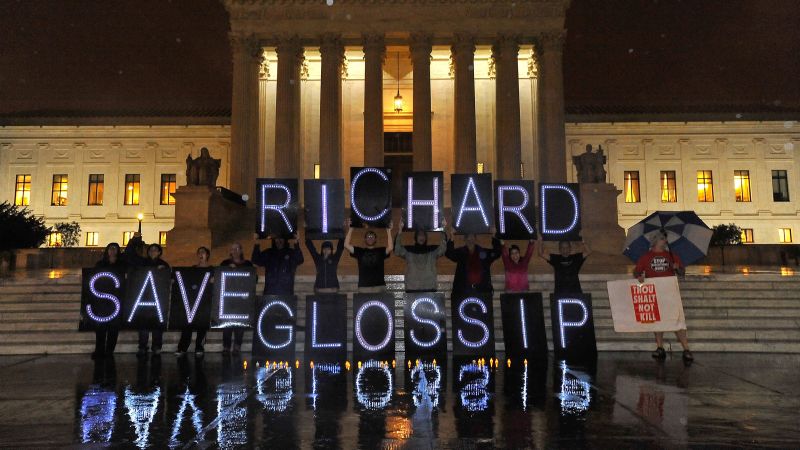
Richard Glossip Gains Freedom, Yet Legal Saga Continues
Richard Glossip goes free but his three – Richard Glossip, a man who spent nearly three decades on Oklahoma’s death row, has finally been released from custody. The former motel manager, convicted of murdering his employer Barry Van Treese, walked out of Oklahoma County Jail on Thursday for the first time since 1997. His release was made possible by a $50,000 bond, a portion of which was paid by Kim Kardashian, a prominent criminal reform advocate, through her publicist. The payment marked a pivotal moment in a case that has spanned over 29 years, leaving both Glossip and his supporters with mixed emotions.
A Judge’s Decision and a 2023 Legal Shift
Thursday’s ruling by Judge Natalie Mai set Glossip’s bond, a move that came after a series of legal battles and repeated doubts about his guilt. The judge cited a 2023 statement from Oklahoma’s attorney general, which highlighted reasonable doubt in the prosecution’s case. “I cannot deny bail to Glossip,” Mai stated, emphasizing that the evidence had weakened enough to warrant his temporary release. However, this decision does not end the case. Prosecutors have vowed to retry Glossip for the murder that took place on January 7, 1997, a crime they believe he committed despite his claims of innocence.
“It’s overwhelming, but it’s amazing at the same time,” Glossip said outside the jail, his gray hair fluttering in the wind. His words reflected the bittersweet nature of his situation—a man who has spent over two decades in limbo, now granted a sliver of freedom but still bound by legal obligations.
The Unresolved Truth Behind the Murder
At the heart of the case is Justin Sneed, a maintenance worker who allegedly killed Van Treese with a baseball bat. While Sneed has never recanted his testimony, his account has been a source of frustration for Glossip’s advocates. “We know who the killer is, yet someone else is on death row,” said attorney Stan Perry, who led an independent review of the case. This contradiction has fueled ongoing debates about the fairness of Glossip’s conviction.
According to court records, Sneed was allowed to reside at the motel under Glossip’s supervision in exchange for his labor. At the time of the murder, Van Treese appeared to suspect Glossip of financial misconduct. Sneed later testified that Glossip had promised him $10,000 to carry out the killing, a plea deal that spared Sneed’s life. Glossip, however, claimed he only learned of the murder after it occurred, and he did not report the incident to authorities. Sneed, now 48, is serving a life sentence without parole, a fate Glossip was offered but refused to accept.
“Do I have the choice of re-canting my testimony at anytime during my life, or anything like that?” Sneed wrote in a handwritten note from prison, a document presented by Glossip’s legal team as evidence of his wavering testimony.
Twice Convicted, Three Times Near Execution
Van Treese’s death in 1997 led to Glossip’s first conviction, which was overturned in 2001 by the Oklahoma Court of Criminal Appeals. The court found the evidence supporting Sneed’s testimony “extremely weak” and criticized the defense attorneys for their ineffectiveness. A new trial followed, resulting in a second conviction and a death sentence. Glossip’s path to execution was again delayed when his legal team challenged the verdict, arguing that the evidence was insufficient.
Three years later, Glossip was retried and found guilty once more, this time of first-degree murder. His sentence was the death penalty, and he became a symbol of the justice system’s complexities. Over the years, he narrowly avoided the execution chamber on multiple occasions. In 2014, for instance, his fate was again in question when fellow death row inmate Clayton Lockett was executed in a botched procedure that lasted 43 minutes. Lockett’s agony during the process—wringing on the gurney, his body writhing—sparked renewed calls for reform and raised questions about the reliability of Oklahoma’s execution methods.
The Weight of Doubt and Public Pressure
Glossip’s case has drawn significant attention, not just for its legal intricacies but for the emotional toll it has taken on him. “It’s still scary, it will always be scary until they finally open this door and let me go,” he told CNN in 2023. His supporters have long argued that the state’s justice system failed to secure a fair trial, pointing to the lack of conclusive evidence linking him to the murder. Meanwhile, the media and public figures like Kim Kardashian have played a role in bringing his story to light, highlighting the intersection of celebrity influence and criminal justice reform.
The bond payment, while a financial burden for the state, also served as a morale boost for Glossip. His temporary release allows him to reunite with family and rebuild his life, but it also underscores the fragility of his freedom. “This is just a temporary victory,” his legal team acknowledged, noting that prosecutors are preparing for a third trial. The state’s position remains firm: they believe Glossip’s guilt is irrefutable, and his legal team’s efforts to prove otherwise have so far fallen short.
A Legacy of Legal Battles and Uncertainty
Glossip’s journey has become a case study in the persistence of the criminal justice system. From 1997 to 2023, his conviction was challenged at every stage, from appeals to re-examinations of evidence. The 2023 attorney general’s statement, which declared reasonable doubt, was a critical turning point. Yet, it also left the door open for further litigation. “The case is far from resolved,” said Perry, who has represented Glossip since the early stages of his legal fight. “There are still questions about who committed the crime and whether the evidence was properly evaluated.”
The execution of Charles Warner in 2015 also highlighted the state’s procedural flaws. Warner, convicted of raping and murdering a child, had described the experience of being put to death as “It feels like acid” and “my body is on fire,” according to a journalist witness. An autopsy later revealed that an incorrect drug was used in his lethal injection, casting doubt on the reliability of the state’s execution protocols. These incidents have galvanized support for Glossip, reinforcing arguments that the system is flawed and that his case deserves a fresh start.
The Road Ahead: A Third Trial and More Appeals
With his release, Glossip now faces the challenge of surviving the next phase of his legal saga. Prosecutors plan to retry him for the murder of Van Treese, arguing that the new evidence—while compelling—does not conclusively prove Sneed’s guilt or Glossip’s innocence. The case may yet reach the Supreme Court, where the constitutionality of Oklahoma’s execution procedures could be debated. “This is a battle that has been fought over decades,” said a legal analyst. “It’s not just about who killed Barry Van Treese; it’s about the fairness of the process that led to Glossip’s conviction.”
For now, Glossip is under house arrest, wearing an ankle monitor and adhering to a strict curfew. His temporary freedom is a small victory in a long struggle, but the shadow of his past remains. “I’m not free yet,” he said, echoing the sentiment of many who believe his fate is still hanging in the balance. The legal team continues to work on strengthening their case, while the state prepares to present its arguments once again. As the third trial looms, the question remains: will justice finally prevail, or will another chapter of uncertainty unfold?
Despite his release, Glossip’s story is far from over. The bond payment by Kim Kardashian and her team represents a significant investment in his cause, but the legal system’s willingness to retry him underscores the depth of the controversy. With nine execution dates already passed and a new trial on the horizon, the fight for his life continues. Whether this will lead to his ultimate acquittal or another conviction, the case remains a testament to the enduring power of doubt and the
