
Rebels jeered Putin’s troops out of a key African town. Now his regional grip is slipping away
Russian Forces Retreat from Kidal, Marking a Shift in Africa’s Strategic Landscape
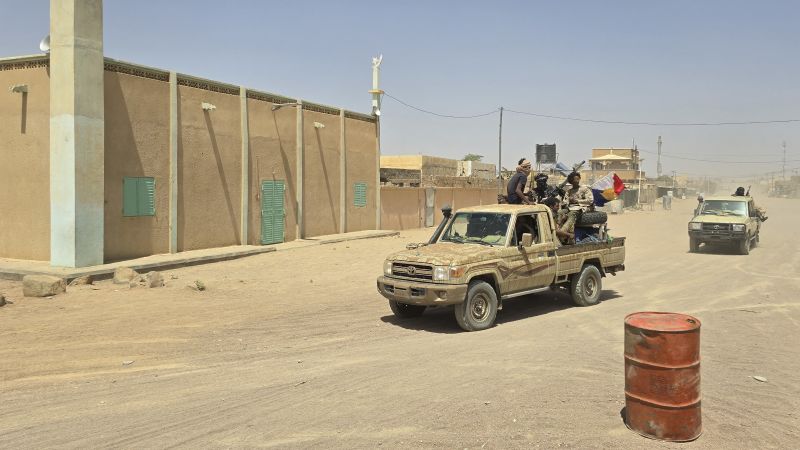
Rebels jeered Putin s troops out – After a month-long withdrawal from the strategically vital hub of Kidal in northern Mali, Russian troops now face a stark reality: their influence in the region is diminishing. The retreat, which unfolded under the scornful gaze of the very rebels they were dispatched to suppress, symbolizes a significant setback for Moscow’s ambitions to solidify its role as a security partner in Africa’s Sahel region. Analysts describe the departure as a blow to Russia’s reputation, highlighting the growing challenges it encounters in maintaining stability for its allies in the area.
Kidal, a town roughly 1,000 miles northeast of Mali’s capital, Bamako, had been under the control of the Malian army and Russian mercenaries since 2023. This victory marked the culmination of nearly a decade of rebel rule, which was upended by the combined efforts of Tuareg separatists and militant groups affiliated with al Qaeda. The recent attacks on April 25, hailed as the most daring in over a decade, triggered a cascade of events that plunged Mali into deeper turmoil. These coordinated assaults led to the capture of multiple military installations, showcasing the effectiveness of the rebels’ alliance and the vulnerability of Western-backed security structures in the region.
“This town is now free,” declared the Azawad Liberation Front (FLA) on social media, signaling the formal end of Russian military dominance in Kidal. The statement was accompanied by video footage of Tuareg fighters jeering at departing Russian vehicles, a visual testament to the shifting power dynamics. The footage, which spread rapidly online, captured the moment when the African town, once a symbol of Moscow’s reach, became a site of public defiance against its occupiers.
The Africa Corps, Russia’s military force now operating under the Defense Ministry, negotiated a safe exit for its personnel, a move that underscored the limitations of Russian commitment in the Sahel. This development echoes recent missteps in securing regimes in Syria, Venezuela, and Iran, where Moscow’s support has not prevented internal collapses. The evacuation from Kidal has raised questions about the sustainability of Russia’s military interventions, particularly in regions where anti-Western sentiment is strong and local dynamics are complex.
The Sahel, a vast expanse of more than 3,000 miles stretching across Africa just below the Sahara Desert, includes nations such as Senegal, Mauritania, Mali, Burkina Faso, Niger, Nigeria, Chad, Sudan, and The Gambia. These countries, often plagued by instability and insurgent activity, have become focal points for Russia’s expanding influence. Western powers, which had previously led counterterrorism operations in the area, were compelled to withdraw their forces between 2022 and last year due to political pressures and local resistance. This vacuum allowed Russia to step in, offering security support without the stringent human rights conditions that Western allies often impose.
Mali, a former French colony, has long been a hotspot for insurgency. Following a series of military coups in 2020 and 2021, the country is now governed by a junta that has turned to Moscow for protection. This decision followed the severing of ties with French military forces and United Nations peacekeepers, who had been central to Mali’s security framework. However, the current situation reveals the fragility of this arrangement. The loss of Kidal has exposed the limitations of Russian military presence, which, while significant, may not be enough to counter the persistent threat from militant groups.
The assassination of Malian Defense Minister Sadio Camara on April 26 further intensified the crisis. A Russian-trained officer and a key figure in the junta’s alliance with Moscow, Camara was killed in a suicide vehicle bombing near his home in Bamako. The attack was attributed to Jama’at Nusrat al-Islam al-Muslimin (JNIM), a group linked to al Qaeda. JNIM’s claim of responsibility not only marked a personal loss for the regime but also highlighted the broader challenges it faces. The group has since threatened to encircle Bamako and mobilize a popular uprising against the junta, advocating for the implementation of Sharia law. This resurgence of militant activity has cast doubt on the effectiveness of Russian support in neutralizing such threats.
Russia’s military involvement in Africa began with the Wagner Group, which had long operated in countries like Libya, Mozambique, and the Central African Republic (CAR). In CAR, one of the world’s poorest nations, Wagner’s influence has remained entrenched since 2018. Investigations by CNN have revealed that companies tied to the group’s leader, Yevgeny Prigozhin—now deceased—secured mining rights to extract gold and diamonds. While the CAR government credits “Russian instructors” with bolstering its military capabilities, the country’s security situation remains precarious. Armed rebels continue to control parts of the nation, and the progress made through Russian collaboration is seen as fragile.
The transition from Wagner Group to the Africa Corps has not stemmed the rising insecurity in the Sahel. Despite the rebranding, Russia’s approach remains transactional, prioritizing security over long-term strategic gains. The 2023 Russia–Africa Summit in St. Petersburg underscored this trend, as Putin announced military cooperation agreements with over 40 African nations. This summit marked a pivotal moment in Russia’s global outreach, but the underlying pattern of leveraging military strength for resource access has persisted. The Africa Corps, while a new chapter in this narrative, continues to operate within the same framework of mutual benefit.
As Western influence in Africa wanes, many leaders are turning to Moscow for stability and security. The Malian junta, for instance, has become a case study in this shift, relying on Russian mercenaries to counter internal and external threats. However, the events in Kidal and the subsequent attacks have exposed the risks of such dependencies. The Russian model, which blends military assistance with economic incentives, has been both effective and precarious. With the Sahel’s militant groups now challenging this dynamic, the future of Russian dominance in the region remains uncertain. The town of Kidal, once a symbol of Moscow’s success, now stands as a reminder of the evolving nature of power in Africa’s complex geopolitical landscape.
