
The chef with 18 Michelin stars who’s still largely undiscovered outside of France
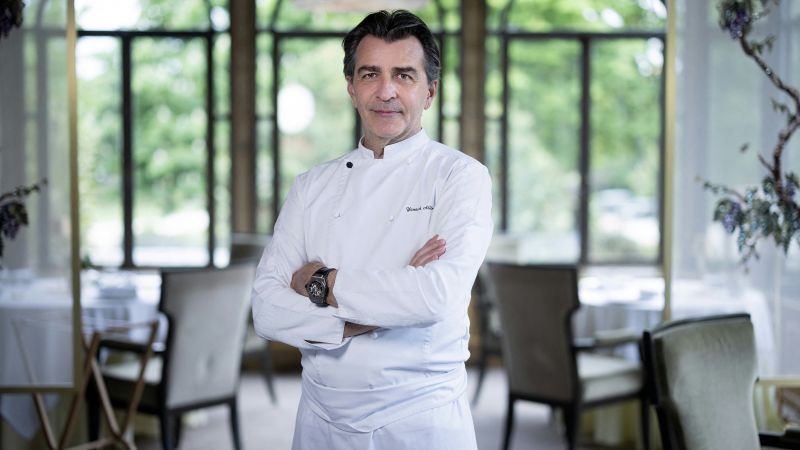
Yannick Alléno: The 18-Michelin-Star Chef Still Unfamiliar Abroad
The chef with 18 Michelin stars – Yannick Alléno, the chef with 18 Michelin stars, has carved a unique niche in the culinary world, celebrated for his mastery of French cuisine. Despite his towering reputation within France, his global recognition remains relatively limited. Alléno’s innovative approach to classic techniques, particularly his redefinition of sauce-making, has earned him acclaim as one of the country’s most revered culinary figures. Yet, his name is still largely unknown outside of France, a testament to the power of traditional gastronomic narratives that dominate international awareness.
Paris as a Culinary Foundation
At the heart of Alléno’s legacy is the Pavillon Ledoyen, a historic Parisian venue that has served as a cultural landmark since the 19th century. The two-story Neoclassical building, once a backdrop for secret meetings between Napoleon and Joséphine, now showcases the chef’s vision. Alléno took the helm in 2014, transforming the space into a symbol of refined French dining. His flagship restaurant, Alléno Paris, opened just seven months prior and quickly garnered a three-star Michelin rating, reflecting his ability to blend heritage with contemporary artistry.
The Pavillon Ledoyen’s transformation under Alléno’s leadership highlights his dedication to elevating classic French flavors. While he inherited the three-star status from Christian Le Squer, his own tenure has redefined the restaurant’s identity. By focusing on the meticulous craft of sauces, Alléno has bridged the gap between tradition and innovation, offering diners a fresh yet authentic experience. This balance of respect for the past and bold experimentation is central to his success within France.
A Strategic Global Reach
Alléno’s culinary influence has expanded beyond Paris, with restaurants in Monaco, Dubai, the UK, Japan, and Qatar. Each location reflects his artistic philosophy, yet his international visibility remains modest. The Michelin-starred breakfast menu at Pavyllon London, part of his global network, underscores his commitment to versatility. However, the chef’s name is still under the radar for many outside France, a paradox that highlights the challenge of breaking through established culinary traditions.
Though his global ventures are impressive, Alléno’s brand remains deeply rooted in French culture. His work at the Pavillon Ledoyen and other Parisian establishments demonstrates this focus. The chef’s ability to adapt his style across diverse settings has earned him a place among the most starred figures in the world of gastronomy. Yet, his international acclaim lags behind the recognition of chefs like Alain Ducasse, who have broader global reach.
Reviving the Art of Sauce-Making
Alléno’s reinvention of sauces has redefined French culinary standards. In the 19th century, the Saucier was a revered role in the kitchen, but the rise of nouvelle cuisine diminished its prominence. By employing advanced methods such as fermentation and cryoconcentration, Alléno has revived this craft. His technique of “extractions” transforms ingredients into concentrated essences, creating sauces that are both precise and expressive. This approach not only honors tradition but also pushes the boundaries of modern gastronomy.
“The stars are a proof of concept,” Alléno explains, emphasizing that they validate his vision for a contemporary French cuisine. His philosophy of using sauces as the language of flavor has influenced kitchens worldwide. Even as his restaurants expand globally, his core identity as the chef with 18 Michelin stars remains anchored in France, where he continues to set the benchmark for culinary excellence.
The Cost of Culinary Perfection
Excellence in dining comes with a price, and Alléno’s work reflects this. Meals at the Pavillon Ledoyen, housed in a heritage-listed space, often exceed 330 euros, highlighting his commitment to quality and ambiance. His smaller ventures, like L’Abysse Paris and Pavyllon Paris, maintain this standard, ensuring that every aspect of the experience aligns with his vision. While the cost may deter some, it has reinforced his brand’s exclusivity and prestige.
Earlier this year, Alléno’s restaurant at 30 Montaigne, Monsieur Dior, achieved a historic milestone by earning its first Michelin star. This addition brought his total to 18, placing him among the most decorated chefs globally. The achievement underscores his ability to translate his signature style into diverse settings, from high-end Parisian establishments to international ventures. Yet, his continued focus on France ensures that his legacy remains deeply tied to the nation’s culinary heritage.
