Why is baseball having a gay meltdown?
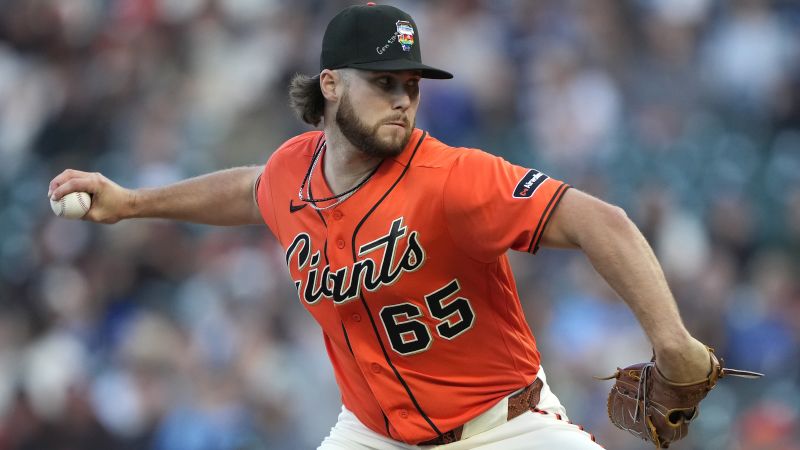
Sandego.net – Last Friday, the San Francisco Giants hosted a Pride Night at their ballpark, drawing attention to an unexpected clash between tradition and modern identity in Major League Baseball. While most teams participate in themed games to celebrate diversity and attract broader audiences, the Giants took a distinctive approach by incorporating rainbow designs into their players’ uniforms. This move, however, sparked controversy when three pitchers—among them starter Landen Roupp—chose to express their own beliefs through the same platform, prompting accusations of religious discrimination.
The Rise of Pride Nights in MLB
Pride Nights have become a common fixture in Major League Baseball, with 29 of the 30 teams—excluding the Texas Rangers—offering such events as part of their seasonal programming. These celebrations are designed to foster inclusivity and resonate with fans who identify as LGBTQ+. Typically, the focus remains on the stadium’s decorations and promotional activities, leaving the symbolism on the field to the players’ attire. The Giants, however, stand out by embedding rainbow logos on their caps, a decision that has drawn both praise and criticism from fans and officials alike.
While the symbolism is intended to welcome all fans, some players have taken it a step further by adding personal messages to their uniforms. Roupp, for instance, wrote “Gen 9:12-16” on his hat, referencing a biblical passage about rainbows. His message recontextualized the Pride imagery as a celebration of God’s covenant with humanity after the Great Flood, rather than a nod to LGBTQ+ pride. Two other Giants pitchers joined him, each incorporating similar religious verses onto their caps. This act of defiance raised questions about the boundaries of expression within the league’s uniform guidelines.
MLB’s Response and the Protest
After the game, Roupp told reporters, “That’s just kind of something I believe in, and I stand firm in that. I’m thankful we live in a country where we have the freedom to believe what we want—and express what we want.” His words echoed the sentiments of other players who saw their participation as an exercise of faith. Yet, MLB officials viewed the protest as a violation of their uniform rules, which state that players may not display messages or nicknames on their apparel. The league issued verbal warnings to the three pitchers, framing their actions as a deviation from the expected decorum of Pride Night.
The backlash was swift. News of the warnings reached Vice President JD Vance, who tweeted on X, “Trump won we don’t have to do this anymore.” This remark fueled speculation that the protest was part of a broader effort to challenge the league’s inclusivity efforts. MLB responded by clarifying that the warnings were not disciplinary and had no connection to the content of the messages. “This routine verbal warning not to wear the hat in future games is not disciplinary,” the league stated, “and had absolutely nothing to do with the message itself.” They emphasized that their policy was about uniformity, not ideology.
Religious Accommodations and Legal Implications
Despite MLB’s stance, the incident sparked a legal debate. Assistant Attorney General Harmeet K. Dhillon wrote a public letter to Commissioner Robert Manfred, urging the Equal Employment Opportunity Commission to investigate whether the league was engaging in religious discrimination. “Federal law is clear: employers must modify their uniform requirements to reasonably accommodate employees’ exercise of religion,” she noted. This claim challenged MLB’s position, arguing that the uniform policy was being applied selectively to Christian players.
Support for the players came from Florida’s Attorney General, James Uthmeier, who announced a formal probe into the matter. He accused MLB of “selectively enforcing its uniform rules,” noting that Christian players were being penalized for displaying Bible verses while secular messages were routinely permitted. The investigation aimed to determine if the league’s actions violated Title VII of the Civil Rights Act, which protects against employment discrimination based on religion. CNN reported that they had reached out to the EEOC to learn more about the status of the inquiry.
The Giants’ situation is not unique. In 2022, the Tampa Bay Rays attempted to join the Dodgers and Giants as the only teams to commemorate Pride Night with a dedicated hat and uniform patch. Five players opted out of the event, choosing to wear their standard uniforms instead. Their decision, while permitted by the league, drew scrutiny and criticism. The following year, MLB encouraged teams to avoid making uniforms a central part of their Pride celebrations, likely to preempt similar controversies. However, the Giants and Dodgers explicitly requested and received approval to continue their approach, suggesting that the league was not entirely opposed to the practice.
Freedom of Expression vs. Uniform Rules
The core of the dispute lies in the balance between freedom of expression and the need for uniformity. MLB maintains that its rules are meant to ensure consistency in player appearances, which are integral to the team’s brand. Yet, the league also acknowledges that players have the right to express their beliefs, as long as they adhere to the guidelines. In this case, the Giants’ players were allowed to display their messages without facing legal consequences, but they were still reminded of the policy’s requirements.
Other examples of uniform rule violations include players wearing caps with messages like “Dad,” “Happy Mother’s Day, I Love Mom,” or family names. These instances were typically met with the same verbal warnings as the Pride Night protest, indicating that the league’s enforcement was consistent. However, the difference in context—religious verses versus secular or social justice-themed messages—highlighted a perceived double standard. Critics argue that the league’s actions against the Giants’ pitchers were more symbolic, emphasizing the cultural shift in baseball and the broader implications for religious expression in the workplace.
The Giants’ players, though not penalized, became unexpected figures in the debate over inclusivity and individuality. Their choice to blend religious symbolism with Pride Night created a moment of tension, as fans and commentators grappled with the idea of competing identities in a space that is meant to be inclusive. While the league defended its position, the incident underscored the evolving nature of how baseball engages with social issues, and the challenges that come with it.
Ultimately, the story of the Giants’ Pride Night protest is a microcosm of a larger conversation about faith, identity, and the role of sports in societal values. As the EEOC investigates the matter, the question remains: does the league’s uniform policy restrict the right to express religious beliefs, or does it simply ensure a cohesive visual identity for the teams? The answer may shape the future of how baseball navigates the intersection of tradition and modernity in its celebration of diversity.