The USA dares to dream the impossible World Cup dream
A Historic Step Forward
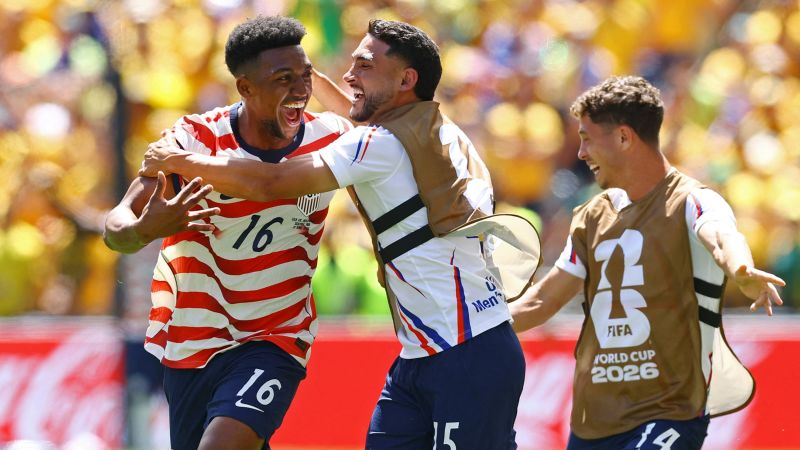
Sandego.net – As the World Cup unfolds, the American soccer team has sparked a renewed conversation about its potential. A decisive 2-0 victory over Australia in their opening match has propelled the United States into the knockout rounds, marking a significant milestone. This achievement, combined with Paraguay’s 1-0 triumph over Turkey, ensures the US will finish first in Group D. For the first time since the inaugural tournament in 1930, the Stars and Stripes have managed to secure two group-stage wins—a feat that has rekindled hopes among fans who have long viewed American soccer as a work in progress.
The Sméagol-Gollum Dynamic
For many American soccer enthusiasts, the World Cup brings a unique blend of anticipation and self-awareness. This psychological tension, which the author humorously dubs the Sméagol-Gollum Dynamic, mirrors the rivalry in *Lord of the Rings* between the two-faced characters. It captures the paradox of American fans who both admire the global dominance of traditional soccer powers and secretly hope for a breakthrough. While they acknowledge the US’s historical underdog status, the recent wins have ignited a shift in perspective, transforming doubt into belief.
“We are humble before the rest of the world, recognizing the USA’s longtime second-tier status in the men’s game. Yet, when the results start stacking up, that humility turns into a fierce conviction. It’s like watching a team slowly claw its way up a mountain, convinced it can reach the summit even when the path seems steep.”
This dynamic is not new to the American psyche. In other international competitions, such as the Olympics, Team USA has consistently been a powerhouse, often finishing near the top of medal tables. However, men’s soccer remains a different story. While the US has shown flashes of brilliance, it has historically struggled to match the dominance of European giants. The contrast is stark: fans spend weekends cheering for top-tier European leagues and weekdays watching the UEFA Champions League, yet the US’s own national team often feels like an outsider in the global conversation.
Structural and Cultural Challenges
Analysts point to structural and cultural factors that have long hindered the US’s progress in men’s soccer. The country’s sports culture, which prioritizes fast-paced, high-scoring games, has sometimes clashed with the tactical, patient style of European teams. Additionally, the development of grassroots talent and infrastructure has lagged behind nations with longer soccer traditions. These challenges have created a narrative where American success is seen as a rare and hard-earned achievement rather than an inevitability.
Yet, the recent performances have disrupted this narrative. The US’s two wins, coupled with moments of inspired play, have flipped the script. Fans are now debating not just the possibility of success, but the likelihood of it. The logic behind this shift is simple: when a team consistently meets expectations, even the most skeptical observers begin to believe in its potential. This is the power of momentum, and the US is riding it like a wave.
Turning the Tide
The Sméagol side of the fanbase—those who remain grounded in reality—acknowledges the US’s challenges. They highlight the leaky back line, the need to face European heavyweights, and the steep competition in the knockout stages. But the Gollum side, emboldened by the results, counters with a compelling argument: “What about Indiana’s national title?” it asks, referencing the underdog spirit that has defined American sports triumphs. This duality is what makes the Sméagol-Gollum Dynamic so fascinating.
For the US to achieve its goals, it must navigate a gauntlet of teams with storied histories. Nations like Germany, Argentina, and Brazil have long viewed World Cup glory as a birthright, while the US has often been the underdog. But this tournament has proven that the underdog can still dream big. The Americans’ ability to secure back-to-back wins signals a shift in the global perception of their team. No longer just a hopeful participant, they are now a contender.
Other Matches to Watch
While the US’s progress is a story of resilience, other matches in Group D are equally intriguing. The Netherlands, after a 1-1 draw with Japan, faces a crucial test against Sweden. Though the Oranje were disappointed by the stalemate, the late equalizer against a formidable opponent has given them a chance to recover. Sweden’s 5-1 dismantling of Tunisia in their opener demonstrated the firepower of their forward line, with Alexander Isak and Viktor Gyökeres exploiting defensive errors to dominate the game. A second win for the Blågult would send them to the knockout rounds, potentially creating a hurdle for the Dutch, who are widely expected to advance far in the tournament.
Meanwhile, Germany’s 7-1 rout of Curaçao in the opening round has set a tone of dominance. The European giant’s performance, characterized by clinical efficiency and attacking prowess, has sent a clear message to the rest of the field. Yet, even this overwhelming display has not silenced critics. Some argue that Germany’s strength is a product of their established soccer culture, while others see it as a warning for the US to maintain its momentum.
A New Era of Possibility
The US’s journey through the World Cup is more than just a series of wins—it’s a cultural awakening. For decades, the nation’s soccer fans have accepted the idea that the US is a mid-tier team, but the recent results have challenged that notion. The key to this transformation lies in the players themselves. Their ability to adapt, execute, and thrive under pressure has redefined the conversation. No longer are they seen as a team that merely participates; they are now viewed as a team that can compete for glory.
As the tournament progresses, the Sméagol-Gollum Dynamic will continue to play a role. The US must now prove that their early success is not a fluke. They will face tougher challenges, but the foundation has been laid. If they can maintain their form and overcome the inevitable hurdles, the dream of a deep World Cup run might no longer feel impossible. It could become the new standard for American soccer—a testament to the power of belief and the strength of the team.
For now, the focus remains on the next phase. The US’s path to the knockout rounds has been secured, but the real test begins when they meet the European powers. Will their recent surge continue, or will the pressure of the stage reveal vulnerabilities? Only time will tell, but one thing is certain: the dream is no longer just a whisper. It’s a roar.