
The Scotsman Who Transformed Brazil’s Football Legacy
Sandego.net – After a 28-year absence, Scotland re-enters the World Cup stage, facing a nation also seeking redemption: Brazil. The five-time champion, long celebrated for its flair and innovation in the Beautiful Game, has endured a dry spell since its last triumph in 2002. Now, with a 24-year gap between titles, the pressure is on for Brazil to reclaim glory. At the heart of this rivalry stands Malcolm McLean, a 77-year-old man whose life embodies the intertwined histories of Scottish and Brazilian football.
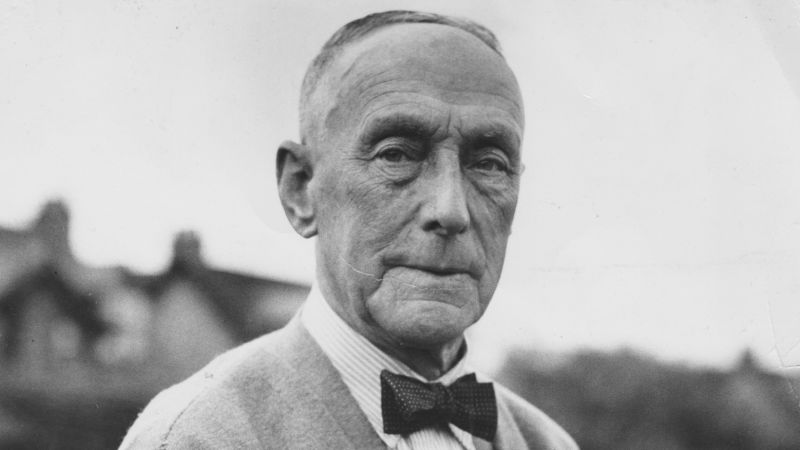
Malcolm’s unique perspective is rooted in his grandfather’s legacy. Archie McLean, a textile company mechanic, was dispatched to Brazil in 1912 to establish a factory. Initially intended to stay for six months, he ended up remaining for nearly 40 years, forging an unexpected bond with the nation. “He loved it here,” Malcolm recalls, adding that his grandfather immersed himself in the local culture and developed a passion for football. This passion, passed down through generations, now sees Malcolm as a living link between two footballing traditions.
Malcolm’s affection for both nations is evident in his daily attire—a Brazil jersey paired with his traditional kilt. “My standard uniform is my Brazil top and my kilt,” he said. This blend of identity reflects a deeper connection, shaped by Archie’s role in introducing Brazilian players to the short, quick-passing style that would later define the country’s footballing DNA. While Brazil’s famed “samba” style of play is often associated with rhythm and improvisation, the roots of their tactical evolution trace back to an unlikely source: a Scottish expat.
As documented in Scottish broadcaster Billy Kay’s book *The Scottish World*, Archie McLean’s arrival in Brazil in 1912 marked a turning point in the nation’s football history. At the time, Brazilian players prioritized long-distance kicks and dramatic flair over the precision and cohesion that Scottish teams were known for. “It’s hard to imagine today how Brazilians once competed to see who could kick the ball the highest and furthest across the field,” Kay wrote. McLean’s influence, however, began to shift this mindset. His partnership with a fellow Scotsman, Robert Hopkins, introduced a new dynamic to Brazilian football—a fast-paced, short-passing interplay that was revolutionary in its approach.
“They were quick and devastating learners,” Kay noted, describing how Archie and Hopkins mesmerized opponents with their relentless passing and tactical awareness. This method, once considered unorthodox in Brazil, gradually became foundational to the nation’s playing style. By the mid-20th century, the technique was rebranded as “tabelinha,” a term derived from the Portuguese word for “chart,” symbolizing the structured yet creative system it inspired. Some even humorously dubbed it “sistema inglês,” or the English system, a nod to its Scottish origins.
Malcolm, born in Brazil and raised in Scotland, carries this duality in his heart. He moved to Paisley at age 10, where he has followed his nation’s World Cup campaigns since 1974. That year, Scotland exited at the group stage in West Germany without losing a match—a record he still considers their finest hour. His story is one of resilience and cultural curiosity, as he recalls attending the 1982 World Cup in Spain but surrendering his tickets to his wife during a challenging pregnancy. “It was a tough decision,” he said, “but I’d have given anything to be there.”
At the 1998 World Cup in France, Malcolm was in Paris for the opening match, where Scotland faced Brazil in a 2-1 defeat. The loss, he admits, was bittersweet—a reminder of the historical ties that still bind the two nations. This time, he extended a family wedding trip in Rio de Janeiro into a longer stay to watch the games, joining a Scottish expat group his grandfather helped establish: the St. Andrew’s Society. “Scotland fans and Brazil fans always get on really well together at the World Cups I’ve been at,” he said. “The Brazilians are usually drumming, and the Scots fans are playing bagpipes.”
Archie McLean’s journey from mechanic to footballing pioneer is a testament to the power of cultural exchange. His story, largely forgotten in Scotland after his return in 1949, was immortalized in Billy Kay’s historical account. The book highlights how Archie’s teachings laid the groundwork for Brazil’s modern style, blending the discipline of Scottish football with the creativity of Brazilian play. “He stayed for nearly 40 years,” Malcolm said, “and his love for the game became a legacy for us all.”
Brazil’s hope to end its 24-year wait for a World Cup title has created a charged atmosphere, with fans rallying behind their nation’s resurgence. Meanwhile, Scotland’s team is viewed as a potential disruptor, its strategy offering a fresh contrast to Brazil’s traditional flair. Malcolm, though, remains neutral in his aspirations. “My dream would be that Scotland can beat Brazil,” he said. “But Brazil win the World Cup.” His words capture the essence of this dual identity—rooted in history, yet alive with hope for the future.
As the tournament progresses, the legacy of Archie McLean continues to echo. His 1912 arrival in Brazil not only introduced a new tactical framework but also fostered a lasting friendship between the two cultures. The partnership he formed with Robert Hopkins, as described by historians, exemplifies how football can transcend borders and reshape national identities. Today, Malcolm’s presence in Miami, where Scotland fans have gathered to support their team, underscores this enduring connection. “The World Cup is more than a game,” he said. “It’s a celebration of shared history and mutual respect.”
From the bustling pubs of São Paulo to the grand stadiums of Rio, the story of Archie McLean serves as a reminder of how far football has come. His introduction of quick, precise passing to Brazilian players laid the foundation for the nation’s dominance in the global arena. Yet, his impact extends beyond the pitch—his life exemplifies the way sport can bridge divides and create a sense of belonging. As Scotland and Brazil face off once again, the spirit of this cross-cultural collaboration lives on, even in the most competitive of settings.
In a world where football is often seen as a unifying force, the tale of Malcolm McLean and his grandfather offers a unique lens. It is a story of legacy, adaptation, and the enduring influence of a single man who, through his passion for the game, changed the trajectory of an entire nation’s footballing evolution. Whether it’s the rhythmic drumming of Brazilian fans or the haunting bagpipes of Scottish supporters, the World Cup remains a stage where history and hope collide.
A Legacy Across Borders
Archie McLean’s journey from Paisley to Brazil is a case study in cultural influence. When he first arrived in 1912, the football landscape in the country was vastly different. Long-distance kicks and individual flair were the hallmarks of Brazilian play, a style that would later evolve into the celebrated “samba” tradition. However, Archie’s arrival marked the beginning of a shift, as he and Robert Hopkins demonstrated the effectiveness of quick, coordinated passing. This innovation, though initially met with skepticism, eventually became a cornerstone of Brazil’s tactical identity.
The St. Andrew’s Society, which Malcolm now joins, is a testament to the lasting impact of Archie’s presence. Founded by expats like his grandfather, the organization has become a hub for Scottish communities in Brazil, preserving ties that span generations. Malcolm’s attendance at the 1964 World Cup in his grandfather’s homeland was a poignant moment, as the crowd’s standing ovation for Archie’s legacy highlighted the respect he commanded. His death five years later didn’t diminish the influence he had already sown, but instead solidified the connection between the two nations.
The World Cup as a Stage for Heritage
For Malcolm, the World Cup is more than a sporting event—it’s a cultural phenomenon that brings together communities bound by shared heritage. His experiences in various tournaments, from the 1974 group-stage exit in Germany to the 1998 loss in France, have shaped his perspective. Each match, he explains, is an opportunity to celebrate the rich history of football and the way it connects people across the globe. “There’s a unique energy at the World Cup,” he said. “It’s about more than just winning; it’s about carrying the spirit of a nation through every game.”
Today, as Scotland’s fans pack pubs in Miami to chant “no Scotland, no party,” the spirit of Archie’s era lives on. His granddaughter, who inherited his divided loyalties, has become a symbol of the cross-cultural pride that defines this family. The phrase, which has grown into an unofficial anthem for Scottish supporters, encapsulates the joy and camaraderie of the World Cup. Yet, the tournament also serves as a stage for Brazil’s ambitions, with its players vying to end a 24-year drought and reclaim their place at the pinnacle of global football.
As the match between Scotland and Brazil approaches, the history of their shared influence becomes even more relevant. Archie McLean’s contributions, once overlooked, now stand as a vital chapter in the evolution of football. His legacy is