FIFA s plan to inject private money faces UEFA boycott
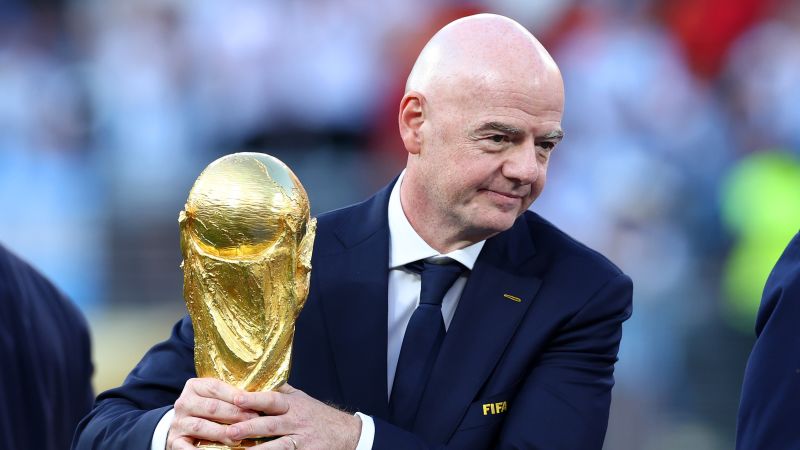
Sandego.net – UEFA members unanimously voted Thursday to boycott future men’s and women’s World Cups, directly challenging FIFA s plan to inject private money into its competitions. The 55 European soccer governing body members made this authoritative statement against FIFA president Gianni Infantino, who announced Tuesday plans to create a separate subsidiary with private equity investment controlling commercial and operational rights of one of the globe’s biggest sporting events.
What UEFA is saying about the proposal
The European federation has come under intense scrutiny, with UEFA stating that the “soul and governance” of the game are under threat. FIFA, though, said that the money generated from what it calls the FIFA Forward Enterprise (FFE) will be reinvested back into the sport. “Europe’s position is clear. We will never lend this model our legitimacy. No one has the moral authority to sell what they merely hold in trust for the next generation,” UEFA said in a Thursday statement.
“As a result of today’s discussion, no UEFA national teams will participate in any FIFA competition for so long as these proposals remain alive, unless this proposal has been abandoned in its entirety and binding assurances have been given that FIFA will never again open its governance or competitions to private ownership.”
“Nobody should be in any doubt: UEFA and its national associations will oppose these plans with absolute determination.” CNN Sports has reached out to FIFA for comment on UEFA’s planned boycott. At Thursday’s emergency meeting held virtually, UEFA’s members approved the boycott, which would mean teams like current World Cup champion Spain as well as semifinalists France and England would not play in the 2030 World Cup.
The boycott would also affect next year’s World Cup in Brazil on the women’s side, where three of the four semifinalists were also European, including defending champion Spain, and would miss the tournament. “There are moments when institutions are judged not by what they are prepared to accept, but by what they refuse to compromise. This is one of those moments,” UEFA said in its statement.
“Some things are simply too important to sell. The FIFA World Cup belongs to football. It always will. And so long as Europe has a voice, it will never be for sale.” Aside from the lack of transparency around the process, much of the criticism of FIFA’s FFE proposal centered around the involvement of private investors purchasing roughly 20% of the FFE subsidiary, in particular the main proposed investor group, Thrive Eternal, headed up by Joshua Kushner – brother of Jared Kushner, the son-in-law of US President Donald Trump.
A fear is that investors, seeking a return on their investments, would push to influence matters beyond their remit to maximize their profits. For example, the newly expanded men’s World Cup generated significantly more revenue through additional matches, while hydration breaks gave broadcasters opportunities to feature additional advertisements if they so chose.
Under this proposal, there would be an even greater incentive to expand the tournament and the Club World Cup to include more teams, providing more games and generating more revenue. This isn’t speculation but rather something already postulated by Infantino during the 2026 edition. Would investors also pressure FIFA to hold the World Cup more frequently – every two years instead of every four?
That would then affect player welfare and competitions outside of FIFA’s remit, such as domestic leagues and continental club competitions like the Champions League. Players are already nearing their physical limits with additional games, so would this move lead to further injuries and have a negative impact across the sport? Following UEFA’s lead, the North and Central America and Caribbean governing body, CONCACAF, also rejected the scheme, noting in a Thursday statement “deep concerns about the lack of due process surrounding the proposal.” However, CONCACAF did not say the 41 member nations are boycotting future FIFA competitions.
A spokesperson for the Oceania Football Confederation said the FIFA proposal would be addressed by the entity’s executive committee “in August.” It remains to be seen what other continental confederations, such as South America’s CONMEBOL and the Asian Football Confederation (AFC) will do following UEFA’s boycott, given the widespread uproar over FIFA’s FFE proposal. Ahead of the UEFA meeting, AFC president Sheikh Salman bin Ebrahim Al-Khalifa branded FIFA’s lack of consultation with its members “totally unacceptable” in a letter sent to his 47 member associations, seen by Reuters.
Frequently Asked Questions
What is FIFA s plan to inject private money?
FIFA s plan to inject private money involves creating a subsidiary called the FIFA Forward Enterprise (FFE) that would allow private investors to purchase roughly 20% ownership while controlling commercial and operational rights of World Cup competitions.
Which teams are affected by the UEFA boycott?
The boycott affects teams like current World Cup champion Spain, semifinalists France and England for the 2030 men’s World Cup, as well as European women’s teams including defending champion Spain for next year’s Brazil tournament.
When will other confederations make their decisions?
Oceania Football Confederation will address the proposal in August. CONCACAF has expressed concerns but has not committed to a full boycott. CONMEBOL and AFC are still evaluating their positions following UEFA’s lead.