A New Corridor Opens: Chinese Basketball Talent Floods American College Courts
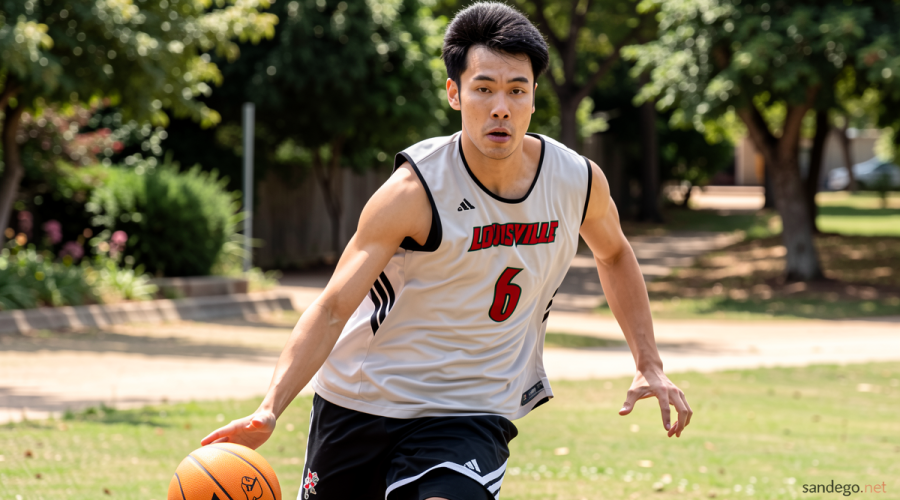
Sandego.net – More than a dozen Chinese athletes are preparing to step onto NCAA Division I floors this season, a development that would have seemed improbable a decade ago. At the heart of this wave is Zhang Boyuan, a 19-year-old forward from Changchun in northeastern China, who is weeks from launching his collegiate career with the University of Louisville Cardinals. His arrival marks not an isolated story but the latest chapter in a shifting pipeline between Chinese basketball and the American college system.
The traditional route for elite young players in China has long pointed inward: dominate the domestic league, attract NBA scouts from home courts, and eventually cross the Pacific as a professional. Hall of Famer Yao Ming, former Dallas Mavericks forward Yi Jianlian, and Yang Hansen — drafted 16th overall by the Portland Trail Blazers last summer — all followed that domestic-first trajectory. Yet the landscape has shifted. The introduction of Name, Image, and Likeness compensation rules in 2021 transformed the NCAA into a financially viable developmental platform, drawing international prospects who previously had no reason to consider American college basketball.
“So, seeing Chinese players come over and playing high school basketball and then college basketball, that’s another extension of this same trend,” Jonathan Givony, an NBA and NCAA draft analyst, explained.
Changchun: Where the Dream Took Shape
Zhang’s hometown, Changchun, translates to “long spring” in Mandarin — a name that belies the city’s industrial character and its brutal, extended winters, far colder than the Kentucky climate he now endures. It was in those frozen months that a young Zhang watched NBA broadcasts with his father, an avid hoops fan, as the Golden State Warriors and Stephen Curry dominated the league. American basketball has been televised in China since 1986, embedding the NBA’s star power into generations of young players.
For most of those kids, however, the league remains an aspiration locked behind an almost impenetrable barrier. Jia Lei, a veteran journalist who has covered Chinese basketball for twenty years, described the NBA dream as something that “can be seen, but never reached.” Zhang, though, was different. He was, by all accounts, the best player in his age group across China. Representing a powerhouse high school program in Changchun, his squad placed third at a national tournament. At the 2024 FIBA U17 World Cup and the U18 Asian Cup, he posted averages above 17 points in both competitions, combining size — he stands 6-foot-9 — with a quick first step, catch-and-shoot range, and the ability to create off the dribble.
The Portland Game That Rewrote a Life Plan
Until April of last year, Zhang’s roadmap was straightforward: attend a top Chinese university and continue developing domestically. Then came the Nike Hoop Summit in Portland, where he was selected for the World Team alongside elite prospects from around the globe. Facing a United States squad loaded with the country’s most heralded high-school talents, he encountered American intensity for the first time.
He scored six points in the opening quarter before his minutes evaporated as AJ Dybantsa and Cam Boozer seized control for the American side. The World Team fell 124–114. The experience, compressed into a single evening, dismantled his previous assumptions.
“Before that game, I never thought about moving to America. My plan was to go to a good college in China,” Zhang recalled. “But just that single game changed everything.”
Back in Changchun, he spent weeks convincing his parents to authorize a year abroad. They agreed. He enrolled at Veritas Academy in California, where he averaged 20.2 points per game against high-caliber competition. College scouts took notice. ESPN placed him at No. 56 in the 2026 recruiting class, and Louisville extended its invitation.
Pushing the Sled: Life Inside the Louisville System
The first Friday morning of his freshman adventure in Kentucky arrived with a weighted sled across the court. Strength coach Eli Foy stood atop the apparatus, loading additional resistance as Zhang drove it toward the far baseline. Teammates and coaches swarmed the scene, chanting encouragement. That ritual — the collective roar around one exhausted teenager — closes every weekly strength session.
The scene encapsulates a broader transformation. The NCAA, once a largely domestic institution, is becoming a genuinely global developmental ecosystem. Chinese players who once had no structural pathway into American basketball now navigate a sequence of high-school exposure, collegiate competition, and eventual professional consideration. The NIL framework removed the financial disincentive that had kept international prospects at home, while the visibility of American competition — amplified by two decades of NBA broadcasting in China — made the destination feel tangible rather than mythical.
“If I didn’t have a dream or a plan to play higher level basketball, I would not have come to the US,” Zhang said.
For Zhang and the dozen-plus Chinese athletes following the same corridor this season, the dream is no longer something seen from a distance. It is something being built, one weighted-sled push at a time, on American soil.
Related Reading
Frequently Asked Questions
What is The Chinese mavericks looking to buck?
The Chinese mavericks looking to buck is the main topic of this guide. The article explains the context, practical details, and next steps readers should understand.
Why does The Chinese mavericks looking to buck matter?
The Chinese mavericks looking to buck matters because readers are looking for a useful answer, not just a short summary. Good content should match search intent and help them decide what to do next.