How FIFA Came to Its Controversial Decision on Folarin Balogun
Sandego.net – On July 6, 2026, the World Cup’s credibility faced a significant challenge as FIFA’s disciplinary actions sparked global debate. The controversy centered on a moment in the tournament that seemed routine at first but quickly became a focal point for accusations of political influence. This story originally appeared in The Beautiful Game, CNN Sports’ daily newsletter covering World Cup news. Subscribers can access the latest updates here.
A Foul That Wasn’t Intended
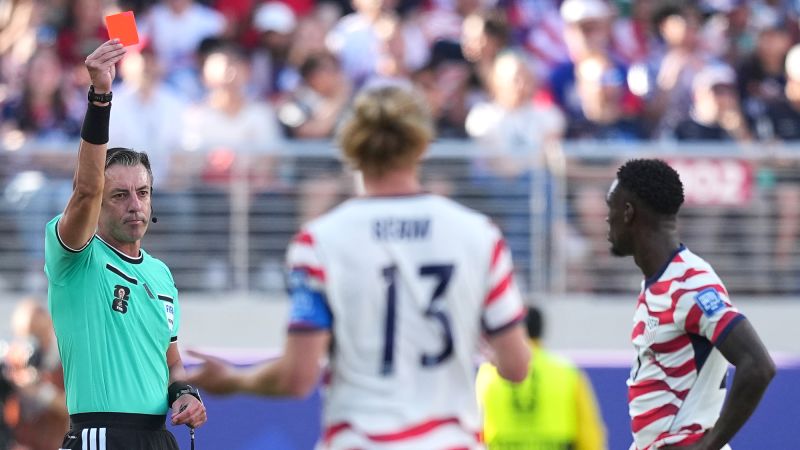
Folarin Balogun, the U.S. national team’s forward, found himself at the center of a storm during the Round of 32 clash against Bosnia and Herzegovina. The incident, which occurred in the second half, involved a defensive challenge that turned into a red card. While Balogun claimed he had no intention of fouling, the action left a defender with a potential injury. The referee’s decision to send him off divided fans and analysts, many of whom questioned whether the call was fair.
“I didn’t think it was a foul,” Trump stated to reporters, highlighting the moment that captivated global attention.
Despite the tournament’s momentum and the lack of political interference earlier in the competition, FIFA’s actions raised eyebrows. Trump, ever the outspoken figure, took to Truth Social to praise the organization for “reversing a great injustice.” His intervention suggested a growing influence of politics in the decision-making process, which many found unsettling.
The Suspension Reversal and Its Implications
FIFA’s disciplinary committee opted to cite Article 27 of its code, which grants the authority to suspend disciplinary measures for up to four years. This decision meant Balogun could return to the field for the Round of 16 and beyond, deferring his one-match ban for a full year. US Soccer, initially unprepared for this reversal, began recalibrating its strategy to secure victory against Belgium without its key scorer.
The move not only surprised the American squad but also drew sharp criticism from opponents. Belgium’s manager, Rudi Garcia, dismissed the decision as a “prank,” while the Belgian Soccer Federation accused FIFA of contradicting its own regulations. Their appeal, submitted just hours after the reversal, was swiftly denied, leaving the situation unresolved.
A Pattern of Political Influence?
FIFA’s decision to suspend Balogun’s ban echoes past instances where political pressure has influenced disciplinary rulings. In November, Cristiano Ronaldo was granted a reprieve from a three-game ban, allowing him to participate in his nation’s World Cup campaign. Similarly, before the tournament began, the FIFA Council revised its rules to enable players with short suspensions to compete, ensuring teams could field their strongest squads.
These adjustments were seen as pragmatic, but they also sparked concerns about fairness. Argentina’s Nicolás Otamendi and Ecuador’s Moisés Caicedo were among those whose one-match bans were deferred for a year, allowing them to play from the outset. While such decisions were justified as necessary for competitive balance, critics now argue that FIFA’s handling of Balogun’s case sets a dangerous precedent for future tournaments.
Global Reaction and Questions of Integrity
The reversal of Balogun’s suspension has ignited a wave of reactions across the soccer world. While some view it as a victory for the U.S. team, others see it as a compromise of the tournament’s integrity. The incident has become a symbol of the growing tension between sport and politics, with many questioning whether FIFA’s leadership is prioritizing influence over impartiality.
Belgium’s federation, in particular, has been vocal in its criticism. The RBFA (Belgian Football Association) argued that FIFA’s decision violated the rules of the tournament, which are meant to ensure consistency in disciplinary actions. “The request was rendered inadmissible on the grounds that the RBFA is not,” the federation’s statement began, though it was cut off, leaving the full argument unclear.
Meanwhile, the U.S. team’s players and coaches have expressed mixed feelings. While they welcome the chance to keep Balogun on the field, they also worry about the message it sends: that even unintentional fouls can be waived if the right connections are made. The incident has added a layer of complexity to their Round of 16 match against Belgium, which now carries the weight of a potential political influence.
Looking Ahead: A Tournament in Peril?
FIFA’s decision to defer Balogun’s suspension has raised broader questions about the governance of the World Cup. The organization’s disciplinary code, while providing flexibility, has been criticized for allowing exceptions in cases where high-profile individuals are involved. The examples of Ronaldo and others illustrate a trend: FIFA may be favoring players with political ties or national importance over strict adherence to the rules.
For fans, the controversy has overshadowed the tournament’s thrilling moments. The U.S. team, which had been on a roll, now faces scrutiny over its ability to maintain form without its top scorer. Analysts suggest that the outcome of the match against Belgium will be a test of both the players’ resilience and FIFA’s commitment to fairness.
As the World Cup progresses, the focus remains on whether FIFA’s actions will be seen as a necessary adjustment or a damaging precedent. The incident with Balogun has highlighted the delicate balance between sportsmanship and political maneuvering, a theme that has followed the tournament from its inception. With the U.S. team’s hopes now intertwined with this controversial decision, the world watches closely to see if the tournament can recover its momentum—or if it will be forever marked by the shadow of political interference.
For now, the story continues to unfold. While the U.S. players prepare for their next challenge, the broader implications of FIFA’s ruling linger. Will this decision inspire similar interventions in other matches, or will it be viewed as an isolated incident? The answers will shape the narrative of the World Cup for years to come, proving that even the most dramatic sporting moments can be influenced by forces beyond the pitch.