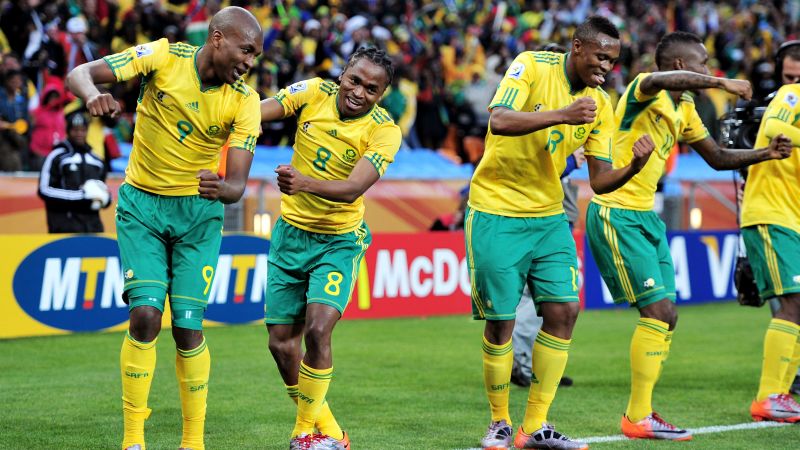
He Scored, Africa Danced: A Goal That Shook a Nation
Sandego.net – On a humid Thursday in June 2010, the roar of a crowd at Estadio Azteca became the soundtrack of a nation’s collective memory. For the South African team stepping onto the pitch to face World Cup co-host Mexico, the moment was more than a match—it was a flash back to a defining day in the country’s soccer history. Sixteen years earlier, on the same date, a similar scenario had unfolded: a young Siphiwe Tshabalala, then a teenage prodigy, had launched South Africa into the global spotlight with a goal that ignited celebration across the continent.
The Opening Kick of a New Era
The 2010 World Cup marked the first time Africa hosted the prestigious tournament, and Tshabalala’s strike was the spark that lit the event. As the ball soared into the top right corner of Mexico’s goalkeeper Óscar Pérez’s net, the crowd at Johannesburg’s Soccer City stadium erupted. The goal was not just a technical feat—it was a symbol of triumph, a testament to the resilience of a nation that had once been sidelined by its own history.
“I think we felt the whole country move,” said Nkosinathi Sibisi, a 13-year-old fan at the time, now set to make his World Cup debut. “It wasn’t only a great moment for the players, but it was for the whole country and for the whole of Africa.”
The spectacle of that night was unforgettable. While the vuvuzelas blared in the stands, the noise of the goal was louder still, echoing through the streets of South Africa. For Sipho Chaine, the future South African goalkeeper, the moment was etched in his mind as he dashed through the streets of Bloemfontein, giddy with joy. “They are all childhood heroes,” Chaine reflected. “As a kid, when you look at these players, you dream of being where they are. That day, it felt like we were all part of that dream.”
A Dance That Defined a Generation
Minutes after the goal, Tshabalala and his teammates joined in a synchronized dance at the corner flag, a celebration that became instantly iconic. Though Chaine was too excited to watch, his mother captured the moment, recreating it for him later. This dance, coupled with the goal, became a cultural touchstone, symbolizing the joy and unity that football could bring to a divided nation.
South Africa’s performance in that tournament was a milestone. Despite losing the opening match to Mexico, the team’s 2-1 victory over France in their final group game ensured they advanced to the knockout stage. Yet, the magic of the opening day lingered in the hearts of fans, offering a glimpse of what was possible when the country stepped into the global spotlight.
From Apartheid to Global Stage
South Africa’s journey to hosting the World Cup was not without struggle. During the apartheid era, the nation’s soccer teams were barred from international competition for three decades. It wasn’t until 1992 that they returned to the global stage, a symbolic shift that paved the way for the 2010 tournament. For many, the 2010 event represented a long-awaited reckoning—a chance to show the world the country’s potential.
The Football Association of South Africa (FAS) CEO, Lydia Monyepao-Yele, emphasized the broader significance of the tournament. “The whole country erupted, but it wasn’t just about that goal. It was the fact that we were hosting this big global mega football event in our own backyard,” she told CNN Sports. “It reignited a fire in us because we’ve had a very difficult history as a country. Football showed the power to unite people, regardless of their differences.”
A Golden Moment, A Mixed Legacy
While Tshabalala’s goal was celebrated as a triumph, the tournament’s aftermath revealed both promise and unmet expectations. Mexico’s equalizer 15 minutes later dashed hopes of an immediate upset, but the overall performance—though not stellar—was seen as a turning point. “That goal was a magnet the country had been searching for,” Monyepao-Yele noted, highlighting its role in reigniting passion for the sport.
However, the excitement was short-lived. South Africa’s failure to advance beyond the group stage, despite their historic debut, left a bittersweet aftertaste. The nation had competed in three of the previous four World Cups, yet the 2010 event marked the start of a three-year drought. The same sentiment echoed across the continent as South Africa watched three of the next six Africa Cup of Nations tournaments from home, unable to replicate the success of their World Cup campaign.
Despite these challenges, the legacy of the 2010 tournament endures. The stadiums built for the event, now used for local and international matches, stand as enduring symbols of the country’s investment in football. Yet, for many fans, the “disappointing hiatus” that followed the 2010 campaign remains a point of reflection. South African journalist and commentator Mark Gleeson described the mood as a mix of pride and regret. “There were high expectations that the 2010 World Cup would be the springboard for a much better domestic league and more international success,” he said. “But the opportunities that followed were not fully seized.”
Still, Tshabalala’s goal remains a cherished memory for South Africans. It was the first in the country’s history at a World Cup on African soil, and it carried the weight of a nation’s aspirations. The celebration that night—marked by vuvuzelas, dancing fans, and the iconic routine—became a defining image of a country rediscovering its love for the game. For Tshabalala, the moment was a childhood dream realized; for the nation, it was a reminder of what football could achieve in the face of adversity.
As the years passed, the 2010 tournament became more than a sporting event—it was a cultural phenomenon. The goal and the dance were not just about the game but about the spirit of a nation coming together. Even though the following World Cup campaigns fell short, the 2010 opener remains a beacon of hope, a testament to the power of unity, and a goal that will never be forgotten. For South Africa, it was the start of a new chapter, one that continues to inspire fans and players alike.