Folarin Balogun’s Red Card Will Be Hotly Debated, But It Revealed Something About the USA That Can’t Be Taken Away
A High-Stakes Triumph
Folarin Balogun s red card will – The United States men’s soccer team clinched a landmark win in the 2026 World Cup Round of 32, defeating Bosnia and Herzegovina 2-0 at Levi’s Stadium. This victory, the most significant for American men’s soccer in a generation, was achieved at a steep price. The critical moment came when Folarin Balogun, the team’s forward, was shown a red card for a controversial challenge. Despite the setback, the U.S. squad demonstrated an unshakable composure, proving that they are evolving into a more resilient force on the international stage.
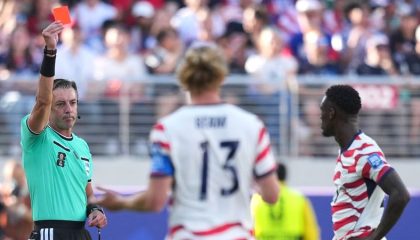
The match’s pivotal incident unfolded in the first half. Balogun, who had already scored the opening goal, was involved in a scuffle with Bosnia defender Tarik Muharemovic over a long ball. In the chaos, Balogun’s right foot made contact with Muharemovic’s calf, leading to a stomp that sent the defender sprawling. The initial play was judged to be a fair contest, with both players competing for the ball. However, when the video assistant referee (VAR) reviewed the moment, the footage revealed a different narrative. Referee Raphael Claus, after scrutinizing the replay, deemed the action dangerous enough to warrant a red card, stripping Balogun of his place in the lineup for the remainder of the game.
The Controversial Red Card
The decision sparked immediate debate among fans and analysts. Balogun’s challenge, though aggressive, lacked clear intent to injure. Both players were in motion, driven by the need to win the ball, and the contact appeared incidental. Yet, the VAR’s intervention highlighted the growing emphasis on precision in refereeing decisions. The contrast between the initial on-field assessment and the replay’s clarity was stark, underscoring how technology is reshaping the way referees interpret dangerous play.
Balogun’s ejection left the U.S. team a man down for 35 minutes, a scenario that could have derailed their momentum. However, the team’s response to this challenge became a defining moment of the match. Instead of crumbling under pressure, they adapted swiftly, showcasing a maturity that had previously eluded them in high-stakes games. Midfielder Weston McKennie emerged as a steadying force, orchestrating the play with composure, while the attacking trio of Christian Pulisic and Malik Tillman continued to exert pressure on Bosnia’s defense.
A Test of Resilience
With the deficit in numbers, Bosnia aimed to exploit the U.S. back line, flooding the pitch with attackers in a bid to break the American defense. The strategy worked initially, as the U.S. players found themselves stretched and exposed. But the team’s defensive organization held firm, preventing Bosnia from capitalizing on their advantage. This tenacity was a stark contrast to the US’s historical struggles in the knockout stages, where costly mistakes have often cost them progress.
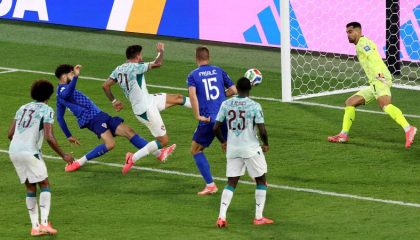
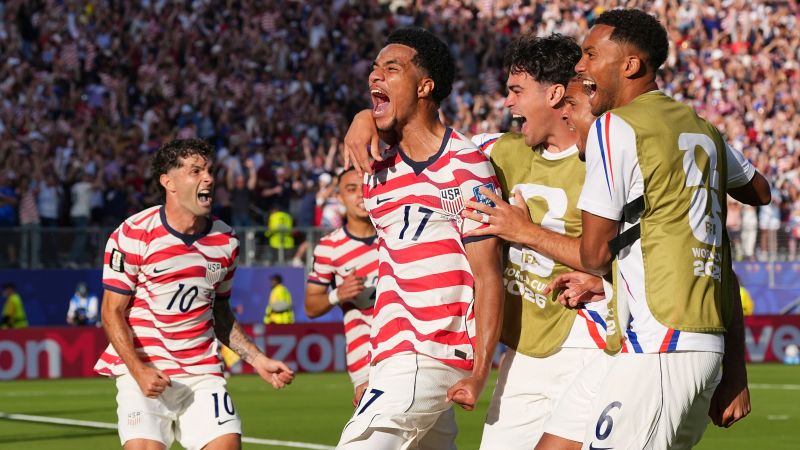
The turning point arrived in the 82nd minute when Tillman, the team’s youngest player, delivered a moment of brilliance. After Sergiño Dest was fouled just outside the penalty area, Tillman stepped up to take a free kick. The shot, a curling right-footed effort, defied the Bosnian wall, slipping past goalkeeper Nikola Vasilj’s outstretched hand and into the net. The goal sent the crowd into a frenzy, with Tillman spinning toward the stands as his teammates erupted in celebration. It was a golden moment that encapsulated the team’s growth, blending technical skill with mental fortitude.
Richards, the U.S. defender, reflected on the team’s performance after the red card. “It’s a proud moment and one that gives us confidence,” he said in a post-match interview. “We’ve kept two clean sheets in the last four games, which wasn’t always the case before. That consistency is something we can build on.” The defense, which had previously struggled to maintain composure in critical moments, played with an unyielding focus, holding the line against Bosnia’s relentless attacks. This shift in mindset was a key factor in the U.S. securing the win, even with a man fewer.
Learning from the Past
As the U.S. team celebrated their hard-earned victory, memories of past World Cup setbacks resurfaced. In 2010, a last-minute goal by Asamoah Gyan had eliminated them in extra time, while in 2014, Belgium’s two extra-time goals marked a painful exit. Four years ago, a defensive breakdown against the Netherlands further highlighted the team’s fragility under pressure. These moments had become a cautionary tale, but the 2026 team’s performance suggested they were no longer the same squad.
The red card incident, while contentious, served as a catalyst for the U.S. to display their newfound resilience. The ability to stay calm and composed when facing a numerical disadvantage is a hallmark of elite teams. For years, American fans had grown accustomed to seeing their team falter in crucial moments, but this match offered a glimpse of a different kind of soccer—one defined by tactical discipline and collective grit. The team’s response to Balogun’s ejection was a testament to their growth, proving they could weather the storm and emerge stronger.
Their resilience wasn’t just about surviving the 35-minute deficit; it was about adapting and evolving in real time. McKennie’s midfield control, Tillman’s clinical finishing, and the defense’s ability to stand tall under pressure all contributed to this transformation. It was a rare display of unity, where every player understood their role and executed it with precision. This level of maturity, once a distant dream, is now becoming a reality for the U.S. national team.
For American fans, the victory over Bosnia and Herzegovina represents more than just a win—it’s a step toward believing in a deeper run in the tournament. The red card, while a point of contention, became a symbol of the team’s willingness to take risks and push their limits. If the U.S. can maintain this form against Belgium in the next round, it would mark a turning point in their World Cup journey. The question now is whether this display of resilience can be replicated consistently, allowing the team to challenge for the title.
As the dust settled on Levi’s Stadium, the match became a microcosm of the broader narrative surrounding the U.S. men’s team. They had paid a steep price for their victory, but the lessons learned in this high-pressure game could shape their future. The red card was a dramatic twist, but it also exposed a growing determination within the squad. If this team can sustain the composure and focus they displayed tonight, they may finally be poised to compete with the world’s best in the final stages of the tournament.
With the momentum of this victory, the U.S. now faces the daunting task of taking on Belgium, a team known for its attacking flair and defensive solidity. The challenge ahead is formidable, but the path they’ve taken so far is promising. The red card, though a hotly debated decision, revealed something fundamental about the USA: their ability to endure and adapt in the face of adversity. This is the kind of mental toughness that defines champions, and it may be the key to unlocking their potential in the knockout rounds.