Explaining the World Cup’s Newest Rules
A Fresh Start for the Beautiful Game
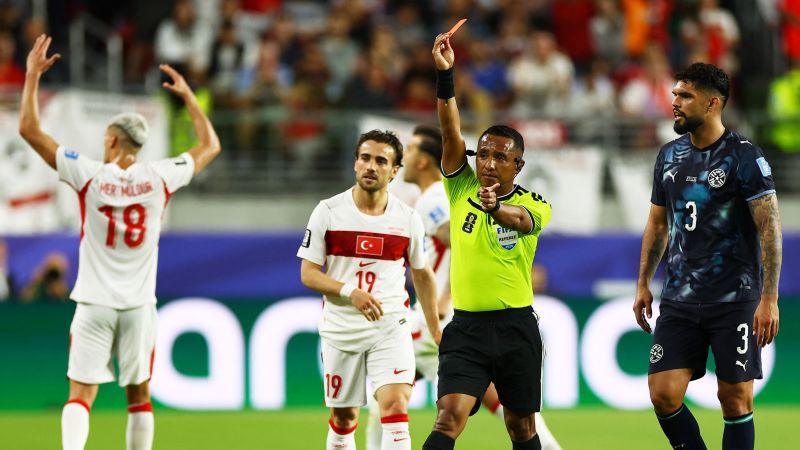
Sandego.net – As the World Cup kicks off in earnest, fans are already grappling with a series of updated regulations that could reshape the tournament’s flow. While the excitement around the USA’s potential World Cup run remains strong, the attention has shifted to the introduction of rules that might seem quirky at first glance. These changes, implemented by FIFA, aim to address long-standing issues in football’s officiating and gameplay, ensuring a fairer and more transparent competition. For instance, one rule has already sparked confusion, as seen in a controversial incident involving Paraguay’s Miguel Almiron.
The World Cup’s new guidelines include provisions that could have far-reaching implications. Among them is the regulation that allows players to be sent off for covering their mouths during confrontations with opponents. This rule, though unexpected, was designed to combat situations where players obscure their speech to avoid being caught on camera using discriminatory language. The fallout from this law became immediately apparent in a first-half clash between Paraguay and Turkey, where Almiron’s red card drew widespread debate.
“It was impossible to know what exactly he said,”
commented a CNN Sports analyst after reviewing the incident. The midfielder, Almiron, had raised his hand to his mouth while exchanging words with Turkey’s Mert Mulder. At first, the action appeared innocent, but under the new rule, this gesture was deemed sufficient cause for a penalty. The replay footage revealed the exact moment, cementing the decision as a historic one for the tournament.
The Rationale Behind the Rulebook Updates
FIFA’s decision to introduce the mouth-covering rule was influenced by a Champions League match in February, where Real Madrid’s Vinícius Júnior accused Benfica’s Gianluca Prestianni of racially insulting him. The incident became a focal point for discussions on racial discrimination in football, as replays showed Prestianni muttering something to the Madrid player while shielding his mouth. This prompted FIFA to act, establishing a precedent for penalizing players who use their hands to hide derogatory remarks.
Other adjustments to the rulebook focus on streamlining gameplay and reducing disputes. For example, goal kicks and throw-ins now include five-second countdowns to discourage time-wasting. If a player exceeds this limit, possession switches to the opposing team. This rule was inspired by the chaotic Africa Cup of Nations final, where delays in set pieces were a frequent issue. Similarly, the Video Assistant Referee (VAR) has been granted additional authority, such as overturning incorrectly awarded corner kicks. These tweaks aim to ensure consistency and reduce human error in critical moments.
While the mouth-covering rule has been the most talked-about, there are several others that will impact the tournament. One notable change allows players to be sent off for leaving the field in protest of a referee’s decision. This has already been applied in the early stages of the competition, with a player from the Africa Cup of Nations final becoming a cautionary tale. Another adjustment involves stricter penalties for handball offenses in the penalty area, ensuring that defenders cannot simply raise their arms to claim a goal.
Spain’s Comeback Bid and the USA’s Next Challenge
As the tournament progresses, Spain is set to take the field again, eager to recover from a surprising 0-0 draw against Cape Verde in their World Cup debut. The team’s high possession rate of 74% and 27 shots on goal were impressive, yet they were repeatedly thwarted by Cape Verde’s resilient defense and veteran goalkeeper Vozinha. Despite the setback, Spain’s coach Luis de la Fuente remains unfazed, recalling how Argentina similarly stumbled in their opening match at the 2022 World Cup. That game, where Saudi Arabia stunned the hosts with a 2-1 victory, served as a reminder that even the most favored teams can face early challenges.
The USA’s next group match looms on the horizon, with fans still hopeful for a deep run in the tournament. However, the focus has shifted to the broader implications of the new rules, which could influence the outcome of games across the globe. Meanwhile, Saudi Arabia continues to make waves in Group H, currently leading the standings after a series of strong performances. Their ability to maintain this position hinges on consistency, as they aim to build on their early success.
A Look at the Tournament’s Evolving Landscape
These rule changes reflect FIFA’s ongoing efforts to modernize football and address its controversies. The mouth-covering rule, in particular, has sparked discussions about the balance between player freedom and accountability. While some argue that it adds an unnecessary layer of complexity, others see it as a necessary measure to ensure that insults are not hidden from view. This principle is echoed in other adjustments, such as the VAR’s expanded role, which allows for more accurate decisions in high-stakes moments.
Additionally, the new guidelines emphasize the importance of clear communication in the game. For example, the five-second countdowns for goal kicks and throw-ins are designed to penalize players who deliberately slow down the pace of play. This has been particularly evident in matches where teams have used these moments to gain tactical advantages, often at the expense of their opponents. The rule also adds a sense of urgency, as players must either execute the set piece efficiently or risk losing possession.
With these changes in place, the World Cup has entered a new era of precision and accountability. The tournament’s opening rounds have already demonstrated how these rules can influence outcomes, from the dramatic red card to the strategic use of set pieces. As the games continue, fans will need to stay informed to fully appreciate the nuances of the new system. For those new to the sport, the rulebook offers a fascinating glimpse into the evolving nature of football’s regulations, blending tradition with innovation to create a fairer game for all.
From CNN’s Emile Nuh: Spain will look to get its World Cup campaign back on track after being held to a shock 0-0 draw by Cape Verde in the island nation’s World Cup debut. La Roja held a staggering 74% possession and 27 shots on goal, but was repeatedly frustrated by a defiant Cape Verde defense and veteran goalkeeper Vozinha. But Luis de la Fuente and his side won’t be panicking. In Qatar 2022, Argentina was also stunned in its opener and lost 2-1 to Saudi Arabia before going on to become champion. Saudi Arabia will look to launch another surprise today and would currently be sitting top of Group H if it weren’t for Maxi Araújo’s late equalizer for Uruguay on Monday. The Spaniards will also be hoping to build on their performance, as they aim to turn their early struggles into a successful campaign.
As the World Cup unfolds, the new rules will be a constant presence, shaping decisions and moments that could determine the final standings. Whether it’s a contentious red card or a well-timed set piece, these changes are here to stay, adding layers of strategy and scrutiny to the beautiful game. For fans, the challenge lies in keeping up with the evolving rules, but for the teams, it’s an opportunity to adapt and thrive in a more regulated environment.