
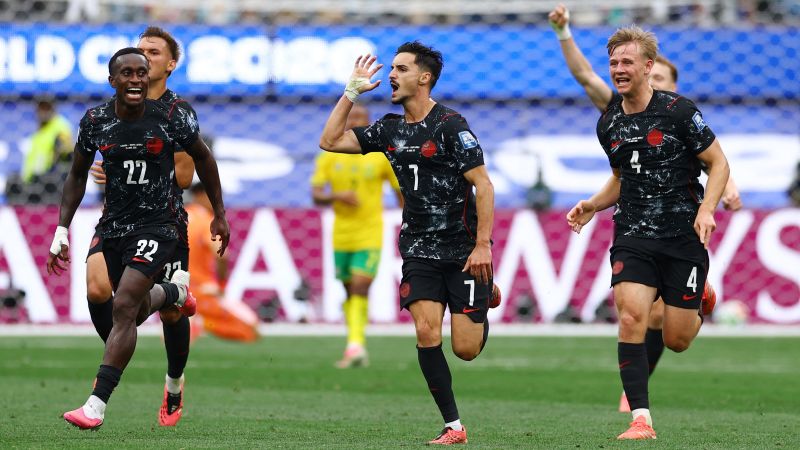
Canada Secures Historic World Cup Round of 32 Victory Over South Africa
Game-Changing Moment in Johannesburg
Sandego.net – In a stunning display of late-game composure, Canada captured a dramatic late winner to defeat South Africa in the opening match of the World Cup’s Round of 32. Stephen Eustáquio’s volley in the 94th minute, which deflected past goalkeeper Ronwen Williams, proved decisive as the Canadians claimed their first-ever knockout-stage win at a World Cup. This monumental goal not only secured Canada’s advancement but also marked a milestone in the nation’s footballing journey, with the team becoming the first co-host to reach the knockout rounds on foreign soil. The game, held in Johannesburg, showcased the resilience of both sides as they battled fiercely for a place in the next round.
Canada’s triumph was fueled by their tactical patience and relentless pressure, which finally paid off in the final moments. South Africa had largely controlled the first half, using quick counterattacks to test the Canadian defense, but the hosts adapted swiftly. Midfielder Niko Sigur’s precise through ball in the 67th minute set up Eustáquio for his game-winning strike, a moment that encapsulated Canada’s determination. The goal was a testament to the team’s growth, as they overcame a tightly contested affair to achieve what many thought impossible in their debut Round of 32 appearance.
South Africa’s Struggles and Canada’s Comeback
South Africa’s journey came to an end in the second half as Canada’s strategy shifted toward aggressive set pieces and attacking transitions. After a goalless first half, the hosts created a flurry of chances, with defenders Aubrey Modiba and Derek Cornelius playing crucial roles. A 74th-minute corner kick from Modiba was narrowly saved by Williams, but the momentum shifted when Shaffelburg’s cross found Eustáquio in the 94th minute. The 24-year-old forward, who had been patient throughout the match, showcased his composure to deliver the decisive blow, sending the crowd into a frenzy and solidifying Canada’s place in the knockout stages.
Despite South Africa’s valiant effort, the team’s inability to capitalize on their chances proved costly. Their defense, led by captain Siyabonga Mthembu, held firm for much of the match but faltered in the dying moments. Canada’s resilience was highlighted by their ability to maintain possession and create opportunities even under pressure. The late winner not only erased any doubts about their competitiveness but also set the tone for a promising campaign in the expanded 48-team format. The victory will be remembered as a pivotal moment in Canadian football history.
Co-Host Nation’s Triumph
Canada’s success in the Round of 32 underscored the significance of their co-host role in the tournament. Hosting matches in Johannesburg and Cape Town provided the team with a unique advantage, allowing them to leverage home support and tactical setups. The late winner in this opener was a culmination of their preparation, as they adapted to the challenges of playing on foreign turf. With the format now expanded to 48 teams, the country’s progression to the next stage was a remarkable achievement, highlighting their growth as a footballing power in the region.
Stephen Eustáquio’s goal was a defining moment of the match, with the striker’s clinical finishing showcasing the team’s depth and readiness. His ability to seize the opportunity in the final minute reflected the disciplined training and strategy employed by Canada’s coaching staff. While South Africa’s campaign ended in disappointment, the performance demonstrated their resilience and ability to compete at the highest level. The game’s intensity and strategic depth made it a standout fixture of the Round of 32, setting the stage for future matches in the tournament.
Historical Significance and Future Implications
The match carried weighty historical implications for both nations. For Canada, it was a breakthrough moment, marking the first time they had advanced beyond the group stage in World Cup history. South Africa, though eliminated, showcased their potential in the expanded format. The tournament’s growth to 48 teams has increased competition, but Canada’s late winner proved their ability to thrive in this new stage. As the World Cup progresses, the co-host nation’s performance will serve as a benchmark for future successes in international football.
“This late winner is a moment we’ll talk about for years,” said Jesse Marsch, Canada’s head coach, after the match. “We’ve worked hard for this, and the result shows our dedication to progress.”
The victory not only highlights Canada’s footballing maturity but also reinforces the importance of their co-host role in driving global interest in the sport. South Africa’s players, despite the loss, remain hopeful for future tournaments, while Canada’s triumph sets the stage for an exciting Round of 16. The game’s outcome will be remembered as a turning point in the tournament’s history.