
Trump’s role as LIV Golf host renews scrutiny over conflicts of interest
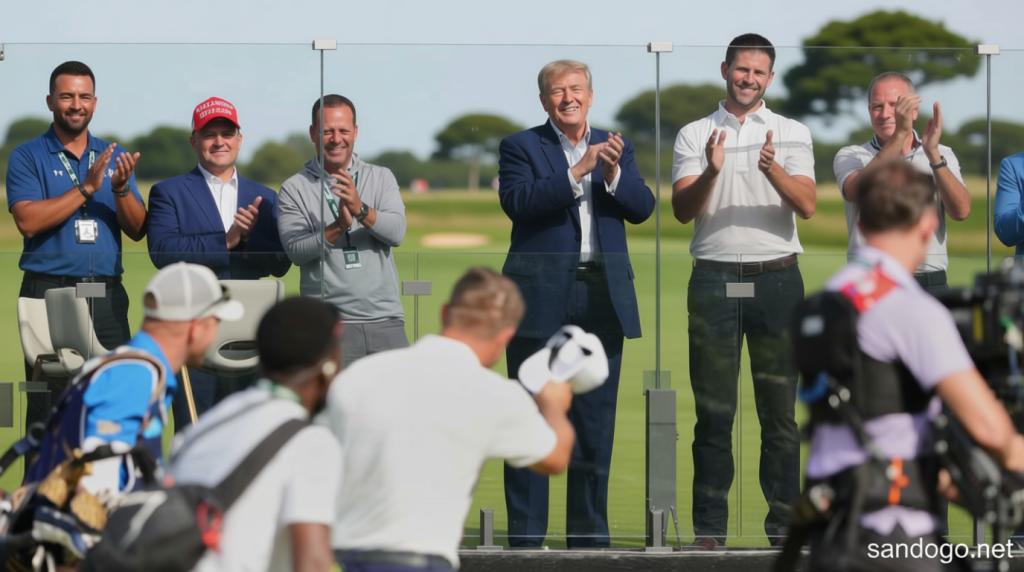
Trump’s Role as LIV Golf Host Sparks Fresh Debate on Ethical Concerns
Trump s role as LIV Golf – President Donald Trump’s recent hosting of a LIV Golf event at his Virginia estate has reignited questions about potential conflicts of interest. Critics argue that the Trump family’s financial ties to the golf league, which is funded by Saudi Arabia’s government, may blur the lines between his presidential duties and personal business interests. This situation comes amid broader scrutiny of how the administration’s relationships with foreign entities could influence domestic policies and public perception.
The Saudi Connection
Saudi Arabia’s government has long been a central figure in LIV Golf’s development, with its support extending beyond the sport to various global initiatives. The nation’s Public Investment Fund has invested heavily in sports, including a 10-year partnership with Formula 1 to host annual races, and has acquired high-profile assets like an English soccer team. These moves have been labeled “sportswashing” by some observers, a term used to describe efforts by authoritarian regimes to improve their international image through sports. Despite recent announcements that the Saudi government will cease funding LIV Golf after the 2026 season, the league’s ties to the kingdom remain under close examination.
Trump’s golf courses have served as a key platform for LIV Golf since its inception, with the league’s chief backer, Saudi Arabia, leveraging these properties to promote its global agenda. The connection between Trump’s brand and the Saudi government has raised eyebrows, especially given the country’s history of human rights violations. Critics point to the 2018 killing of Jamal Khashoggi, a Saudi journalist, as a pivotal moment that highlighted the kingdom’s alleged efforts to deflect scrutiny through high-profile events.
“Saudi Arabia is a murderous, authoritarian, anti-democratic region,” Kathleen Clark, a law professor specializing in government ethics at Washington University in St. Louis, stated to CNN. “Trump’s willingness to do this is actually a really nice example about what his priorities are.”
Ethics in Question
Experts who spoke to CNN expressed caution about Trump’s decision to host LIV Golf events at his properties, citing a lack of transparency in how his family is compensated. Trump’s assets are managed by a trust controlled by his children, and he has claimed to be uninvolved in running his business during his time in office. However, the combination of his personal interests and political role has led to renewed calls for accountability.
During a meeting with Saudi Crown Prince Mohammed bin Salman at the White House last year, Trump’s dismissive attitude toward human rights concerns became apparent. When asked about the journalist’s murder, the president responded with what some describe as deflection, asserting that the subject was “extremely controversial” and that the question was meant to embarrass the crown prince. Trump further insisted that bin Salman “knew nothing about it, and we can leave it at that.” Saudi officials have consistently denied the allegations, with the Foreign Ministry in 2021 calling the report “negative, false, and unacceptable.”
A Pattern of Business and Politics
Trump’s involvement with LIV Golf is just one of several instances where his business ventures and presidential responsibilities have overlapped. During his second term, critics have highlighted a range of activities that blur the line between public service and private gain. These include the administration’s acceptance of a $400 million luxury jet from Qatar, Trump’s promotion of his Scotland golf properties, and the use of his cryptocurrency coin to host dinners with wealthy investors.
Such actions have drawn comparisons to the broader concept of “sportswashing,” where nations use sports to mask political controversies. The Saudi government’s financial backing of LIV Golf, along with its investments in soccer and Formula 1, has been seen as part of a larger strategy to project a more favorable image globally. Trump’s acceptance of these partnerships raises concerns about whether his administration is prioritizing economic interests over ethical considerations.
“This is just going to be the tip of the iceberg,” Richard Painter, a corporate law professor at the University of Minnesota Law School, told CNN. “And the message has been said all over the world that if you want to get along with the Trump administration, do business with the Trump family or with his golf courses or with his son.”
The Trump family’s financial arrangements are central to these debates. With assets managed by a trust, the extent of their involvement in decision-making remains unclear. While White House officials have maintained that there are no conflicts of interest, the cumulative effect of Trump’s business dealings and political affiliations has fueled skepticism. For instance, during a recent event, the White House press secretary acknowledged that Trump had dined with cryptocurrency investors linked to his coin, further complicating the narrative of separation between personal and public interests.
As the 2026 season approaches, the focus on LIV Golf’s financial structure has intensified. The league’s reliance on Saudi funding has made it a symbol of the broader geopolitical strategies that intersect with American politics. Ethical watchdogs and journalists continue to question whether Trump’s participation in such events could sway public opinion or policy decisions in favor of the Saudi government. The lack of clear disclosure about the Trump family’s earnings from these partnerships has left many in the public eye questioning the transparency of the administration’s financial dealings.
Despite the criticisms, Trump has remained largely unapologetic. His recent events, including attending PGA Tour and LIV Golf gatherings at his properties, underscore a consistent pattern of intertwining personal interests with public platforms. This has led to accusations that the administration is using its influence to create favorable conditions for businesses aligned with foreign governments, even as those governments face scrutiny for their human rights records. The ongoing debate highlights the challenges of maintaining ethical boundaries in a political landscape where business and diplomacy often intersect.
With the spotlight on Trump’s role in LIV Golf, the conversation extends beyond the sport to touch on the administration’s broader relationships. The Saudi government’s investments in sports and media have been designed to counter negative narratives, and Trump’s support appears to align with that goal. As experts and watchdogs monitor these developments, the question remains whether the Trump family’s financial benefits are outweighing the ethical implications of their partnerships with the Saudi regime.
