The Numbers Behind the Voter Fraud Claim: What Nevada’s Election Officials Actually Heard
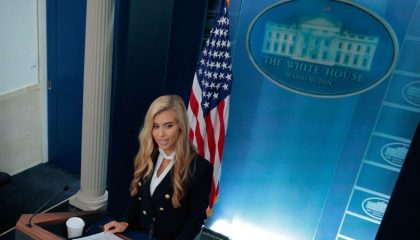
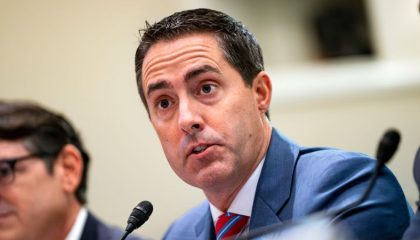
Sandego.net – When Homeland Security Secretary Markwayne Mullin faced a bank of cameras last month, he delivered what he framed as a decisive revelation about American elections. According to his department’s analysis, roughly 250,000 people who are not U.S. citizens appear on voter registration rolls across four states — Nevada, Pennsylvania, New Jersey, and California. The methodology, as DHS described it, involved cross-referencing publicly available voter files against federal immigration databases.
Mullin positioned the finding as irrefutable proof validating President Donald Trump’s years-long insistence that noncitizens routinely cast ballots. He told reporters:
“One thing that I love about numbers, and I love about facts, is they don’t lie.”
Yet the numbers emerging from Nevada tell a considerably more complicated story than the administration’s public messaging suggests.
A Preliminary List, Not a Confirmed Verdict
In July, DHS announced that 15,903 individuals on Nevada’s voter rolls matched records indicating noncitizen status. That figure was quickly absorbed into the administration’s broader narrative about electoral integrity. But behind closed doors, the picture looked different.
During an August 13 meeting with Nevada state election officials — a session captured on audio and supplemented by more than a dozen internal emails — DHS representatives conceded that the vast majority of those 15,903 names had never undergone individual human verification. Through manual case-by-case review, officials had confirmed just 185 registrants as noncitizens. The remaining 14,000-plus cases sat in various stages of incompleteness, including a subset of 6,200 that DHS internally tagged as “higher confidence matches.”
Even that elevated-confidence category carried caveats. DHS acknowledged in the meeting that some entries could represent naturalized citizens whose immigration paperwork simply had not been updated in federal systems. The department characterized the full 15,903-name list as a “preliminary” output of its algorithmic matching process, not a finalized determination.
The Exchange That Undid the Headline
The tension between the public claim and the internal reality surfaced most plainly in a direct question from C. Murphy Hebert, chief deputy in the Nevada secretary of state’s office:
“So what you’re saying is the 15,000 number has not been vetted?”
Kimberley Vogt, who heads a fraud division within DHS, responded carefully:
“I probably wouldn’t use the sentence, ‘It hasn’t been vetted.’ Because definitely we’ve done something with it to get down to 15,000. So I wouldn’t say that. But it hasn’t had a full manual review of each one.”
She added that the preliminary figure represented an upper bound:
“That would be the ceiling. So it should not magically go above that. It would stay where it would stay, and it would go down from there as we make our way through it.”
In other words, the number could only shrink as review progressed — a far cry from the certainty implied in Mullin’s press conference.
Why the Matching Process Is Inherently Messy
Election administrators and voting-rights organizations had warned from the outset that bulk data-matching between voter files and immigration databases would generate substantial false positives. Federal citizenship records are not always current; naturalization events, name changes, and clerical delays mean a person who became a citizen years ago may still appear in legacy immigration datasets. Meanwhile, public voter rolls often contain limited identifying detail — a first name, last name, date of birth, and address — which is insufficient to reliably distinguish between individuals sharing similar names, particularly in large metropolitan areas.
DHS itself recognized the problem. Vogt explained in the August 13 session that the department intended to verify each match individually before treating it as confirmed:
“We’re going to manually review to be sure that it is not someone’s dad or someone’s son – that it is that person. Then we’re reducing the list down to what is a confirmed match.”
She also noted the practical difficulty of the task, describing the case-by-case checking as “a lot of work to go one by one.” DHS declined to transmit the complete 15,903-name list to Nevada’s election office, citing a desire to avoid distributing inaccurate records. Instead, the department forwarded voter identification numbers for the 6,200 higher-confidence entries, leaving the state to work with a partial dataset while the bulk of the file remained in administrative limbo.
A Broader Pattern of Unverified Claims
The Nevada episode is not an isolated instance. Earlier this week, the Census Bureau published an analysis asserting that approximately 24,000 noncitizens cast ballots in the 2020 presidential election. Trump promptly seized on the report as additional evidence that the prior cycle had been compromised. However, former senior officials at the Census Bureau publicly questioned the study’s methodology, its transparency, and what they characterized as potential political bias in its framing.
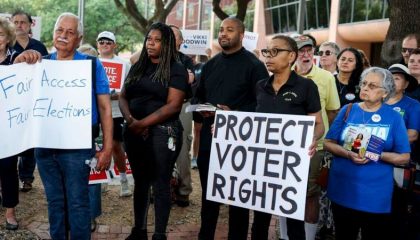
These data releases sit within a wider administrative strategy aimed at tightening voting requirements, reopening questions about past election outcomes, and reinforcing the president’s longstanding narrative of systemic electoral vulnerability. For months, Trump has urged congressional Republicans to advance the stalled SAVE America Act, legislation that would mandate photo identification at polling places and proof of citizenship at registration. Opponents — including Democratic lawmakers and voting-rights organizations — argue the broader campaign is calibrated to suppress turnout among groups that tend to vote Democratic and to inject doubt into the results of the upcoming midterm elections.
What Remains Unresolved
As of the most recent available information, the full accuracy of DHS’s Nevada findings has not been independently tested. The department has not published its matching algorithm, its data sources, or its error-rate estimates. State election officials continue to await the completed manual review before they can determine how many of the original 15,903 entries represent genuine noncitizen registrations versus administrative artifacts of outdated records. Until that review concludes, the gap between the administration’s public rhetoric and its internal working assumptions will remain open — and the question of whether the numbers truly “don’t lie” will rest on what the completed file ultimately shows.
Related Reading
Frequently Asked Questions
What is Trump officials touted a voter fraud?
Trump officials touted a voter fraud is the main topic of this guide. The article explains the context, practical details, and next steps readers should understand.
Why does Trump officials touted a voter fraud matter?
Trump officials touted a voter fraud matters because readers are looking for a useful answer, not just a short summary. Good content should match search intent and help them decide what to do next.