Former General Criticizes Military’s Political Role in Op-Ed
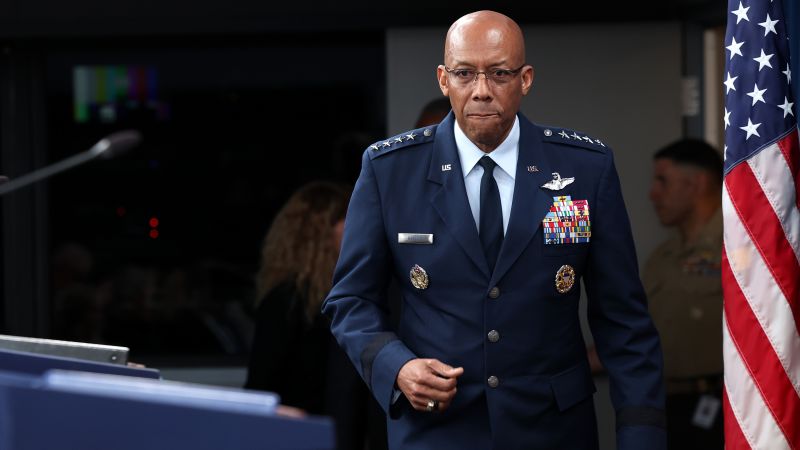
Top general fired by Trump administration – Charles Q. Brown, the former chair of the Joint Chiefs of Staff, who was dismissed by Defense Secretary Pete Hegseth in February 2025, has voiced concerns about the military being utilized for politically driven objectives in an op-ed published on Friday. The piece, co-authored with Duke political science professor Peter Feaver and North Carolina lawyer Andrew Kragie, highlights the Trump administration’s decision to deploy troops in major cities to address domestic crime, a move that Brown and his collaborators argue undermines the military’s core mission.
Op-Ed Warns Against Politicizing the Armed Forces
In the article, the authors caution that when presidents leverage the military for more politically charged tasks, such as combating urban crime, the institution’s effectiveness is compromised. They write, “(W)hen presidents use the armed forces for more politically contentious missions, such as addressing domestic crime in cities, the work of the military becomes more fraught.” This sentiment reflects a broader critique of how military resources are being repurposed to serve political agendas, rather than their traditional role in defense.
“Resorting to a military solution rather than fixing the underlying incapacity or dysfunction in civilian institutions diverts the military from focusing on its primary combat mission,” the authors continued. “And … it is not the military’s job to save the republic from political impasses. Indeed, if you ask too much of the military, you risk the entire enterprise.”
Brown, a retired Air Force general and the second Black individual to hold the position of America’s most senior military leader, was not alone in his criticism. His co-authors emphasize that the military’s role should remain focused on combat and national security, with political actions handled by civilian leaders. The piece, however, does not directly target President Donald Trump or current government officials, instead offering a balanced view of how both Trump and former President Joe Biden have utilized the armed forces during the pandemic.
Context of the Firing and Banned Diversity Efforts
Brown’s dismissal occurred amid a broader shift in the Trump administration’s approach to military policy, which included banning diversity and inclusion initiatives across the armed forces and federal agencies. This decision, which sparked internal debate, is seen as part of a larger effort to centralize control over military operations. The firing of Brown and Admiral Lisa Franchetti, the first woman to serve as a Joint Chiefs of Staff member, marked a significant moment in the administration’s restructuring of leadership.
Franchetti, who was also the chief of the Navy, shared Brown’s concerns about the politicization of the military. Their tandem removal underscored a pattern of reassigning key positions to align with the administration’s priorities. Brown, in an interview at the Aspen Ideas Festival last week, expanded on these issues, noting that the current wave of dismissals is not rooted in merit but in political strategy.
“What’s starting to happen now is not about merit,” Brown said. “It’s important we understand that all these people that are being removed are very well experienced and my concern is that the impact it has on those that are still continuing to serve.”
He further questioned whether remaining military personnel would have equal opportunities to advance their careers. “Are they going to have a fair opportunity to advance in their career going forth?” Brown asked, highlighting the potential for institutional bias and the erosion of professional autonomy.
Expanded Military Deployments Under Trump’s Return to Power
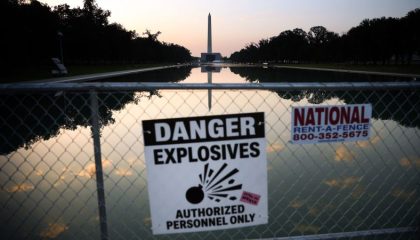
Since Trump’s re-election, the administration has intensified the use of the military in domestic affairs, with Hegseth playing a pivotal role. Last year, thousands of National Guard troops and hundreds of Marines were deployed to cities like Washington, DC, and Los Angeles to combat rising crime rates. Hegseth recently praised the National Guard’s efforts, describing the protesters as “ingrates” who fail to appreciate the value of law and order.
“They can’t see law and order and common sense in front of them, that there’s nothing ideological about this group, there’s nothing political about this exercise,” Hegseth stated. “Law and order is something all Americans deserve.”
This rhetoric frames the military’s involvement as a necessary response to chaos, but Brown and his co-authors argue that such deployments risk conflating military strength with political solutions. They suggest that civilian institutions, such as police departments and local governments, should bear the responsibility for maintaining public safety, rather than shifting that burden onto the armed forces.
Patriotism and National Unity in the Face of Division
While critiquing the military’s dual role, the op-ed also reflects on the significance of patriotism and national unity. The authors assert that “patriotism means recognizing the promise of America’s founding, the progress of its past, and the potential of a shared future.” They argue that the values instilled in military training—such as service to a greater cause—should inspire all citizens, not just those in uniform.
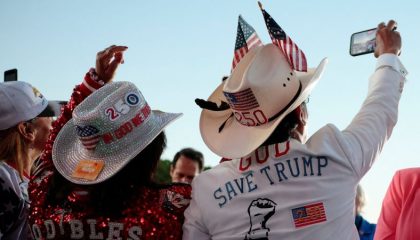
Brown and his co-authors see the 250th anniversary of the United States as a chance to reaffirm the nation’s commitment to interdependence. “In ways big and small, Americans can recognize this milestone of 250 years as a moment to rejuvenate the national interdependence that our founders proclaimed along with independence,” they wrote. This perspective contrasts with the administration’s emphasis on centralized authority, suggesting that the military’s role should complement, rather than replace, the work of civil society.
Broader Implications of Political Military Use
The debate over the military’s role in political missions extends beyond specific deployments. Critics argue that such actions could strain the armed forces’ ability to focus on their primary functions, like defending against external threats or maintaining readiness for combat. Brown’s op-ed raises the question of whether the military is being asked to take on responsibilities it was never designed for, potentially leading to a loss of institutional credibility.
At the same time, the administration maintains that military involvement in domestic issues is a justified response to crises. Hegseth’s statements, for example, frame the deployment as a necessary measure to restore stability. Yet, Brown’s analysis challenges this view, emphasizing the long-term risks of treating the military as a political tool. “If the military is constantly pulled into politically charged scenarios, its independence and effectiveness as an institution could be jeopardized,” he warned.
Legacy of Leadership and Future of Military Policy
Brown’s tenure as the Joint Chiefs chairman, which ended in 2025, was marked by a focus on strategic clarity and institutional integrity. His removal and the subsequent appointments reflect a shift in priorities, with the administration prioritizing loyalty and political alignment over diverse perspectives. This has raised questions about the long-term impact on military decision-making and the balance of power between civilian leaders and the armed forces.
Despite the controversy, the op-ed underscores a key principle: the military should remain a pillar of national strength, not a proxy for political campaigns. By linking the current use of troops to broader themes of patriotism and unity, Brown and his co-authors aim to remind Americans of the importance of preserving the military’s distinct mission. Their work serves as a call to action for both the current administration and future leaders to ensure the armed forces continue to serve as a reliable and impartial force for the nation’s defense.
CNN’s Oren Liebermann and Haley Britzky contributed to this report.