Trump’s DOJ Cites Thwarted UFC Attack as Justification for White House Ballroom Expansion
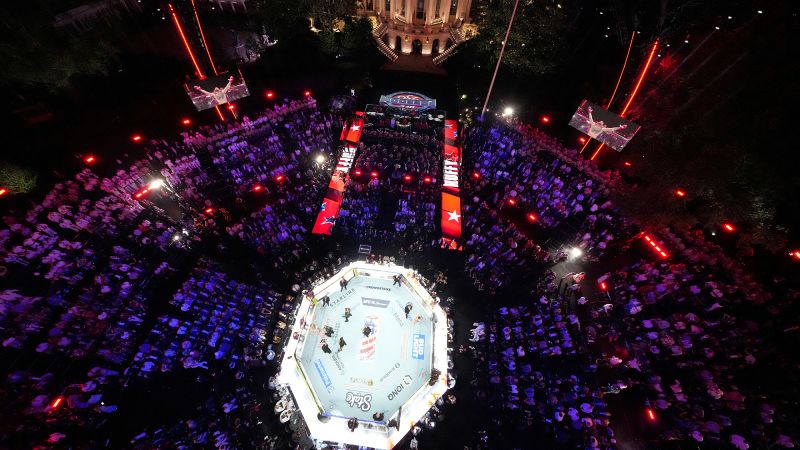
Sandego.net – President Donald Trump’s legal team at the Department of Justice has increasingly leaned on recent security threats to defend the construction of a large new ballroom at the White House. While federal courts have questioned Trump’s claim that the project can proceed without congressional approval, the DOJ has framed the planned facility as a necessary measure to counteract potential dangers. The latest argument emerged late Tuesday, as a senior official from the Justice Department cited a thwarted attack on an outdoor UFC event held at the White House last weekend. This incident, they argue, underscores the urgent need for the nearly 90,000-square-foot event space, which they claim would provide enhanced protection for the executive branch and its guests.
Key Arguments from the DOJ
In a recent filing, Brett Shumate, head of the DOJ’s civil division, emphasized the ballroom’s ability to serve as a defensive structure. He stated that the building’s “mass and height will shield the White House grounds from attack, giving the Secret Service the visibility needed to identify and neutralize threats.” This assertion comes amid ongoing debates over the project’s legality, with the DOJ attempting to tie security concerns to the construction. Shumate further highlighted that current event spaces on the South Lawn are vulnerable, describing them as “plastic tents that cannot even protect highly esteemed guests from inclement weather, let alone high caliber bullets or kamikaze drones.” The recent attack, he argued, exemplifies the risks of relying on temporary structures for major events.
“When completed, this highly integrated, unified project will provide a ‘SAFE HAVEN’ from attackers,” the DOJ lawyers wrote on May 24. The term, used in their filing, reflects the administration’s broader strategy to link security threats to the ballroom’s construction, despite critics questioning the timing of such arguments.
The DOJ’s approach has drawn comparisons to previous instances where security incidents were leveraged to justify the project. Earlier this year, they cited a shooting at the White House Correspondents’ Dinner and a separate incident near the White House as examples of the president’s need for improved infrastructure. These events, though occurring in different locations, were framed as evidence that the ballroom is essential for safeguarding high-profile gatherings. The administration’s reliance on these incidents has sparked debate over whether the threats were genuine or used as a strategic move to expedite construction.
The Legal Battle Over the Ballroom Project
A three-judge panel at the DC Circuit Court of Appeals is set to deliberate on the matter, with the potential decision looming in the coming weeks. The case initially came before a lower court in Washington, D.C., which ruled in favor of halting the project. However, the DOJ has since argued that the threat of violence justifies bypassing legislative oversight. During oral arguments earlier this month, two of the judges appeared skeptical of Trump’s security rationale, focusing instead on the legal framework governing presidential authority to unilaterally alter the White House.
The planned ballroom, which would replace parts of the East Wing, has been a point of contention for months. Critics, including Democratic lawmakers, have pointed out that the project’s foundation was laid long before the recent security incidents. Alexandria Ocasio-Cortez, a member of the House of Representatives, noted that Trump’s decision to demolish the East Wing for the space was made well in advance of the threats. “The idea that they are now trying to change the rationale for this in retrospect doesn’t quite add up,” she said in a conversation with CNN’s Manu Raju in April. “In fact, the White House long had facilities for hosting events, which also included the East Wing.”
Despite these points, the DOJ continues to assert that the ballroom is a critical component of national security. Their latest argument hinges on the premise that the structure’s permanence and scale make it superior to the temporary setups currently used for large events. The administration’s focus on the potential for aerial or ground-based attacks—such as the one that targeted the UFC event—has been central to their case. By highlighting these risks, they aim to shift the legal discussion from the project’s scope to its protective capabilities.
Critics Highlight the Timing of Security Claims
Opponents of the ballroom expansion have raised concerns about the administration’s use of security incidents as a pretext for expanding presidential authority. The National Trust for Historic Preservation, which has been challenging the project, argued that its case is not about the need for a new facility but about whether Trump can proceed without congressional consent. “We take the president’s safety seriously,” the trust stated in a recent filing. “However, the ballroom’s construction was approved long before the recent threats, suggesting the security justification is being applied retroactively.”
Additionally, the trust has criticized the DOJ’s framing of the issue, pointing out that the White House already has spaces for hosting events. They contend that the ballroom’s expansion, while ambitious, does not address the unique security needs of the White House. Instead, they argue that the project represents a significant change to the presidential residence, one that should have required more public scrutiny and legislative debate.
The UFC event, which occurred last weekend, served as a focal point for the DOJ’s argument. While the attack was thwarted, it has been used to underscore the vulnerability of outdoor gatherings. The administration maintains that the ballroom’s presence would not only provide physical protection but also act as a psychological deterrent. However, some legal analysts question whether the threat level was high enough to warrant such a sweeping change. “The attack on the UFC event, while serious, may not be representative of the broader security risks facing the White House,” one observer remarked. “The ballroom’s construction seems more about consolidating power than addressing immediate threats.”
A Broader Narrative of National Security
As the case moves forward, the DOJ is positioning the ballroom as a cornerstone of national security infrastructure. Their arguments have been shaped by a series of incidents that have occurred in Washington, D.C., over the past year. These events, from the White House Correspondents’ Dinner to the UFC event, are being cited to demonstrate the necessity of a permanent, fortified space. The administration’s legal strategy relies on the idea that such threats are not isolated but part of an ongoing pattern that demands proactive measures.
While the DOJ emphasizes the ballroom’s role in protecting the president, the legal challenge remains focused on the executive’s authority to make such changes without congressional input. The court’s decision could set a precedent for future projects, determining whether the president can unilaterally alter the White House for national security purposes. For now, the administration continues to push its case, using recent events to bolster its claim that the ballroom is not just a luxury but a vital addition to the nation’s capital’s defenses.
The ballroom’s construction, which has been ongoing despite opposition, has drawn attention to the balance between executive power and legislative oversight. As the federal appeals court prepares to weigh the arguments, the debate over the project’s legitimacy remains as intense as ever. Whether the DOJ’s emphasis on security threats will sway the judges or if the legal challenges will prevail is yet to be decided. For now, the White House ballroom stands as a symbol of the administration’s broader narrative: that national security imperatives justify swift and decisive action, even in the face of skepticism from lawmakers and preservation groups.