Supreme Court Rules Police Must Obtain Warrant for Cellphone Location Data Sweeps
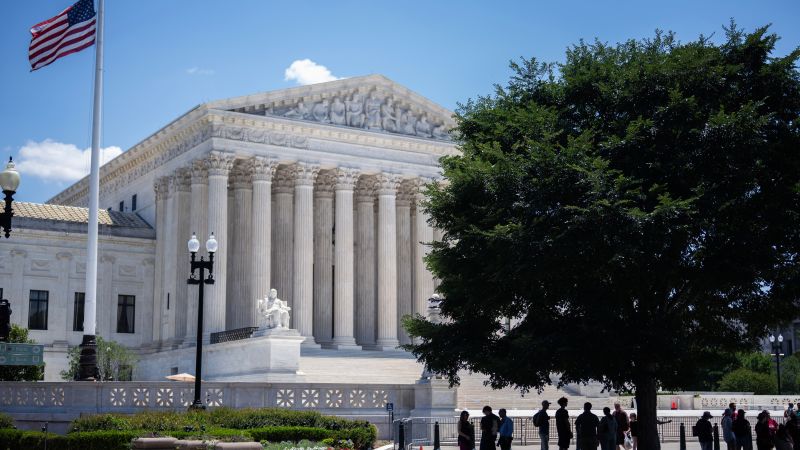
Sandego.net – In a pivotal decision, the Supreme Court on Monday affirmed that the use of a “geofence warrant” to gather cellphone location data for investigating a robbery suspect qualifies as a search under the Fourth Amendment. This ruling mandates that law enforcement agencies secure a warrant before accessing location information from geolocation databases, marking a significant shift in digital privacy standards. The decision, which splits the court 6-3, centers on the balance between government surveillance and individual privacy rights in an era of widespread digital data collection.
Fourth Amendment and the Scope of Warrants
The ruling emphasizes that the Fourth Amendment, which safeguards against unreasonable searches and seizures, applies to modern cellphone location data. Justice Elena Kagan, writing for the majority, argued that the warrant process ensures checks and balances, preventing law enforcement from conducting broad data sweeps without judicial oversight. “The Fourth Amendment must, as ever, protect against unjustified governmental intrusion on the privacy of the individual,” she stated, underscoring the court’s commitment to preserving constitutional protections.
Geofence Warrants and the Case of Okello Chatrie
The case originated with Okello Chatrie, a Virginia man who became a suspect in a 2019 bank robbery. After initial investigations stalled, police obtained a geofence warrant from Google to identify individuals within a 300-meter radius of the bank at the time of the crime. Chatrie’s attorneys contended that the warrant was overly broad, enabling police to sift through location data for millions of users to pinpoint a small group of potential suspects. The Supreme Court’s decision does not overturn Chatrie’s conviction but establishes a legal framework requiring warrants for such data requests.
Dissenting Opinions and Concerns Over Precedent
Justice Samuel Alito, joined by the court’s conservative bloc, dissented, calling the majority’s interpretation an “irresponsible escapade.” In his dissent, Alito highlighted that the ruling’s implications extend beyond Chatrie’s case, potentially reshaping Fourth Amendment doctrine. “Although today’s decision will send seismic waves through our Fourth Amendment doctrine, not one iota of the majority opinion will affect the outcome of this case,” he wrote. The dissent criticized the court for avoiding a direct review of the specific legal question in Chatrie’s case, arguing that the decision was a strategic move to bolster privacy advocacy in the digital age.
Technology and Privacy in the Modern Age
The case underscores the tension between technological advancements and constitutional rights. Cellphone location data, which can track a person’s movements with three-meter accuracy every two minutes, is now stored by tech companies in vast databases. The Supreme Court’s ruling reflects growing concerns about how easily this data can be accessed without explicit consent. “The potential for abuse is breathtaking,” Chatrie’s legal team argued, warning that the government could exploit geofence warrants to monitor gatherings at churches, political rallies, or even gun shops, revealing who attended without prior justification.
Prosecution and Evidence Found
Chatrie’s case hinged on the evidence gathered through the geofence warrant. Police claimed he had passed a note to a bank teller during the robbery, instructing them to “hand over all the cash” and promising “at least 100k and nobody will get hurt and your family will be set free.” Once identified, federal agents executed search warrants at his home, uncovering robbery-style demand notes, nearly $100,000 in cash, and a 9 mm pistol. Chatrie eventually entered a conditional guilty plea, reserving the right to challenge the warrant’s validity. However, the lower courts had already ruled against him, asserting that the data retrieval process did not amount to a “search” under the Fourth Amendment because users voluntarily share location data with companies.
Legal Arguments and the Particularity Requirement
Chatrie’s attorneys argued that the geofence warrant failed to meet the Fourth Amendment’s particularity standard. They claimed the warrant was too general, as it required Google to analyze millions of location records to isolate those near the bank at the crime scene. “The government need only draw a geofence around a church, a political rally, or a gun shop, and it can compel a search of every user’s records to learn who was there,” they contended. The Justice Department, defending the warrant, countered that users voluntarily enable location tracking, making it a form of consent. US Solicitor General D. John Sauer noted that Chatrie “took no steps to protect his location from disclosure, such as pausing the Location History feature he had enabled or adjusting, deactivating, or forgoing his cellphone during his crime.”
Implications for Digital Surveillance
The ruling has far-reaching implications for how law enforcement uses digital tools to investigate crimes. By requiring warrants for location data sweeps, the Supreme Court aims to prevent broad surveillance that could infringe on individuals’ privacy without sufficient cause. However, critics argue that the decision creates a new layer of complexity for police, who must now navigate judicial approval for each data request. This could slow down investigations, particularly in cases where rapid access to information is critical.
A Delicate Balance Between Security and Freedom
As technology continues to evolve, the Supreme Court’s decision highlights the ongoing struggle to define the boundaries of government surveillance. While the ruling reinforces privacy protections, it also acknowledges the necessity of digital tools in modern policing. The court’s 6-3 split suggests that the debate over this issue is far from over. Justice Kagan’s majority opinion, though limited in scope, sets a precedent that will influence future cases involving data collection. Meanwhile, the dissenting justices remain unconvinced, arguing that the decision sacrifices practicality for ideological clarity. For now, the ruling ensures that any sweep of cellphone location data will require a warrant, placing a greater burden on law enforcement to justify their actions in court.
Conclusion: A Step Toward Digital Privacy
Okello Chatrie’s case, though not fully resolved by the Supreme Court, has become a landmark in the fight for digital privacy. The decision to require a warrant for geofence data collection signals a recognition of the privacy risks associated with mass surveillance. As technology companies store ever more personal information, the court’s role in setting legal standards becomes increasingly vital. Whether this ruling will lead to broader privacy protections or create new challenges for law enforcement remains to be seen, but it undoubtedly marks a turning point in how Americans’ digital lives are governed by the law.