Lawyers for Rep. LaMonica McIver force judges to weigh the limits of congressional immunity
The clash over legislative protection and assault charges
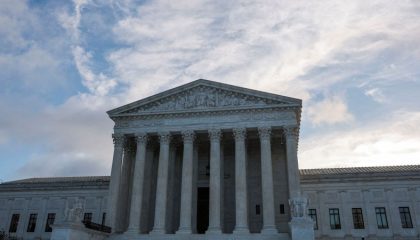
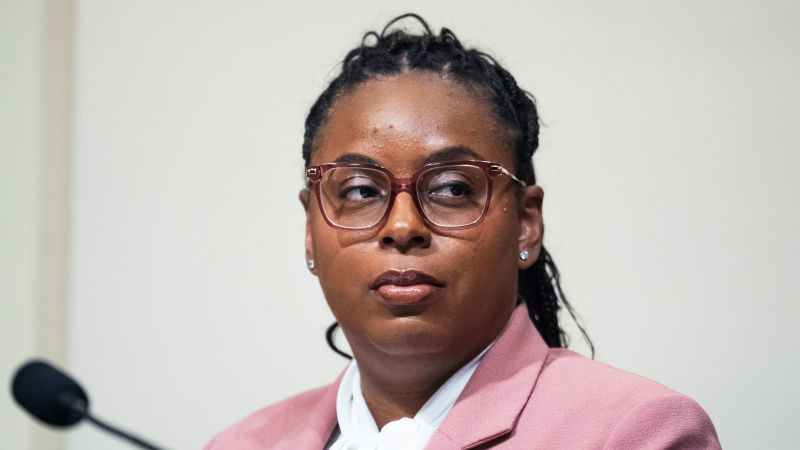
Sandego.net – On Wednesday, three federal judges in Wilmington, Delaware, grappled with a pivotal legal question: Can the constitutional safeguards afforded to members of Congress shield them from criminal charges if they are accused of assaulting a federal officer? The case against Democratic Representative LaMonica McIver, a New Jersey congresswoman, has become a focal point in this debate, as her legal team argues that her actions during a congressional visit should be considered part of her duty to oversee immigration policies.
The incident in question occurred in 2025 at an immigration detention center in New Jersey. McIver was present during the arrest of Newark Mayor Ras Baraka outside the facility. While officials initially moved to detain Baraka, the arrest was soon withdrawn. Prosecutors claim McIver used her forearm to strike an officer, attempted to restrain another by grabbing his arm, and pushed against a third when trying to re-enter the building. However, the indictment does not state that any officers sustained injuries during the encounter.
A legal battle over the scope of congressional privileges
McIver’s attorney, Paul Fishman, contended that the congresswoman was performing her legislative role when the alleged assault took place. He emphasized that the detention center had become a site of recent protests and confrontations between law enforcement and demonstrators, framing her presence as a critical oversight mission. Fishman urged the judges to examine the incident holistically, asserting that McIver and two other lawmakers exited the facility to observe the arrest, which he linked to their duty to scrutinize the actions of Immigration and Customs Enforcement (ICE) and the Department of Homeland Security (DHS).
“Being a critic of the administration is what the clause was designed to protect,” Fishman argued. “They are picking on someone who is a member of Congress because she disagrees with the administration.”
Yet, the Justice Department’s legal representative, Mark Coyne, challenged this interpretation. During the hearing, Coyne stated that physical force is not automatically protected under the Speech and Debate clause. “Use of physical force is never, never covered by the Speech and Debate clause,” he emphasized, while acknowledging the gravity of the case. Coyne also noted that the decision to prosecute was not made in Newark, but rather by the Justice Department, which he suggested might target political opponents of the Trump administration.
Judges probe the boundaries of immunity
As the hearing progressed, judges raised pointed questions about the applicability of congressional immunity. Judge Stephanos Bibas, a Trump appointee, quipped, “Isn’t this as weak a case as I hypothesized?” during a discussion with Fishman. This line of inquiry highlighted the tension between the lawmakers’ actions and the definition of legislative duties. Meanwhile, Judge Thomas Ambro, an appointee of former President Bill Clinton, pressed Coyne on whether any other congressional officials had faced similar charges for pushing against officers during an arrest.
“That doesn’t seem like assault,” Ambro remarked, casting doubt on the validity of one of McIver’s charges. “If any member walks into a bar and decks an ICE officer,” Fishman countered, “that would not be protected.”
Coyne conceded that the case was unconventional, but he maintained that the charges were justified. When asked about Fishman’s claim that the Trump administration was pursuing the case vindictively, Coyne responded, “I’m still here,” adding that he would take “everything in my power” to prevent a pattern of targeting lawmakers if the administration decided to do so. This exchange underscored the political undertones of the dispute, with both sides presenting contrasting narratives about the intent behind the prosecution.
The case is on hold as higher court reviews appeal
The legal proceedings have been temporarily paused as the Third Circuit Court of Appeals considers McIver’s appeal of a lower court ruling that dismissed her motion to dismiss the case on multiple grounds. The lower court had rejected her arguments on congressional immunity and alleged vindictiveness in the prosecution. McIver’s team now seeks to have these issues reevaluated, emphasizing that her actions were part of a broader effort to hold federal agencies accountable.
McIver’s legal strategy hinges on the argument that her conduct during the incident was a direct exercise of legislative oversight. Her attorneys insist that the circumstances of the arrest—where officials hastily decided to detain Baraka—created a scenario where her intervention was both necessary and within her congressional authority. However, prosecutors counter that the use of force, regardless of intent, should be scrutinized under standard criminal standards rather than shielded by legislative privileges.
Political implications and personal stakes
McIver, who is several months pregnant, spoke to reporters after the hearing. She framed the case as an attempt by the Trump administration to retaliate against political adversaries. “I have literally the president of the United States and the Department of Justice trying to send me to jail for 17 years,” she said. “That’s very frightening. The point of it all is cruelty. The process is the pain for them.”
The case has drawn attention beyond the courtroom, raising questions about the extent of congressional immunity in modern politics. If the Third Circuit rules in favor of the prosecution, it could set a precedent that limits the ability of lawmakers to use physical force while carrying out their duties. Conversely, a favorable decision for McIver might reinforce the idea that legislative oversight justifies certain actions, even if they involve direct confrontation with law enforcement.
As the legal battle continues, the outcome could shape how future cases involving members of Congress are handled. The issue of whether the Speech and Debate clause extends to physical altercations remains unresolved, with judges weighing the balance between protecting lawmakers’ rights and ensuring accountability for their actions. For now, the case is suspended, pending the circuit court’s review, leaving McIver in a state of legal limbo as she awaits a final ruling. The stakes are high, not just for her career, but for the interpretation of a constitutional provision that has long been a shield for congressional activity. The decision may ultimately redefine the boundaries of what is protected and what is punishable under the law.