Policy Shift Sparks Uncertainty for Immigrants
Sandego.net – The Trump administration’s recent policy adjustments on green card eligibility have sent ripples of concern through immigrant communities, creating a climate of confusion and apprehension. At the heart of this turmoil is a directive that could alter the trajectory of lives built on the promise of permanent residency. For Francisco and Julia, a couple whose love story unfolded in one of the world’s most remote locations, the change threatens to upend their carefully planned future.
A Love Story in the Coldest Corner of the World
Francisco and Julia’s journey began at the edge of the world. As research scientists, they crossed paths in Antarctica during January 2024, a time when the continent’s icy expanse seemed as vast as their growing feelings. Their bond deepened as each took turns visiting the other’s home country—his in Chile, hers in the United States. Last summer marked a pivotal moment, as Francisco met Julia’s family and the couple began envisioning a life together. “We decided we want to spend the rest of our lives together,” Francisco shared, reflecting on their commitment. They married the following year, and Francisco’s green card application became a symbol of their shared dream to build a permanent home in the U.S.
The process, which typically allows individuals to adjust their immigration status while residing in the country, had seemed straightforward. Lawyers consulted by the couple assured them that Francisco could remain in the U.S. during the application process rather than return to Chile. But this certainty was abruptly challenged by a new policy directive, one that cast doubt on their future. “This change in policy puts us in a situation where we made a family decision based on a certain policy expectation, and now that’s been changed retroactively,” Julia explained, her voice tinged with anxiety. The directive, announced last week, proposed requiring most applicants to wait out their residency adjustment process in their home country, a step that could force families to split during a critical phase of their lives.
Directive Threatens Family Plans
Julia’s upcoming twins have made the stakes even higher. “We’re looking at the possibility of, if that applied to our case, that I would be alone with two newborns in a full-time job,” she said, emphasizing the personal cost of the policy shift. The directive’s ambiguity leaves applicants like Francisco in a precarious position, caught between a promise of stability and a new set of rules that could disrupt their lives. While the policy’s initial public announcement appeared to lean toward stricter enforcement, the Department of Homeland Security quickly reversed course, framing the directive as a reminder of the discretion granted to immigration officers.
This back-and-forth has left many in limbo. The policy’s wording suggests that adjudicators now have greater flexibility to decide whether immigrants can stay in the U.S. during their application process. However, the broader interpretation could force applicants to return to their home countries, effectively resetting their journey. “It’s really scary to think about being separated when the kids are little,” Julia added, her words underscoring the emotional weight of the policy’s potential impact.
Attorneys Weigh In on Policy Changes
CNN spoke with half a dozen immigration attorneys, all of whom highlighted the uncertainty surrounding the directive’s scope. While the policy itself is not a new law, its interpretation has sparked debates about its implications. “This represents simply a change in policy, not in law,” one attorney noted, explaining that the directive would likely face legal challenges. The attorneys urged their clients to remain calm, advising them to follow their lawyers’ strategies as the situation unfolds.
Charles Kuck, an Atlanta-based immigration lawyer, expressed skepticism about the policy’s retroactive application. “I do not expect a massive series of denials, plus there is no way they can apply this memo retroactively,” he said. “You cannot say now to those million pending adjustment applications, ‘Thanks for your money, I need you to go to your home country and restart this all over again.’ No judge upholds that—none.” His comments reflect a common concern: that the directive’s vague language could create chaos for families who have already invested years in their immigration plans.
USCIS Justifies New Approach
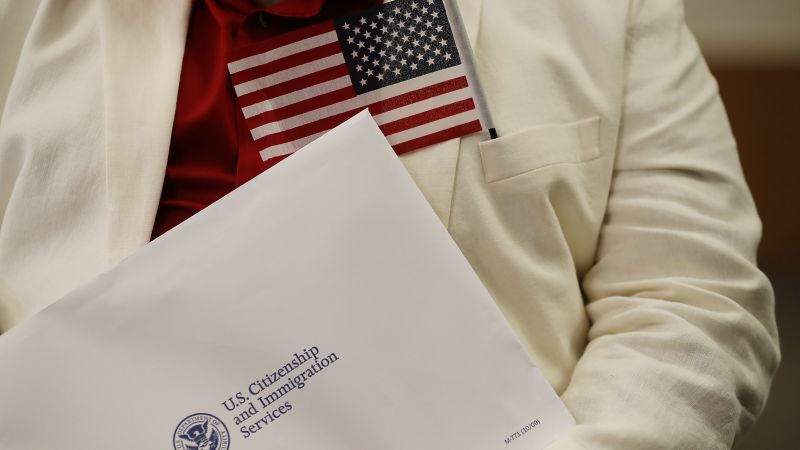
According to the U.S. Citizenship and Immigration Services (USCIS), the policy adjustment aims to streamline the immigration system and ensure fairness. Officials argue that the change eliminates loopholes allowing immigrants to “slip into the shadows” and live illegally if their residency applications are denied. “The adjustment of status process is a loophole that allows individuals to remain in the U.S. while their cases are processed,” a USCIS spokesperson stated. However, this description has drawn criticism, as the process is rooted in a statute passed by Congress, not an administrative rule.
Lawyers like Kuck question whether the directive effectively addresses these loopholes or simply shifts the burden onto applicants. “When Congress amends and betters a law 20 times, it’s hard to call that a loophole, as [USCIS] did in this policy announcement,” he said. “It is the law, and the law will continue to allow for adjustment of status for individuals who otherwise qualify inside the United States.” The debate highlights the tension between regulatory flexibility and the stability of established immigration pathways.
The Road Ahead for Immigrant Families
As the policy’s details remain unclear, the focus is on its real-world consequences. For Francisco and Julia, the directive has turned a joyous chapter of their lives into a source of stress. Their story is emblematic of many immigrant families who rely on the green card process to secure their futures. The uncertainty has also prompted a broader conversation about the role of administrative policies in shaping immigration outcomes. Will this directive lead to a significant increase in denials, or will it be tempered by judicial review?
The Trump administration’s approach to immigration has long been marked by its focus on enforcement. This directive aligns with that philosophy, emphasizing efficiency and reducing the number of people in the U.S. on temporary visas. However, the emotional toll on families like Francisco and Julia’s cannot be overlooked. “The policy’s language is confusing, and its impact is unpredictable,” one attorney said. “It’s not just about legal procedures—it’s about the lives and livelihoods of people who have already made the leap to build a new life here.”
As the situation evolves, the couple and others like them will watch closely for clarity. Their story, once defined by the vastness of Antarctica and the warmth of shared dreams, now hangs in the balance of a policy that promises to reshape the immigration landscape. The outcome of this directive could determine whether their family remains intact or is forced to navigate the complexities of separation, all while their future in the U.S. hangs in the balance. For now, the only certainty is that the change in policy has left many feeling vulnerable, their hopes for permanence now entwined with the uncertainty of a shifting legal framework.