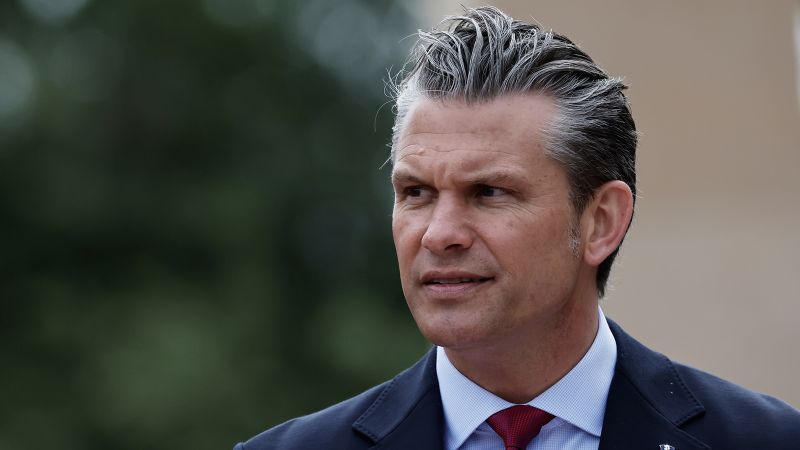
Hegseth Launches Review of US Forces in Europe, Cites NATO Allies’ Inadequacy
Sandego.net – Defense Secretary Pete Hegseth has initiated a comprehensive review of the US military presence in Europe, marking a pivotal step in the Trump administration’s strategy to reshape NATO’s operational structure. The review, announced this week, aims to evaluate the positioning and readiness of American forces on the continent, while also reiterating criticism of NATO allies for their perceived shortcomings in defense commitments. Hegseth emphasized the importance of this assessment, highlighting its role in reinforcing US strategic priorities and ensuring a more effective alliance.
Shifting NATO’s Military Priorities
Hegseth’s review of US forces in Europe is designed to align NATO with a more assertive defense posture, focusing on hard power and deterrence. Speaking at a NATO defense ministers’ meeting, he argued that the alliance must prioritize Europe’s security, with member nations taking greater responsibility for their own defense. “This review will force NATO to act decisively and ensure it is a true military alliance,” he stated, underscoring the need for faster, more unified responses to emerging threats.
“This review will ensure that NATO is moving fast and irreversibly toward Europe, stepping up to take primary responsibility for the defense of the continent,” Hegseth asserted.
The decision follows heightened tensions between the US and European allies, as Trump-era officials have pushed for a reduced US footprint in Europe. Hegseth’s review of US forces in Europe is seen as a continuation of this approach, with the goal of making NATO more responsive to American strategic interests. Allies have been urged to increase their contributions, as the US looks to shift focus toward regions deemed more critical to global security.
NATO’s Response to US Adjustments
NATO Secretary-General Mark Rutte acknowledged the US’s adjustments to its military contributions, noting that the alliance had already evaluated the impact of these changes. “European allies and Canada are ready, willing, and able to increase their efforts,” Rutte said, emphasizing the capacity of members to meet the alliance’s defense requirements. This statement, however, came alongside concerns about the potential consequences of reducing American troop numbers in Europe.
“We have looked at the division of labor in the context of conventional forces and see that European allies and Canada are ready to do more,” Rutte explained.
Rutte’s remarks reflect a balanced view of the situation, recognizing the US’s strategic realignment while reassuring that Europe can sustain its defense commitments. The review of US forces in Europe is expected to influence future NATO decisions, particularly regarding resource allocation and operational readiness. Analysts suggest this shift may test the alliance’s resilience in the face of evolving security challenges.
Strategic Withdrawals and Deployment Cancellations
Earlier this month, Hegseth ordered the cancellation of two military deployments to Europe, as revealed by CNN sources. The Pentagon confirmed plans to withdraw around 5,000 troops from Germany over the next year, citing disagreements with European leaders over defense spending and regional priorities. These moves are part of a broader review of US forces in Europe, which seeks to streamline military operations and target areas where the US believes its involvement is most impactful.
“This review of US forces in Europe is a strategic reassessment to ensure we are allocating resources where they matter most,” Hegseth stated.
The cancellation of a specialized battalion deployment to Germany, focused on long-range missile capabilities, signals a reorientation of US military strategy. While the US remains committed to its nuclear deterrent, the reduction in conventional forces has sparked debates about NATO’s ability to maintain a robust defense framework without American support. Hegseth’s actions highlight the administration’s growing skepticism toward European allies’ capacity to meet defense obligations.
European Allies’ Commitment to NATO
In response to the US’s review of US forces in Europe, European nations have pledged to increase their defense spending and troop contributions. Last year, NATO members committed to raising defense budgets to 2% of GDP, a goal that has gained urgency with the US’s more assertive stance. Countries like France, Germany, and the UK have taken steps to bolster their military readiness, aiming to reduce reliance on American forces while maintaining collective security.
“European allies are stepping up their efforts to ensure NATO remains strong, even as the US adjusts its role,” Rutte noted.
The US’s review of US forces in Europe has prompted a renewed emphasis on self-reliance among NATO members, with some nations investing in advanced weaponry and joint exercises. While this shift could strengthen European autonomy, it also raises questions about the effectiveness of the alliance’s unified strategy. Hegseth’s review of US forces in Europe is expected to influence future NATO discussions on burden-sharing and collective defense.